Get Full Government Meeting Transcripts, Videos, & Alerts Forever!
Get email alerts on the Emergency Medical Services topic
No spam. Unsubscribe anytime.
County EMS reports new paramedic hires, expanded training and strong priority response times
Summary
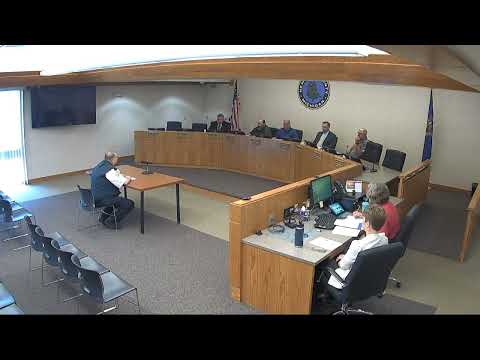
A Life EMS representative told the Newaygo County Board of Commissioners the agency has expanded training for paramedics and EMTs, marked recent licensures, and met its 20-minute on‑scene target for priority 1 calls 95% of the time in the first quarter.
A Life EMS representative told the Newaygo County Board of Commissioners that the agency has strengthened its internal training program, added recently licensed paramedics and met performance targets for high‑priority calls.
"We have 1 floor building right now that we can fill with either an EMT or a paramedic, staff pretty well with paramedics," the Life EMS representative said, describing current staffing and a part‑time paramedic trainee who the agency expects "would probably return back to a full time status once they complete the paramedic training." The speaker said two EMTs recently became licensed paramedics and have started the county program.
The nut graf: County emergency medical services leaders said they have invested in a structured, consistent local training pipeline and an outside trainer to provide daily feedback and skill evaluations, and they reported that the county met its internal response‑time goal nearly all the time during the first quarter.
Life EMS described the training changes in more detail. "Over the last year, we've really spent a lot of time developing our training program for new paramedics and EMTs. We've actually hired some a full time overseas training company, Bridal," the speaker said, adding the program includes daily observation reports and assigned trainers who provide shift‑by‑shift feedback. "They do individual skill evaluations to test certain airway skills ... so that program has really been working good for us."
On time frames for completing internal credentialing, the presenter said, "On average, it takes anywhere from 6 months to a year to fully complete our internal training program." The speaker emphasized the variance depends on an individual's prior experience: recruits with substantial EMT experience tend to complete the program faster than those newly out of EMT school.
The presenter also summarized operational performance numbers for the first quarter: there were 627 priority 1 calls, and the agency met its performance standard of arriving on scene within 20 minutes 95% of the time. The report included a heat map showing call concentrations in more populated townships and a list of priority‑1 calls that exceeded the 20‑minute benchmark, with explanatory comments from Life EMS.
Life EMS said it took part in a mass casualty incident (MCI) drill focused on hospital sorting and resource allocation. "Running out of March, we did participate in an MCI drill ... The scenario was an active assailant in the school, multiple injuries," the presenter said, adding that such drills highlight both strengths and areas for improvement. The speaker called the drills "really beneficial."
Board members and other attendees noted local educational pipelines feeding EMS. One attendee described attending a graduation at Lake Shore (West Shore) College and said many students are entering health care fields; the Life EMS representative said partnerships with local training programs and school‑based programs support staffing over time.
The Life EMS representative also described regional variations in staffing and response models. Asked about seeing small response SUVs from another provider, the presenter said some agencies supplement advanced life support with basic EMT ambulances during staffing shortages, and may deploy a paramedic in a smaller vehicle to assess on scene.
Ending: The Life EMS representative said the internal training and outside trainer have increased consistency and that the agency will continue to monitor performance and the list of calls that exceeded the target time. The presenter offered to answer follow‑up questions and to forward detailed reports prepared by colleagues.