Get Full Government Meeting Transcripts, Videos, & Alerts Forever!
Get email alerts on the Public Safety topic
No spam. Unsubscribe anytime.
Council reviews public‑safety capital needs: new police headquarters and training, plus fire‑station expansion and modernization
Summary
Police and fire leaders asked the City Council to consider bond funding for a new police headquarters and training center (about $110 million) and a multi‑station build/modernization plan for the fire department, citing service gaps, 9‑1‑1 capacity and station age.
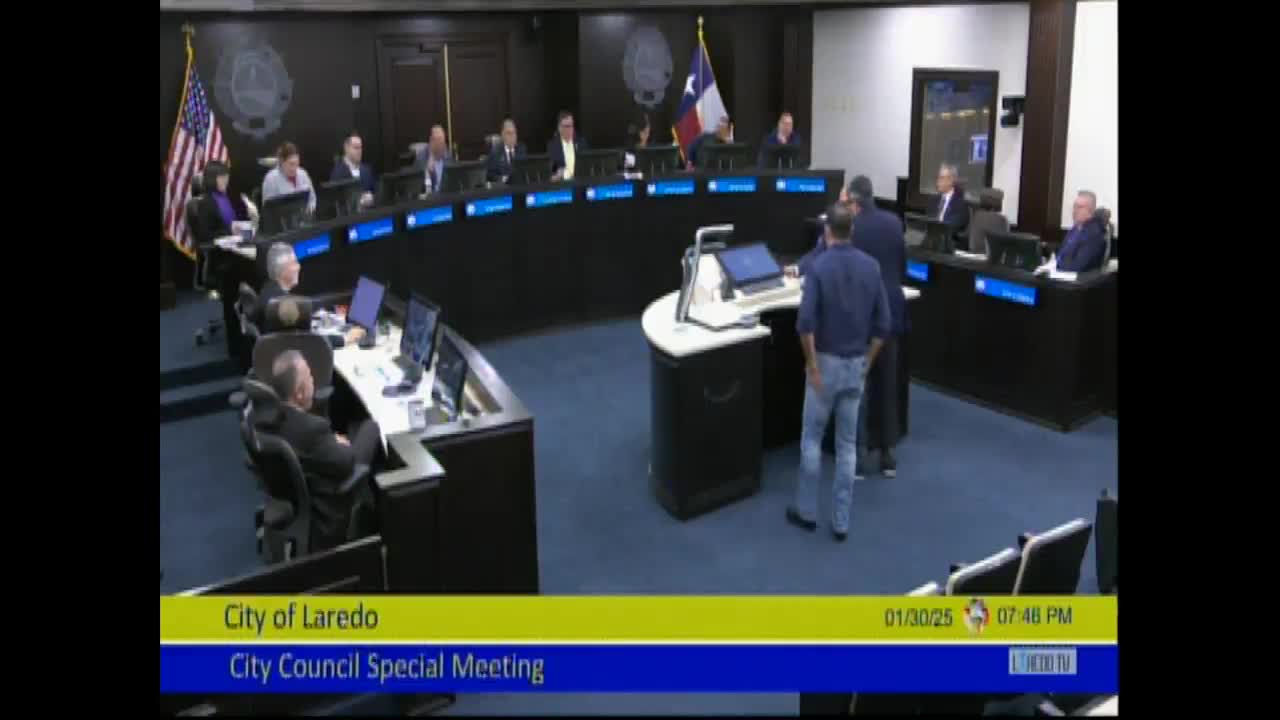
Police and fire chiefs presented competing capital requests during the Jan. 30 special council workshop, asking council to weigh construction of a new police headquarters and 9‑1‑1/training complex alongside an expanded, modernized fire‑station network.
Police: a headquarters, 9‑1‑1 and training campus
City public‑safety presenters asked council to consider a new police headquarters and consolidated training facility that would include an updated 9‑1‑1 center and property evidence storage. The police request referenced a concept budget in the neighborhood of $110 million for a phased headquarters and support facilities, with an option to shell a second‑floor finish for a later phase to reduce the initial cost. Staff argued a modern 9‑1‑1 center would improve interoperability with local school dispatch centers and with Webb County in the event of large incidents.
Fire: new stations and modernization
The fire chief presented a station‑location study recommending three new stations (South Laredo/Buena Vista area, Mile Marker 15 corridor, and a Mines Road/Green Ranch area location), relocation of a station at the airport site and structural upgrades to several decade‑old stations. The department said 50% of existing stations are more than 50 years old and emphasized firefighter wellness measures (decontamination areas, improved sleeping quarters) as part of station redesigns. The fire request tied infrastructure changes to improved response times and an insurance‑rating (ISO) profile that can affect business and homeowner insurance premiums.
Shared topics: dispatch, training and staffing impacts
Both departments stressed training and dispatch capacity. Police leaders asked for a modern 9‑1‑1 operations center able to collocate dispatch functions with partner agencies to reduce duplicated calls and improve response coordination. Fire leaders emphasized that adding strategically placed stations reduces the need for long cross‑jurisdictional responses and improves coverage for both city and annexed areas.
Budget and timing: tradeoffs discussed
Staff and bond advisers cautioned that including large facilities together with other capital asks (streets, parks, health) would increase the bond package size and potentially the tax impact; they noted alternative financing tools exist for equipment and vehicles if the council opts to exclude those items from a long‑term bond. Council members requested options — a full headquarters build, a staged approach, and lower‑cost interim solutions — and asked for the finance office to show tax impacts at several bond sizes before the Feb. 10 follow‑up meeting.
Next steps: staff to model phasing and financing scenarios
Council asked staff to return with phasing options, site feasibility details, and bond‑impact scenarios so members can decide which public‑safety capital components, if any, to place on a potential bond ballot.