Get Full Government Meeting Transcripts, Videos, & Alerts Forever!
Get email alerts on the County Budget Public Safety topic
No spam. Unsubscribe anytime.
Coos County commissioner outlines $1 million shortfall, personnel cuts and revenue options
Summary
Coos County Commissioner Drew Farmer told the Coos Bay City Council the county reduced a $1.8 million budget gap to about $1 million through cuts and one-time funds, but warned public-safety and longer-term solutions remain necessary.
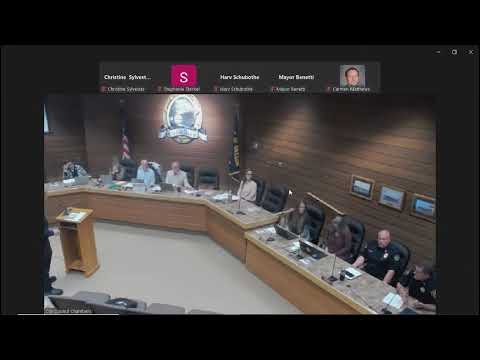
Coos County Commissioner Drew Farmer told the Coos Bay City Council on Tuesday that the county’s 2025 budget arrived with a $1.8 million deficit and has been reduced to about $1 million through efficiency cuts, use of reserve funds and personnel reductions.
Farmer said, “the nutshell of the budget is, it came in with a $1,800,000 deficit.” He described a mix of one-time and structural actions — including six personnel cuts, temporary use of reconciliation funds and revenue from county parks — that narrowed the shortfall but left unfinished choices for the next budget cycle.
The council heard that the county drew about $100,000 from parks operations this cycle because the parks are revenue-generating. Farmer said timber reconciliation funds — money that accumulates when forestry-budgeted work is not spent — had reached roughly $800,000 over time and the county used just under $400,000 from that balance to reduce the gap. “Not a sustainable solution,” he told the council.
Why it matters: Farmer emphasized that further cuts would have hit patrol and jail services, which have statutory minimums. He said the county avoided cutting patrol hours this year but would have had to cut 20-hours-per-day coverage to 10 hours per day had deeper reductions been required. Farmer also described a reorganization in juvenile services that will place juvenile functions under community corrections and eliminated two management positions.
Several revenue options and near-term actions were discussed. Farmer said negotiations with the state contractor or agency managing the Elliott State Forest are expected to conclude by late June; the county hoped that the Elliott manager would fund “a half or a whole deputy” — paying officer salary, vehicle and training — which would increase on-duty coverage. He said a decision by June 30 on that funding could allow money to be returned to the reconciliation fund.
Farmer said Lakeside and other North County communities have discussed a safety district and grant applications — including a potential COPS grant — to help pay for deputies stationed north of the Big Green Bridge. He also said the county reviewed surplus properties for possible sale or vacation (including unopened roads) and that further departmental restructures were expected to reduce costs, though specifics were not given.
Farmer described the county’s work on urban renewal on the North Spit: an under-levy proposal could return roughly $52,000 a year to the county general fund and to overlapping taxing districts. He said county leaders were not arguing against urban renewal generally but questioned whether that specific district had produced the returns seen in cities.
On long-term revenue, Farmer told the council he is working with unions to place a statewide ballot measure that would return 5% of collected state income tax to counties of origin. “It would require the state to return 5% of collected income taxes back to their county of origin,” Farmer said, and later told the council the county’s share under that plan would be about $4.8 million. He said the signature drive is expected to require more than 100,000 signatures.
Public-safety staffing and jail capacity were a recurring theme. Farmer gave cost estimates for jail expansion and staffing: he said one jail pod without administrative staff costs about $800,000 and with administrative staff about $1 million per pod. He noted the county currently had one pod open and that past experience with two pods open produced far fewer early releases. He also said the county’s narcotics team had one allocated position but that staffing ideally should include one sergeant and several officers.
Council members thanked Farmer for the update and asked follow-up questions about specific lines in the budget and possible revenue projects. Farmer closed by noting the Elliott Forest timeline and the prospect of carbon-credit revenues in the next two years, and said he had pushed the state agency for clearer answers.
Ending: Farmer told the council he would keep working on the mix of short-term fixes and longer-term revenue options; several items he mentioned — the Elliott Forest plan, timber-deputy funding and the proposed state ballot measure — will return as future budget and policy discussions for county and city leaders.