
Portsmouth commissioner recommends continuing 50% personal-property tax relief; outlines appeals process and emerging issues
Get AI-powered insights, summaries, and transcripts
Sign Up Free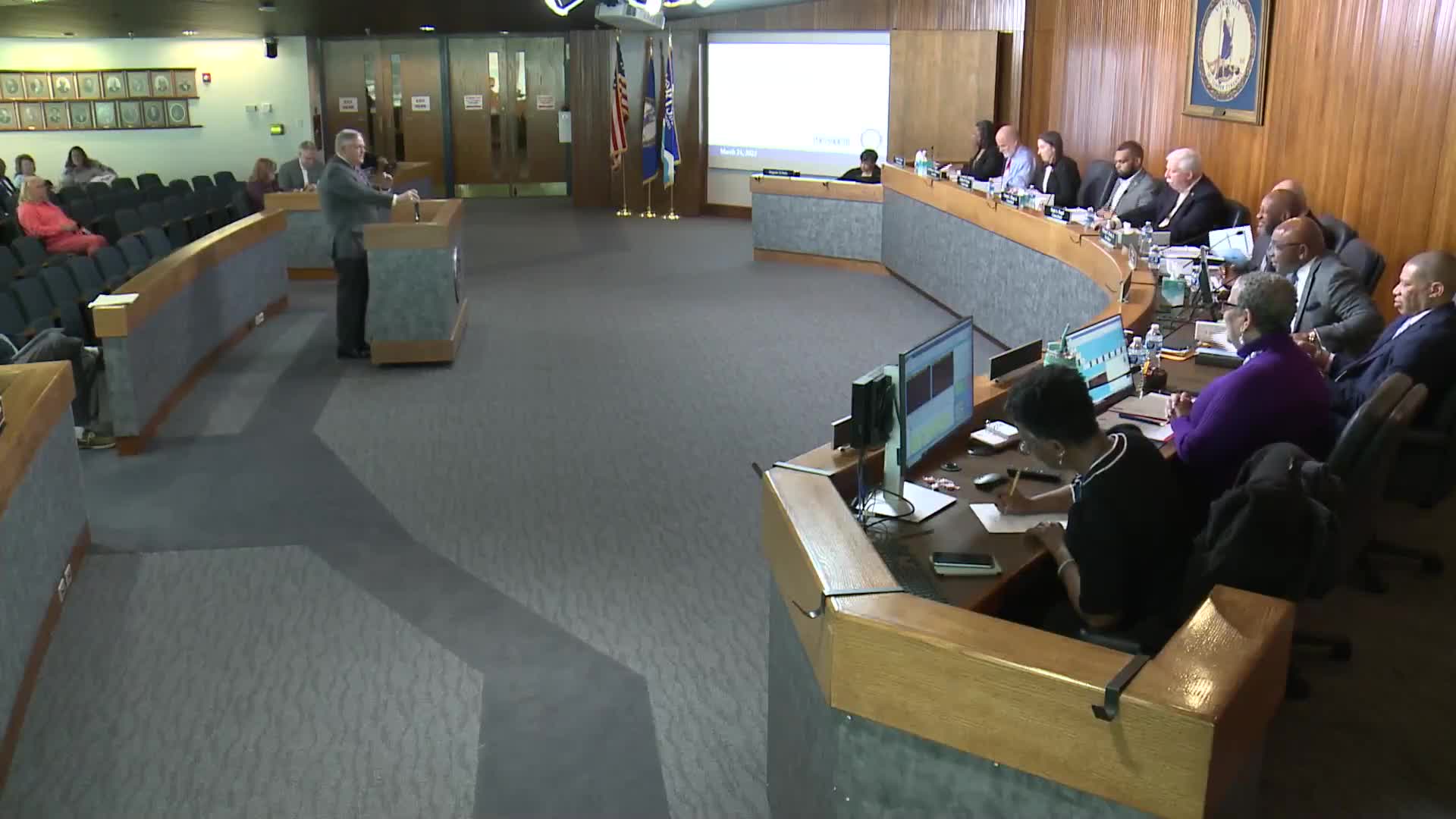
Summary
At a March 24 Portsmouth City Council work session Commissioner Frankie Edmonds recommended continuing a 50% personal-property tax relief level, explained valuation methodology, shared appeals procedures and raised issues including exemptions and peer-to-peer boat rentals that could affect local revenue.
Commissioner Frankie Edmonds, Portsmouth’s commissioner of the revenue, told the City Council at a March 24 public work session that the city should continue offering 50% personal-property tax relief for qualifying vehicles and outlined how the program is calculated and administered.
Edmonds said the state established the personal property tax relief program in 2004 and that Portsmouth has received a roughly $9.8 million annual payment from the state since 2006. He said council has historically covered the remaining cost — about $3.5 million under a 50% relief level — as an offset in the city budget.
The recommendation matters because the relief level affects how much individual vehicle owners pay, how much revenue the city must cover in its operating budget and how council balances relief against other revenue needs.
Edmonds described the valuation process used to set assessments, saying Portsmouth uses the National Automobile Dealers Association (NADA) pricing guide and the J.D. Power model as the industry standard. "We are in compliance with the state code as well as the state constitution to provide 100% of fair market value," Edmonds said. He added that city assessors perform a mass appraisal and noted that taxpayers who believe their vehicle has been misvalued can appeal.
He gave a series of data points from the city’s packet: the median vehicle value in Portsmouth is $24,003.24 and the mean is $31,008.54; the range between the most and least expensive vehicles in the sample was about $87,075. Edmonds said the personal-property relief applies only to qualifying vehicles and only to the first $20,000 of value under state code.
Edmonds described the appeals and review process: customers may request a review at City Hall during business hours year-round, and the city will hold an annual appeals day on Saturday, May 17, 2025, from 9 a.m. to 1 p.m. in the City Hall garage. He said appeals could yield reductions for high-mileage vehicles, vehicles damaged or inoperable on the assessment date (Jan. 1), or other conditions that depart from normal wear and tear.
Council members asked for additional comparisons and clarifications. Councilman Hugo asked Edmonds for a regional comparison of tax rates as well as the peer comparison provided for relief percentages; Edmonds said staff will provide rate comparisons and that Portsmouth’s personal-property rate has been $5 per $100 of assessed value for many years. "The rate's not gonna change," Edmonds said while explaining that relief changes affect the offset but do not automatically alter the statutory rate unless council acts.
Vice Mayor Moody and others pressed on what factors can trigger an assessment reduction; Edmonds said the most common is high mileage, but assessments can be lowered if a vehicle was damaged or inoperable on Jan. 1 and if the taxpayer provides documentation. He noted a 10-year mileage adjustment in the NADA guide and that agreed-value procedures can be used when the guide does not fit.
Edmonds also flagged two policy issues for council consideration: the increasing number of exemptions (for example, disability or veteran exemptions) and new business models in the gig economy. He told council that exemptions reduce local revenue because those reductions are not funded by the state. "We want everyone to get every exemption they're entitled to, but we want to prepare accordingly," Edmonds said.
On peer-to-peer and commercial use of watercraft, Edmonds said the city has received an inquiry from Andy Sutter of Freedom Boat Club about how personal watercraft used in rental or commercial models should be classified. "If you're using this for your business, then you're commercial," Edmonds said, adding that the city may need to create a niche or special classification for gig‑economy models rather than treating all watercraft identically.
On enforcement, Edmonds said the commissioner's office has a compliance unit that works with DMV records and local public-safety partners to identify untaxed vehicles. He said the office can issue summonses and back-bill taxpayers found out of compliance.
Edmonds cited prior COVID-related adjustments in the city’s history: Portsmouth used a ratio study in 2022 that reduced assessments to a 75% ratio for that year, producing a lower relief percentage (43% in 2022). He said that situation was an anomaly tied to the pandemic and that the city has been recovering since.
Council members requested additional follow-up materials: a regional comparison of tax rates (in addition to relief levels), and an estimate of what 1¢ of the personal-property tax represents in revenue terms to aid rate discussions. Edmonds and city staff agreed to provide those figures and to work with the city manager and finance department as the budget review continues.
The commissioner’s presentation did not include a council decision; Edmonds asked if there were further questions and the council moved on to the manager’s budget presentation.