Get Full Government Meeting Transcripts, Videos, & Alerts Forever!
Get email alerts on the Urban Renewal topic
No spam. Unsubscribe anytime.
Coos Bay budget committee approves Urban Renewal Agency proposed budget, continues special levy for downtown
Summary
The Coos Bay Urban Renewal Agency Budget Committee approved the proposed fiscal 2025–26 budget for the Downtown and Empire districts and voted to continue a downtown special levy option capped at 28%. The committee also selected a tax collection method under ORS and forwarded the proposal to the Urban Renewal Agency Board for adoption in June.
The Coos Bay Urban Renewal Agency Budget Committee on Thursday approved the agency’s proposed fiscal 2025–26 budget for the Downtown and Empire urban renewal districts and voted to continue a downtown special levy option capped at 28%.
Budget Committee members approved three required motions: selecting the collection method for urban renewal taxes pursuant to ORS 457.343(52)(a), imposing the division of taxes and the downtown special levy option (limited to 28%), and approving the proposed fiscal 2025–26 budget. The committee recorded the approvals and forwarded the budget to the Urban Renewal Agency Board for adoption at its June meeting.
The agency’s tax increment financing structure remains the same: a frozen tax base was set when each district was created, and the growth in assessed value above that frozen base goes to the Urban Renewal Agency to fund projects. “The growth above that frozen base is what is provided to the Urban Renewal Agency,” City Manager Nicole Rutherford said in her presentation.
The budget documents show the Downtown Capital Projects fund with roughly $4.2 million proposed for projects this year, including Front Street pedestrian work, sidewalks, parking-lot improvements, boardwalk restoration work and a continuing allocation for building acquisition and redevelopment. The Empire District’s capital projects total about $2.3 million and include the Empire Blueprint implementation, Newmark Avenue seawall follow-up work and parking-lot improvements. The downtown district also anticipates using a special levy estimated to yield roughly $600,000 in the coming year; that levy has been dedicated historically to street improvements.
Committee discussion noted phasing and timing for some projects. Staff explained some Empire expenditures have not been spent yet because design and planning work needed to be finished before construction can start. Members also discussed the boardwalk and ongoing annual sidewalk and parking-lot set-asides for downtown.
The committee’s motions were procedural and administrative: they set the method of tax collection and confirmed the amount of the special levy option, and they approved the proposed budget for referral to the Urban Renewal Agency Board. No amendments to the budget were adopted at the meeting.
The agency’s capital-funding plan relies on a mix of tax-increment revenues, long-term bonds previously issued to fund Fourth Street and other projects, and short-term "du jour" loans between the city and the Urban Renewal Agency to smooth cash flow between tax collections and debt service repayments. Rutherford reminded the committee that urban renewal operations typically carry outstanding debt to finance projects and that the Downtown and Empire districts are at different repayment schedules: one Empire issuance is scheduled to be paid off in fiscal 2027 and another in 2028.
The Urban Renewal Agency Budget Committee’s approval means the proposed plan will be considered by the Urban Renewal Agency Board at its formal adoption meeting in June. The committee did not change levy percentages or add new projects at the session.
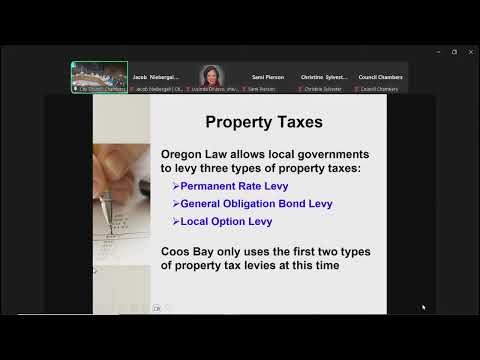
For residents, the city emphasized that property owners’ bills remain the same under urban renewal: the tax paid by a property owner does not rise because a district exists — rather, the growth in assessed value above the frozen base is redirected to the agency for redevelopment work.
The budget documents and the committee proceedings are public records and will be available with the Urban Renewal Agency’s June agenda for final adoption.