Get Full Government Meeting Transcripts, Videos, & Alerts Forever!
Get email alerts on the Traffic Calming First Avenue topic
No spam. Unsubscribe anytime.
Sweet Home council signals support for permanent asphalt speed humps on First Avenue
Summary
Residents and staff described high traffic volumes and crashes on First Avenue; city consultant recommended full‑width asphalt speed humps (materials ~ $8,400) with an expected 20% drop in volume. Councilors and neighbors voiced support and asked staff to return with a formal proposal for a vote.
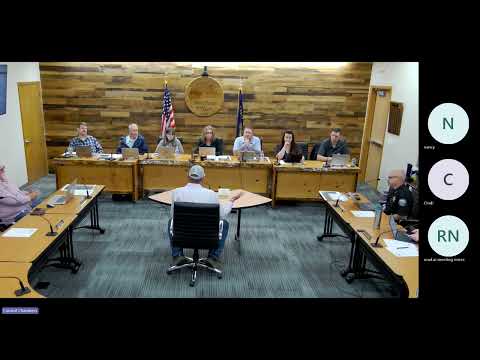
Councilors and neighborhood residents signaled support Tuesday for a plan to install permanent asphalt speed humps on First Avenue to slow traffic and reduce crashes.
City staff reviewed a study by Dyer Partnership that recommended four full‑width parabolic speed humps spaced about 250 feet apart. The consultant estimated asphalt materials for that option at $8,400 (materials only) and projected about a 20% reduction in traffic volume and speeds reduced to about 15–20 mph. Staff said final engineering, labor and equipment costs are not included in the materials estimate and that contracting the installation could increase total costs (staff estimated an outside installation might be in the neighborhood of $35,000).
The recommendation followed residents’ long‑running complaints about First Avenue’s use as a bypass between Highway 20 (Main Street) and Highway 228 (West Holly Road), high speeds, and several collisions. A resident who chairs the Traffic Safety Committee, Frank Gallagher, told the council the neighborhood has tracked speeds and collisions and urged that if the city spends money on calming devices, it should “do it right the first time.” Gallagher said he surveyed 28 residents and that the survey favored closing the street to some traffic options; he did not provide a specific percentage in the meeting record.
During the discussion, residents and several councilors favored permanent asphalt humps over temporary or rubber devices. One councilor recalled a previous council motion in 2014 to add speed tables and said the issue has been under consideration for years. Councilors asked staff to return to the next council meeting with a formal proposal and a vote-ready package.
City staff cautioned the council that the public works crews do not have prior experience installing asphalt speed humps and that the work would likely be contracted. Staff also noted tradeoffs among device types: offset humps can be staggered to allow emergency vehicles to weave around a hump but may encourage lane weaving by other drivers; speed cushions allow fire apparatus to pass but may be less effective against large commercial vehicles.
No formal ordinance or appropriation was adopted at Tuesday’s meeting; instead, council direction was to bring a detailed engineering and cost proposal back for a formal vote at the next meeting.
Residents may see additional discussion and a formal vote when staff return with cost estimates, engineered plans and recommended funding sources.