Get Full Government Meeting Transcripts, Videos, & Alerts Forever!
Get email alerts on the School Reconstruction topic
No spam. Unsubscribe anytime.
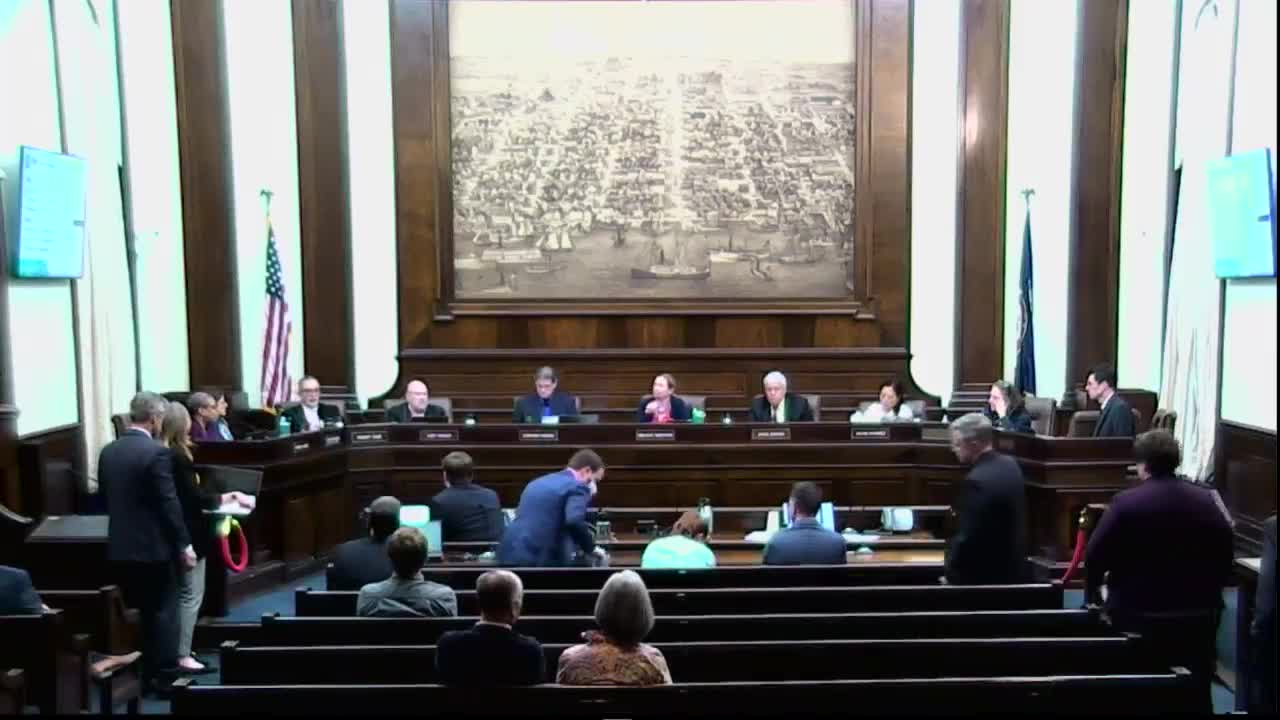
Planning commission recommends approval of George Mason Elementary modernization, drawing neighbors’ questions on fencing and trees
Summary
The Alexandria Planning Commission voted 6–1 to recommend City Council approval of a development special-use permit for the George Mason Elementary School modernization at 2601 Cameron Mills Road.
The Alexandria Planning Commission voted 6–1 to recommend City Council approval of the George Mason Elementary School modernization project at 2601 Cameron Mills Road, forwarding staff conditions but also hearing sustained neighborhood concern about fencing, mature-tree removals and loss of open space.
Abigail Harwell, urban planner with Planning and Zoning, described the project as a partial demolition and reconstruction that would retain the school’s original 1939 façade while building a new two-story facility to accommodate about 670 students and roughly 80 teachers and staff. The proposed site plan shows three on-site parking areas totaling 60 spaces; ACPS staff reported that they are working on a memorandum-of-understanding with Westminster Presbyterian Church to use 20 additional spaces during school hours.
Harwell said the design includes two courtyards, an interior glass library connecting north and south wings, expanded recreation amenities and stormwater best management practices that staff estimates would exceed required phosphorus load reductions by roughly 34 percent. ACPS and staff said the building is being designed with geothermal heating/cooling infrastructure and a “net-zero ready” approach; Green Building Manager Dustin Smith and ACPS staff said on-site photovoltaic generation is planned but that sizing and final procurement may be determined after initial operations and performance monitoring, a strategy the applicant said was used successfully at other recent schools.
Public comment reflected a divide. Several neighbors and the Northridge Civic Association urged the commission to preserve more park open space, limit mature-tree removals and avoid erecting a continuous six-foot fence around the playfields. Northridge resident Dr. Harry Wilmer said the proposed fence would create a “physical and psychological barrier” and urged the commission to require a smaller fenced footprint limited to secured play areas rather than encircling most of the field. Matt Heckle, a resident on Taylor Avenue, urged caution about doubling vehicle and parking loads on the south side of the school and asked that pick-up/drop-off and aftercare operations be carefully managed.
ACPS representatives and the applicant team explained that the fence was requested by the district’s safety/security staff to separate students at play from pedestrians and off-site users during the school day; they said gates would be locked during school hours and opened after hours, with signage and operational arrangements to allow community access outside school hours. Applicant representatives also emphasized a long community outreach process dating back to 2023 with 15 public meetings and that the scheme includes stormwater, sustainability and expanded usable recreation features.
Commissioners asked technical questions about net-zero goals and how geothermal, PV sizing and post-occupancy energy monitoring would be used to approach net-zero performance. Commissioner Koenig and others noted that “net-zero ready” means the building is designed to facilitate on-site renewable generation and that actual net-zero performance will be assessed once the building is operational; staff said ACPS intends to work with the Office of Climate Action on performance reporting.
In a final motion Vice Chair Koenig moved to recommend approval of the DSUP with one modification: staff should not reserve administrative authority to approve additional on-site parking if an agreement with the church could not be reached. Commissioner Ramirez seconded; the motion passed 6–1 with Commissioner Brown voting no. Commissioners said they wanted the City Council to carefully review tree and fence design details and the applicant’s commitments regarding post-occupancy energy performance.