Get Full Government Meeting Transcripts, Videos, & Alerts Forever!
Get email alerts on the Historic Preservation And Plaza Design topic
No spam. Unsubscribe anytime.
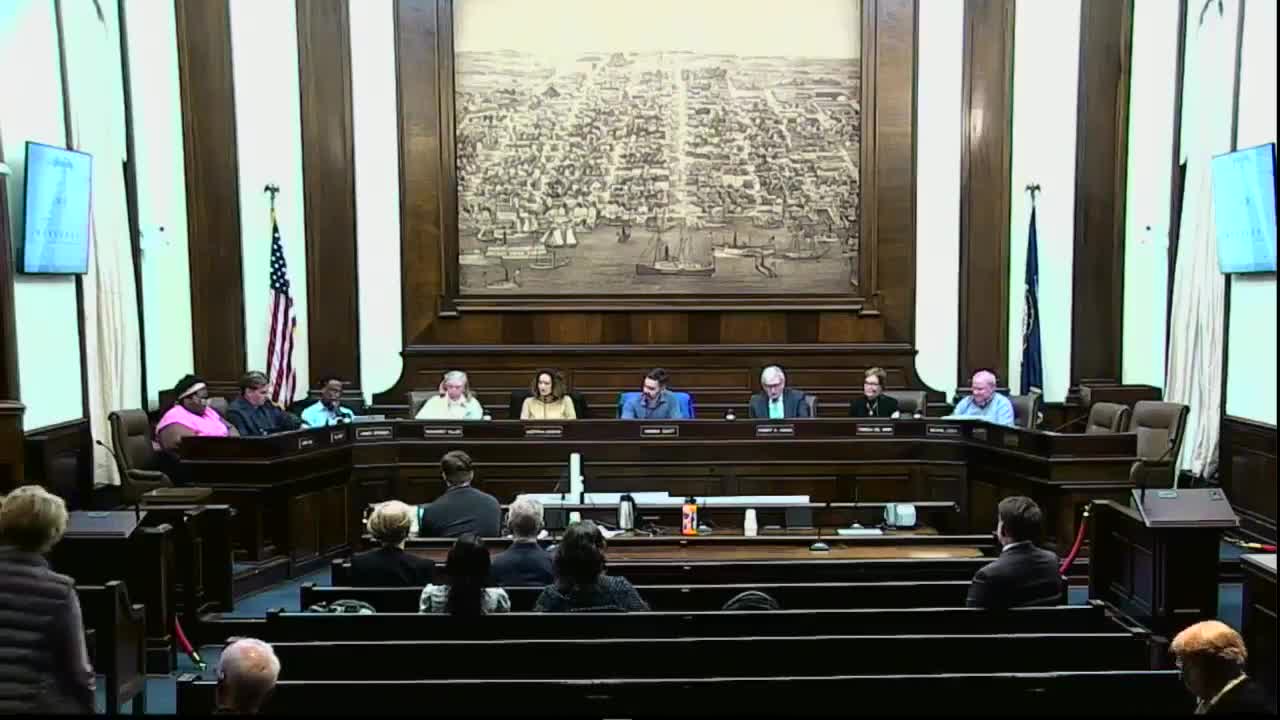
City presents concept for Alexandria City Hall and Market Square renovation; board and public press for quieter fifth floor and clearer central entry
Summary
City of Alexandria staff and consultants presented a concept review for a comprehensive renovation of Alexandria City Hall, Market Square and the plaza garage, including historic research, plaza reconfigurations and proposed Fifth Floor streamlining. The BAR heard robust public comment and gave advisory feedback — there was no vote.
The City of Alexandria presented concept designs for a renovation of City Hall, Market Square and the adjacent plaza garage. The presentation combined historic research, rehabilitation goals for the 1871 City Hall and conceptual ideas for Market Square’s layout and the 1960s courtyard infill.
Jeremy McPike, the city’s director of general services, said the garage structure is roughly 60 years old and approaching the end of its useful life; the project aims to preserve and celebrate the 1871 building while improving accessibility, circulation and Market Square’s function as the city’s civic center. The design team — led by Leo A. Daly, EHT Traceries and associated consultants — presented a historic timeline, an exterior condition assessment, and initial massing and plaza concepts.
EHT Traceries’ preservation lead, Sarah Bonnish, summarized archival and physical research that shaped the team’s recommendations. The consultants proposed expanding the building’s period of significance from 1871–1873 to include activity through 1945, a change they said better reflects the building’s civic and multifunctional history. Recommended preservation actions for the 1871 portion included masonry repointing to match historic mortar, replacement of non‑historic windows with historically accurate units, reinstatement of the original color palette where documented, and careful treatment to reveal and celebrate original façades.
Design lead Irina Savakawa (Leo A. Daly) presented conceptual massing and plaza options. Key features included: - A clarified, more formal south‑facing entry and new glazed lobby/arcade treatments to improve wayfinding from King Street and to better connect Market Square with interior civic spaces. - Plaza changes to improve accessibility (reduced slopes, more intuitive routes), a flexible ground‑level water feature that can be turned on/off seasonally, and reconfigured seating and shade elements to support vendors and events. - Streamlining and consolidation of rooftop mechanical and elevator overruns on the Fifth Floor so rooftop elements would be lower and less visually cluttered; the design team said the building requires some Fifth Floor functions (e.g., elevator overruns and egress) and proposed solutions that aim to minimize visibility from key public viewpoints.
Public comment included several speakers who urged restraint and close adherence to historic character. Horace Day, a property owner facing Market Square, called for design humility and urged the team to “articulate the intent of the 1960 facade” rather than introduce a modern signature element that conflicts with the historic setting. Historian John Patrick and Gail Rothrock of Historic Alexandria Foundation emphasized that the 1960s addition itself has historical value and that any new rooftop work should be minimally visible so the 1871 building remains legible from public vantage points. Old Town Civic Association President Yvonne Wade Callahan and other residents asked for clearer views of the proposed Fifth Floor massing, concerns about a glassy new lobby appearing like retail, and support for maximizing open plaza space for farmers’ market use.
Board members and staff commended the depth of historic research but repeatedly asked the design team to bring additional studies. Requested follow-up items included: street‑level and rooftop sight‑line diagrams from multiple public vantage points; clearer comparisons of preserving the 1871 fabric while treating the 1960s infill; limited and lower‑profile Fifth Floor options; additional material and color studies; and refined plaza plans emphasizing unobstructed vendor circulation and shorter, lower seating steps rather than heavy landscape that would reduce usable market area.
No BAR vote was required for the concept review. The board provided advisory feedback and invited the applicant back for a subsequent presentation with alternatives and additional visual studies.
Ending: The project remains at concept review; the city and consultant team will return with additional visual studies and refined design options addressing the board’s and public’s concerns.