Get Full Government Meeting Transcripts, Videos, & Alerts Forever!
Get email alerts on the Zoning Text Amendments topic
No spam. Unsubscribe anytime.
Commission backs package of zoning text amendments including ADU permit changes, church parking exemptions and removing 80-foot cap on athletic lighting
Summary
The Alexandria Planning Commission voted 7–0 to initiate and recommend City Council approval of a multi-topic zoning text amendment package that streamlines ADU permitting, adjusts church parking requirements, allows EV chargers in required yards and removes a prescriptive 80-foot cap on athletic-field lighting height in special-use-permit reviews.
The Alexandria Planning Commission voted unanimously (7–0) to initiate and recommend approval of a multi-part zoning text amendment package that includes: revisions to accessory dwelling unit (ADU) permitting and owner-occupancy rules; adding churches as a permitted use in several zones and exempting some churches from certain parking renovation triggers; permitting electric-vehicle charging equipment in required yards; clarifying open-space requirements in certain residential zones; and removing an explicit 80-foot height cap from the special-use-permit review for athletic and recreational lighting so City Council could consider taller fixtures when appropriate.
Sam (Sam Shelby/Sam Shell Wing in the record), Planning and Zoning staff, described the ADU changes as administrative cleanups and process streamlining. Staff proposes eliminating a now-redundant administrative ADU permit that duplicated information already captured in building-permit and related reviews and removing an owner-occupancy requirement that city council had added earlier. Staff argued the owner-occupancy limit created barriers when a primary house was under redevelopment and that short-term-rental rules and other safeguards reduce the original concerns about speculation.
Staff also proposed adding churches to the list of permitted uses in several zones where similar uses are allowed and exempting churches from being forced to meet modern off-street parking calculation requirements triggered by certain renovation thresholds; staff said that has created practical difficulties since taxed property assessment does not apply to tax-exempt churches.
Proposed EV-charging changes would allow charging equipment to be located in required yards adjacent to driveways to reflect how homeowners typically install chargers at detached houses; staff said larger, sign-like commercial chargers would still be subject to other approvals.
The package drew several commissioner questions. Commissioner Koenig and others discussed removing the 80-foot prescriptive cap for athletic lighting and asked staff about real-world experience with modern LED systems. Planning Director Karl Moritz and staff pointed to recent field-lighting installations at city athletic facilities (Patrick Henry, Hammond, Jefferson-Houston, George Washington, and others) and said post-installation performance work showed those new systems could meet objectives for minimizing off-site light spill and glare; staff emphasized that removing the cap does not create a by-right right to any specific height but instead lets City Council consider taller poles under the special-use-permit review with performance standards.
Commissioners also asked about ADU occupant limits and whether life-safety building codes (rather than zoning) would continue to govern maximum occupants; staff said building-code thresholds remain in place and that removing a specific ADU occupancy cap aligns ADU rules with other dwelling regulations.
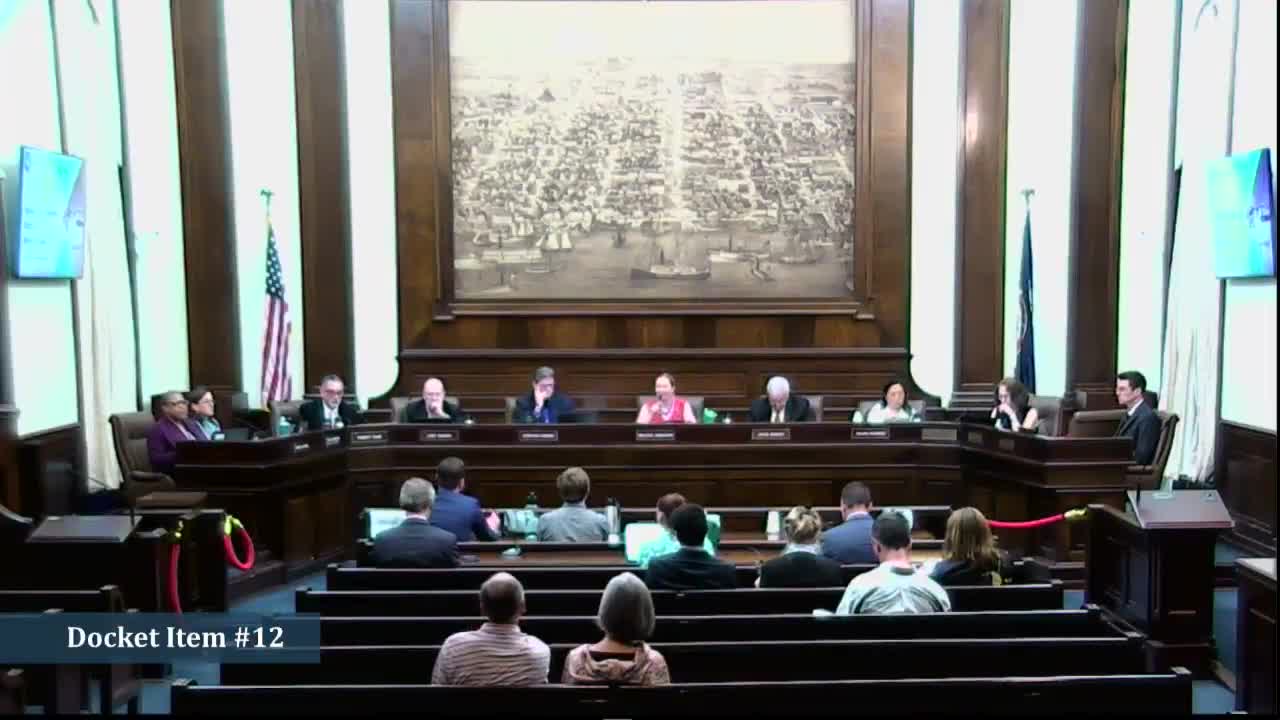
After discussion the commission moved to initiate and recommend the package to City Council. Several speakers had tried to join the hearing; staff postponed one public comment for troubleshooting earlier in the meeting but ultimately heard public testimony on the docket before the initiation motion.
The item will proceed to City Council with a Planning Commission recommendation and with staff-provided examples and documentation of recent lighting projects that commissioners asked to see.