Get Full Government Meeting Transcripts, Videos, & Alerts Forever!
Get email alerts on the Health And Human Services topic
No spam. Unsubscribe anytime.
City budget session highlights state‑funded supportive housing, food‑hub expansion and dental access concerns
Summary
Department of Community and Human Services presented proposals continuing state funding for 35 permanent supportive housing placements, adding $300,000 for food hubs, and recommending changes to dental clinic funding while staff plan follow‑up memos on waiting lists and shelter strategy.
Department of Community and Human Services Director Kate Garvey told the council the department was aligning its FY26 budget with the city’s four council priorities, including housing opportunities and eliminating community disparities.
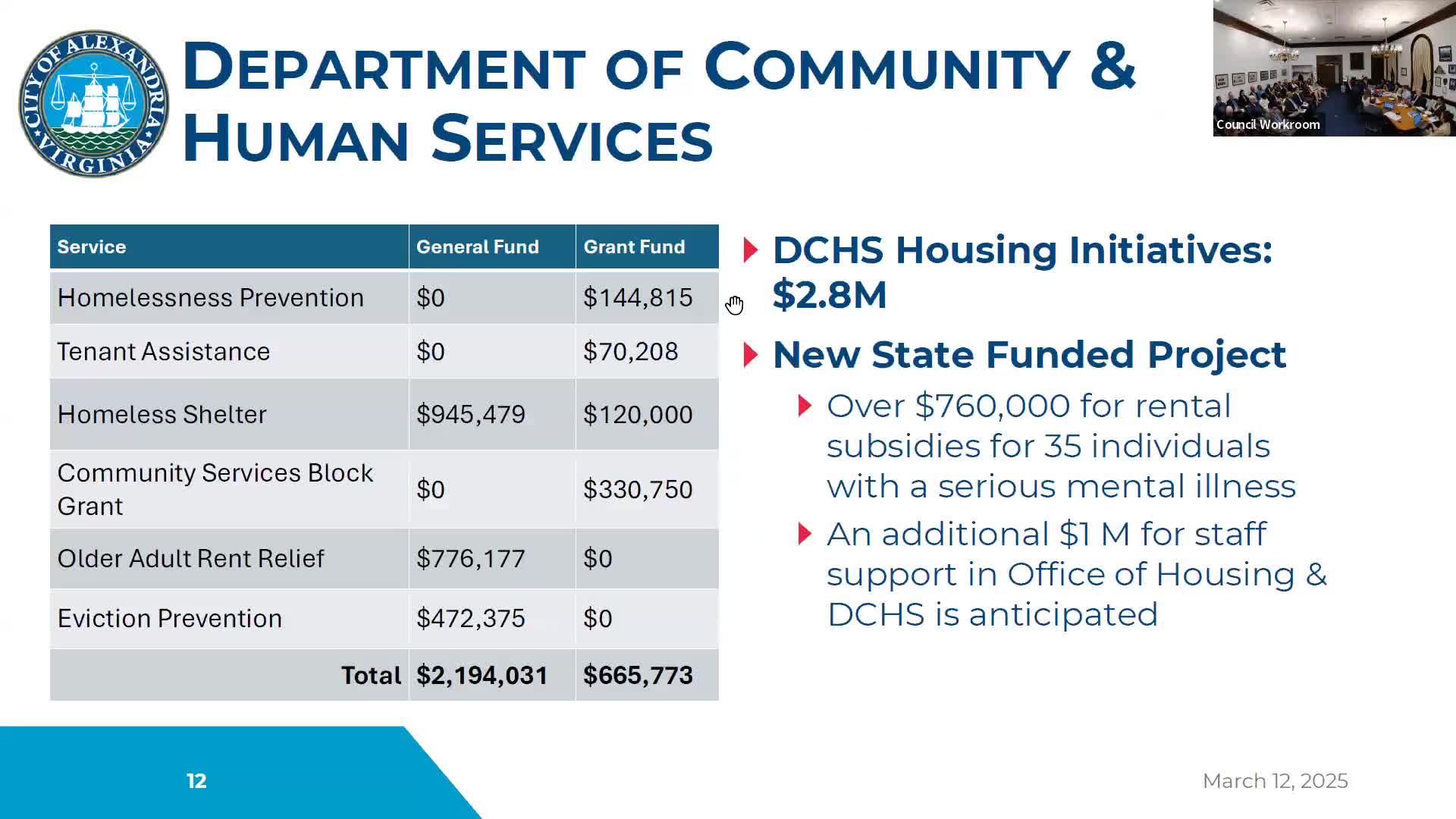
Garvey described a new, ongoing state partnership to fund permanent supportive housing for 35 people with serious mental illness. “This is a critical project for us,” Garvey said, and staff said the state funding will cover rent, move‑in supports and on‑site staffing in both the Office of Housing and DCHS. Staff added the state indicated it may expand the program if the city demonstrates early success.
Garvey and Deputy Director of the Office of Housing Eric Keeler said homelessness prevention programs remain a major component of the department’s work. Garvey reported the city’s homeless prevention assistance averages about $10,000 per individual; city shelter partnerships typically serve roughly 650–700 people per year and staff expect to serve about 750 this year. Officials did not provide a full, citywide waiting‑list figure for shelter during the session but said they would follow up with that information.
Food security and food hubs
Garvey said the city provides ongoing support for community food hubs and that the FY26 proposal would add $300,000 to fully support operations in addition to $200,000 provided previously. “You provided $200,000 ongoing for the food hubs, and what we're putting in the budget is the $300,000 additional to support them fully,” she said. Staff noted the West End food hub is heavily used and they are exploring whether moving some operations into the Pepper‑sited center could reduce rent costs, while recognizing possible tradeoffs in community reach.
Older adults, rent relief and eviction prevention
Garvey said the city’s older‑adult rent relief targets households at 30% of area median income (AMI). Councilmembers asked whether that threshold reflects current capacity; staff replied that raising the income cutoff would require more funds and said they would return data on need at different AMI levels and on rejection rates.
Neighborhood health, dental services and funding adjustments
Staff proposed $200,000 in one‑time funding for Neighborhood Health, bringing total city support for that partner to slightly more than $1 million for the year. Garvey and councilmembers discussed the city’s long‑running contract and partnerships with Northern Virginia Dental providers. City staff described low utilization at the regional dental program (50 Alexandria residents in 2024, 88 in 2023) and outlined logistical barriers including travel distance and the requirement that patients pay in advance at the specialty clinic. As part of budget adjustments, staff proposed reducing a $25,000 line item that had supported specialty dental services; staff and councilmembers asked for follow‑up analysis on how changes would affect access and whether local delivery (for example via Neighborhood Health or partnerships with dental schools) could bridge gaps.
Jail, mental health and recovery services
Garvey said the jail’s sober‑living unit has been closed since 2020 and was rarely filled when it operated; she said the FY26 proposal would fund the recovery court instead. DCHS staff reported mental‑health recruiting and retention efforts in 2024 reduced some turnover: senior therapist pay grades and hiring bonuses were adjusted, an “under‑hire” clinician‑in‑training approach was adopted, and state funding was securing ongoing support for some licensure costs and internships. Staff reported 14 senior‑therapist vacancies and said two hires were imminent.
Other items and next steps
Staff said they will return to the council with memos on shelter waiting lists, the cost to extend older‑adult rent relief to higher AMI thresholds, and options for local dental service delivery. Councilmembers suggested exploring partnerships with neighborhood clinics, dental schools and the Animal Welfare League (for temporary pet care tied to shelter access). Garvey and housing staff said studies have been done on mixed‑use shelter/housing models (Carpenter Shelter model) and that a broader planning discussion about the long‑term future of shelter facilities would require funding and multi‑partner coordination.
Ending
Councilmembers praised DCHS’s budget work but asked for more detail on waiting lists, cost‑to‑serve at different eligibility levels, and alternative delivery models for dental and food security services before final budget decisions.