Get Full Government Meeting Transcripts, Videos, & Alerts Forever!
Get email alerts on the Food Security topic
No spam. Unsubscribe anytime.
Grace Cafe outlines mobile meal program and asks city for continuing support
Summary
Grace Cafe described its mobile feeding program 'Grace on the Go,' which serves a mix of housed and unhoused residents across Danville; the director highlighted dignity‑based service, anonymous donation model, and asked the city for support (requested amount $2,500) to continue operations.
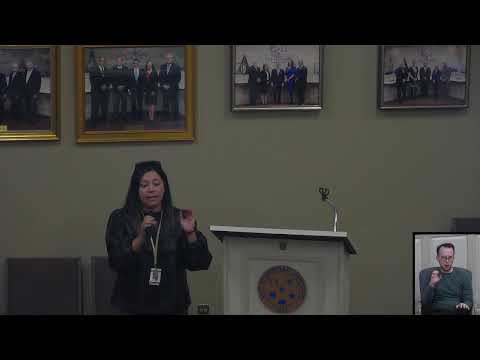
Jennifer Earl, executive director of Grace Cafe, reported that the nonprofit launched Grace on the Go and is now operating a mobile food trailer that serves regular customers and people experiencing homelessness across locations including Michael Smith Park and Baywood Homes. Earl said the operation emphasizes dignity—meals are available without posted prices and customers donate what they can into an anonymous donation box or by card.
Earl described a cross‑section of recipients and gave examples to illustrate the mix of needs among customers: people who regularly pick up multiple meals for family members, customers who donate modest sums, and unhoused residents who rely on the trailer for hot meals. She said Grace on the Go intentionally positions at specific community sites to reach people who lack transportation and that most clients pay what they can but 85% pay nothing or a small amount.
The director asked the commission to consider a $2,500 contribution (the pantry asked for different levels in the meeting packet); she explained that $100 provides about 10 meals and a $1,000 donation would cover roughly 100 healthy meals. Grace is volunteer‑led and posts its daily schedule on social media; Earl said all donations go to meals and operating needs.
Why it matters: The city would be funding direct local meal services that serve both the homebound and people without shelter, plus community members who depend on the program’s regular schedule and accessible locations.