Get Full Government Meeting Transcripts, Videos, & Alerts Forever!
Get email alerts on the Transportation Safety topic
No spam. Unsubscribe anytime.
Staff presents traffic-calming options; commission urges targeted measures and short-term warnings
Summary
City staff presented a range of traffic-calming measures — from lane-width changes and striping to roundabouts and raised crosswalks. Commissioners urged targeted, lower-cost steps for Aiken and South College, directed painting of stop bars and use of temporary flashing barricades; no formal ordinance or binding action was taken.
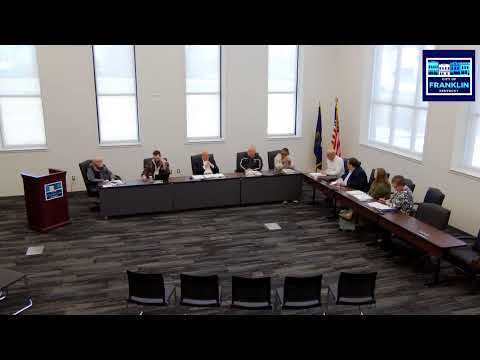
City staff presented a menu of traffic-calming measures at the Franklin City Commission meeting, describing options that range from simple striping to major roadway redesigns.
Staff (identified in the transcript as John) cited sources including the Federal Highway Administration, the National Association of City Transportation Officials and the American Association of State Highway and Transportation Officials. He discussed how lane width influences vehicle speed, recommended parallel parking and 8–11 foot parking spaces where appropriate, and described vertical and horizontal deflection measures such as speed tables, raised crosswalks, roundabouts and traffic islands. Staff also discussed mid-block crossings and the maintenance needs of landscaped traffic-calming features.
Commissioners and staff applied the guidance to local concerns raised about Aiken Avenue and South College, saying many of the larger roadway treatments would be disproportionate to traffic volumes in those neighborhoods. Several commissioners recommended lower-cost treatments for those corridors, including repainting stop bars, adding reflective or painted approach markings, and using mobile barricades with flashing lights to draw attention to changed patterns. The transcript records that the city has ordered mobile barricades with flashing lights and plans to use them to notify drivers before new stop sign operations begin; staff also said they will paint stop bars when weather permits.
No formal vote or ordinance followed; the item resulted in staff direction and continued study. Commissioners emphasized enforcement as part of the approach — including targeted enforcement details — and asked staff to prioritize low-cost, high-impact measures for the most-complained-about streets.