Get Full Government Meeting Transcripts, Videos, & Alerts Forever!
Get email alerts on the State Legislation topic
No spam. Unsubscribe anytime.
Alexandria delegation scores wins on WMATA funding, cemetery restoration; many bills await governor's action
Summary
City legislative staff reviewed outcomes from the shortened 2025 Virginia General Assembly session, noting wins on WMATA funding restoration, Douglas Cemetery restoration funding, local authority on animal-boarding inspections and a right-of-first-refusal bill for affordable housing; several items await gubernatorial action.
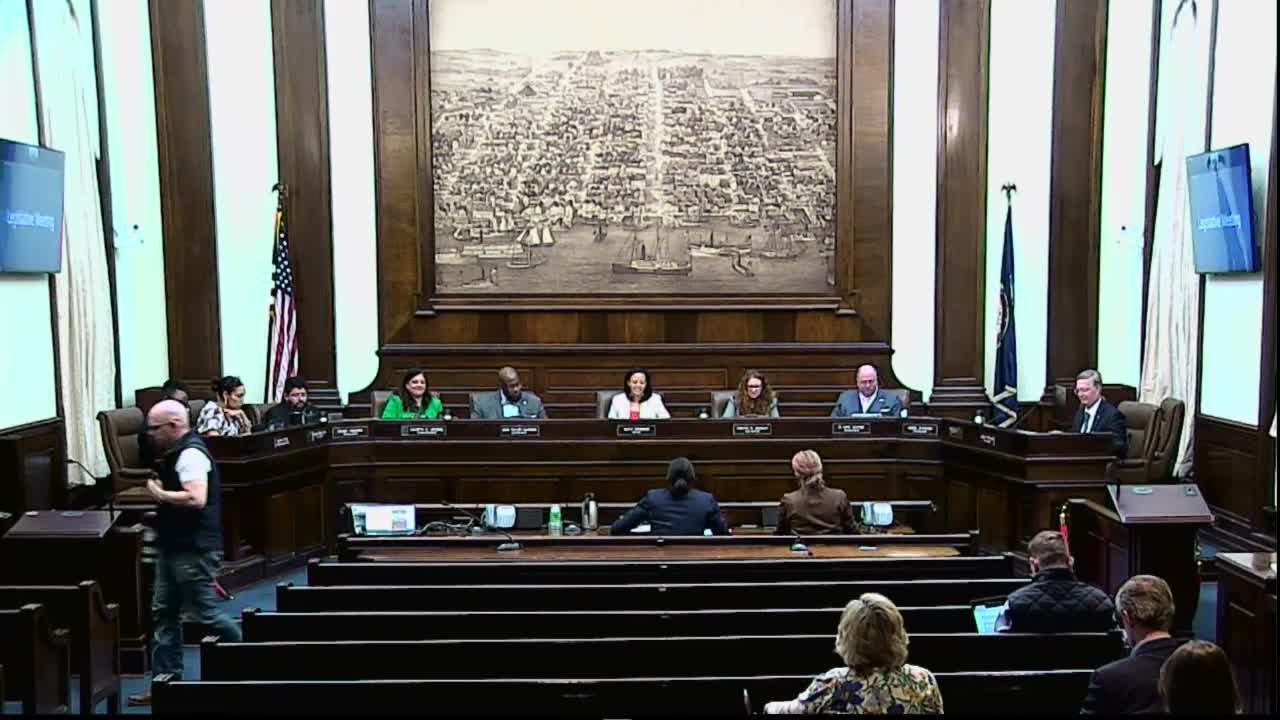
City legislative staff told the Alexandria City Council on March 11 that the 2025 Virginia General Assembly session produced mixed results for the city, with some budget wins and several high-profile items still awaiting action by the governor.
The update matters because the session produced changes that affect local authority, transportation funding and specific local projects — and because several measures will not take effect until after the governor signs or vetoes legislation later in March.
Deputy City Manager Alethea Perdau and legislative consultant Sarah Graham Taylor summarized the session. They said the session was shortened and accelerated by a statewide water crisis, and that big statewide debates (data centers, utility-scale solar, casinos) occupied legislative attention. Alexandria secured budget support for WMATA that restored funding the governor had proposed to cut, and the caboose (amendment) budget contains $500,000 for Douglas Cemetery restoration. The General Assembly also passed a bill to give localities authority to inspect animal boarding facilities and passed a right-of-first-refusal measure for certain affordable-housing properties; staff noted the latter passed with changes designed to improve the governor's chances of signing it after he vetoed a similar measure previously.
Staff described the session as a "caboose" budget year (amendments to the biennial budget) and said the governor has until March 24 to sign or veto measures; the reconvened session for veto and amendment action is April 2. Council members asked about automated-enforcement changes, license-plate-reader rules and campaign-finance reforms; staff summarized that automated traffic enforcement can now be retained by localities in a lockbox for pedestrian and bicycle safety projects but the Legislature restricted expansion of camera placement; license-plate-reader proposals were amended to impose data-retention guardrails and did not expand placement; and campaign-finance personal-use prohibitions advanced and await the governor's action. Staff said several constitutional amendments moved forward and must be approved again by the next legislature before reaching voters in 2026.
Staff also noted items that did not advance, including legalization or taxation of skill games, and that a proposed work group on state-local shared employees did not appear in the final budget. Council members pressed staff to prepare more granular briefings on license-plate reader changes and school construction funding mechanics; staff said they will return with targeted summaries and next steps.
Ending: Staff advised the council to watch March 24 (governor's deadline), April 2 (reconvened session), July 1 (effective date for most legislation) and to expect follow-up memos once the governor acts and staff finishes implementation reviews.