Get Full Government Meeting Transcripts, Videos, & Alerts Forever!
Get email alerts on the Housing topic
No spam. Unsubscribe anytime.
Alexandria staff outline Housing 2040 engagement, preservation and financing work through 2026
Summary
City housing staff presented a timeline and outreach summary for the Housing 2040 master plan, emphasizing preservation of aging units, deeper affordability targets, and a phased project list to guide 2025–26 actions.
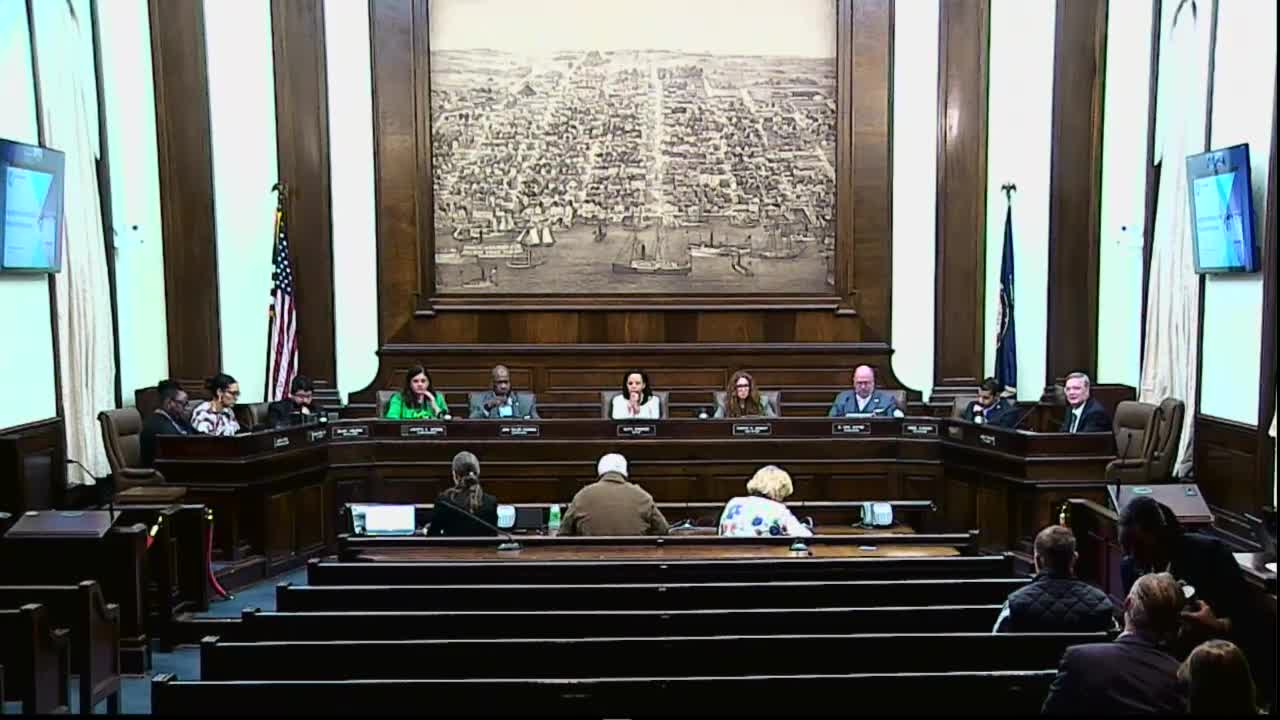
Alexandria housing staff told the City Council on March 11 that the Housing 2040 master-plan update will continue through 2025 with further public meetings, targeted project work and follow-up analysis through 2026.
The update matters because staff say the plan will set city priorities for preserving older and naturally affordable units, expanding deeper levels of affordability and identifying financing tools that can be deployed as opportunities arise.
Tamara Yovovich of the Office of Housing and Housing Director Helen McElveen described a public-engagement program that began in fall 2024 with a quantitative needs analysis. Staff mailed postcards to roughly 90,000 addresses and ran pop-up events, school sessions and translated outreach in Spanish, Amharic, Dari and Pashto. A draft of principles and goals will be shared for public feedback at a community meeting and open house on March 18 at Patrick Henry, staff said. A housing preservation panel is scheduled for April 29 at Charles Houston.
Staff summarized key findings from the needs analysis: roughly 21,000 renter and owner households with incomes up to 60% of area median income are spending over 30% of gross income on housing and related costs; about 13,000 units in common-interest communities are more than 40 years old; only about 9% of owner-occupied housing is held by households identifying as Black or African American despite that group being about 21% of the city population; and seniors (65+) have grown from roughly 9% of the population in 2010 to about 12% in 2022. Staff said market-rate production has tended to deliver one-bedroom units and that the city needs strategies to produce family-size rental housing and pathways to first-time homeownership.
Planned work through 2025–26 includes: evaluating financial tools and funding sources for deeper affordability; improving homeowner programs and preservation strategies for aging communities; piloting rental rights and resources; exploring “senior housing plus care” models; and updating the city’s affordable-housing contribution policies. Staff noted coordination with other city planning and health projects, and urged residents who cannot attend meetings to use an online comment form that will be translated and left open for several weeks.
Council members pressed staff on outreach metrics, targeted employer engagement and entitlement/permitting process reforms that could reduce development costs. Staff said they would return with more detailed participation counts and noted that preservation and many financing decisions are opportunity-driven and will require close coordination with regional partners.
The Office of Housing asked the council to encourage community participation at upcoming meetings and to expect draft recommendations this late spring for additional comment and refinement.
Ending: Staff said the Housing 2040 process is intended to produce a plan document and interactive dashboard by late 2025, with several project-level efforts stretching into 2026 for implementation and funding alignment.