Get Full Government Meeting Transcripts, Videos, & Alerts Forever!
Get email alerts on the Fire Safety topic
No spam. Unsubscribe anytime.
Norfolk Fire Rescue details spike in house fires, expands smoke-detector outreach
Summary
Norfolk Fire Rescue briefed the City Council on a recent uptick in residential fires, described prevention and inspection work, and outlined expanded smoke-detector distribution and education efforts.
Norfolk Fire Rescue on Tuesday told the City Council it has seen an uncommon recent increase in house fires and is expanding public-education and smoke-detector efforts to reduce risk.
Fire Marshal Damon Langley, speaking at the council work session, said the department has faced “a series of fires resulting in loss of lives” since 2025 and called the string of incidents “a really big…deal.” He described the department’s prevention pillars as public education, enforcement of fire codes, fire investigation and training for both personnel and residents.
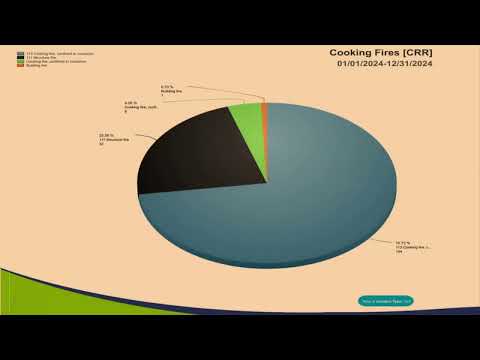
The presentation said cooking-related incidents account for the large majority of home fires the department responds to — the slide Langley cited listed just over 70 percent and he said the real figure is “closer to 80 percent” depending on how 911 call details and on-scene findings align.
Battalion Chief and Public Information Officer Glenn Williams described the city’s long-running free smoke-detector program and recent spikes in demand. “Smoke detectors save lives and every home has access to a free smoke detector,” Williams said. He said requests for free detectors rose from an average of one or two per week to roughly six or seven per day after recent fatal fires and media coverage.
Williams said last year Norfolk Fire Rescue installed 294 smoke detectors through targeted weekend door‑to‑door outreach and partnerships with the American Red Cross; crews also leave door tags with contact options when residents are not home. He said the program’s intake is handled via the city website, the Norfolk Cares hotline or the city app, and stations coordinate installation and follow-up.
Langley described code enforcement and on‑scene procedures following a fire: the fire marshal’s office investigates origin and cause, applies placards or red tags when a structure is unsafe, and coordinates with Healthy Neighborhoods and code enforcement to manage re‑entry and recovery. He explained the difference between a red tag (isolated to an appliance) and a placard (building unsafe for re‑occupancy) and said only Healthy Neighborhoods or code enforcement can remove a placard.
Council members and residents asked about staffing and outreach. Langley and Williams said the department has a single dedicated public educator, Michelle Morgan, and that department staff augment her school and civic‑league visits by sending apparatus and crews; they noted those apparatus remain available for emergency response, which constrains the duration of outreach events. Acting Deputy Chief Drew Savage was introduced as departing April 29 after accepting a fire chief position elsewhere.
Council members also pressed for coordination after major fires to speed short-term assistance for displaced residents. Langley said the Red Cross is contacted for every incident where occupants need help but acknowledged there can be a two‑day period before full Red Cross engagement and noted the Red Cross provides short‑term vouchers and immediate assistance rather than long‑term housing.
The department closed by noting it responded to more than 50,000 calls last year and recorded more than 20,000 community engagement contacts, and it asked the council to consider more resources for public education staff to expand prevention work.