Get Full Government Meeting Transcripts, Videos, & Alerts Forever!
Get email alerts on the Public Safety Retail Theft topic
No spam. Unsubscribe anytime.
Norfolk council adopts local ordinance adding new retail-theft offense and signals diversion focus
Summary
The City Council adopted an ordinance creating a new section (29-11) of the Norfolk City Code targeting concealing or taking possession of merchandise and related acts; council members emphasized tools for small businesses and said they will pursue diversion and restorative options to avoid criminalizing poverty.
Norfolk City Council on May 20 adopted an ordinance amending Section 29 of the Norfolk City Code to add a new Section 29-11 defining and criminalizing certain forms of retail theft, including concealing merchandise, altering price tags and “counseling” others to commit such acts.
The measure passed on a recorded voice vote with Councilmembers Clanton, Doyle, Johnson, McGee, Page, Smigiel, Thomas and Mayor Alexander voting aye. Councilmembers framed the ordinance as a local enforcement tool for retailers and neighborhood businesses while raising concerns about disproportionate impacts on youth and low-income residents.
Supporters and some council members said retail theft losses threaten small businesses and neighborhood stores; Councilmember Page and others described conversations with business owners and civic leagues who reported incidents that threaten a store’s viability. Councilmember Doyle cited a presentation by Norfolk Police Chief Mark Talbot showing a rise in some larceny categories and said that data informed her “aye” vote.
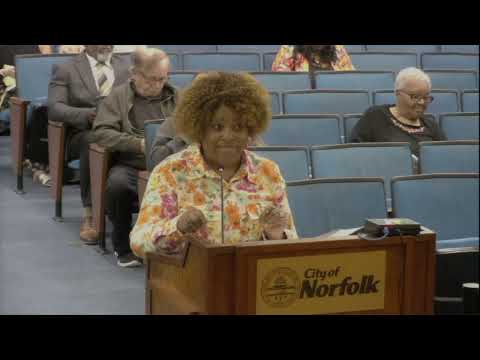
Several speakers, including public commenters Alton Robinson and Barrett Hicks, urged caution to avoid criminalizing poverty. Councilmembers and the sponsor said they intend to pair the ordinance with diversion options, community service alternatives and restorative justice practices “where appropriate,” and to monitor enforcement so it does not disproportionately affect youth or marginalized communities.
The ordinance was presented and read by the city clerk; council dispensed with the charter requirement for reading the ordinance twice and adopted it with immediate effect. The record shows unanimous council support at the vote recorded on the ordinance.
Council debate and public comment stressed two distinct points: the formal adoption of a new local criminal offense (formal action) and continuing commitments by council members to pursue or study noncriminal alternatives and supports (direction/discussion). The transcript indicates councilmembers asked staff to explore or implement diversion and community-based responses, but those follow-up steps were discussed rather than enacted as separate formal motions at this meeting.
What’s next: enforcement will be carried out under the newly adopted city code section and council members signaled follow-up work on diversion, community supports and monitoring of enforcement outcomes.