Get Full Government Meeting Transcripts, Videos, & Alerts Forever!
Get email alerts on the Subdivision topic
No spam. Unsubscribe anytime.
Stratford planning commission hears petition for three‑lot subdivision, waiver request for underground utilities
Summary
At a public hearing, a petitioner sought approval to subdivide a parcel on James On Road into three lots, ask for a waiver of underground utilities and described wetlands, septic and sewer requirements; staff recommended conditions and commissioners debated the utility waiver but the transcript does not record a final vote.
The Town of Stratford Planning Commission on the evening the petition was heard considered a request to subdivide a parcel on James On Road into three lots, allow rehabilitation of an existing dwelling and construction of two new single‑family homes, and grant a waiver of the town’s underground‑utilities requirement.
The petition, presented by attorney Barry Knott, included a wetlands approval dated Dec. 20, 2024, and revised drainage calculations the town engineer had requested. Knott told the commission the petitioner would rehabilitate the existing house on the middle lot, build two new houses on the other lots, properly abandon and crush the existing well and septic as required, and record a restriction that the property “would never be used for multifamily, so‑called affordable housing.”
The matter drew detailed staff review. Town staff and the town engineer, John Casey, had provided comments and, according to documents submitted at the hearing, Casey indicated by email that the hydraulic and drainage information the engineer requested had been supplied. Staff recommended standard conditions including compliance with the inland wetlands permit dated Dec. 20, 2024; WPCA approval for any sewer extension; adherence to erosion‑ and sediment‑control measures; and posting of subdivision bonds or lot‑specific bonds as determined by the town engineer.
Commission discussion centered on a request to waive the requirement to place utilities underground for the three lots. Knott said undergrounding made little sense given existing overhead wires and that the earlier, related approval for eight lots had included a waiver. Commissioner questions focused on which regulatory criteria for a waiver applied and whether the commission should update outdated subdivision regulations. Manny Silva, the applicant’s civil engineer, pointed out an existing fire hydrant near the corner of the site and said the hydrant the fire marshal initially requested was farther away than needed.
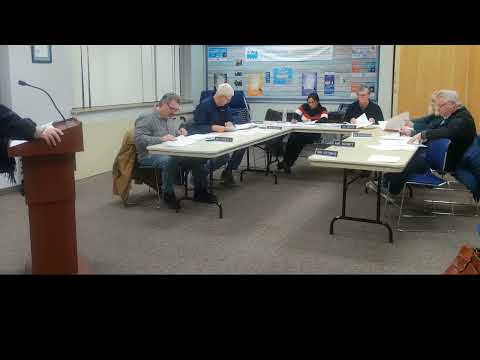
Commissioners noted that a sidewalk waiver would require four affirmative votes and that only four members were present for this hearing, because a regular member was absent and an alternate (Ed Kingston) was seated. The vice chairman advised that if any commissioner intended to oppose the underground‑utilities waiver, the commission could table that portion of the application to the next meeting when a full five‑member quorum was expected.
A motion to grant the waiver for underground utilities was made and seconded during the public hearing; the transcript records the motion and a second but does not record the roll‑call or the final tally. Separately, the petitioner requested and moved for a 90‑day extension to file final materials; the transcript captures the motion but does not record a final vote on that extension.
Beyond the utility waiver, staff reminded the commission that any approvals should include the conditions from the wetlands permit, WPCA requirements for sewer connections, erosion‑control conditions, and the posting of bonds if lots are sold separately. Knott emphasized that all administrative comments had been addressed in revised submissions made the morning of the hearing.
The hearing included extended discussion of broader planning policy: staff referred to the town’s Plan of Conservation and Development (POCD), flood hazard areas and an area identified in state natural‑diversity mapping; a staff member advised the commission to consider environmental constraints and the POCD’s guidance when forming a recommendation to the zoning commission, particularly because the application may involve 8‑30g review at the zoning stage. The record shows several residents and neighborhood outreach efforts were discussed but the transcript contains no new formal appeals or written objections introduced at the hearing.
Because the transcript does not record a final roll‑call on the waiver or the 90‑day extension, the record before the commission at the close of this hearing consisted of the petitioner’s revised engineering submissions, the wetlands permit dated Dec. 20, 2024, staff recommended standard conditions, and a motion on the underground‑utilities waiver that had been made and seconded but for which the outcome is not specified in the transcript.