Get Full Government Meeting Transcripts, Videos, & Alerts Forever!
Get email alerts on the Community Services Housing topic
No spam. Unsubscribe anytime.
Historic board approves In Our Own Voices addition with archaeological notification condition
Summary
The Albany City Historic Resources Board approved a two‑story rear addition for In Our Own Voices at 245–247 (project 586) with a condition requiring applicant notification to the city if certain archaeological features are uncovered during construction; nearby residents raised concerns about use and access.
The Albany City Historic Resources Board voted unanimously to approve a two‑story, roughly 2,300‑square‑foot rear addition for In Our Own Voices at 245–247 (project listed as 586), subject to a stipulation that the applicant notify the city if construction uncovers human remains, historic foundations or wells, or evidence of railroad or canal infrastructure.
Architect Danny Sanders, of Harris Sanders Architects, and civil engineer Dan Hirschberg described the project as a two‑story wood‑frame addition to the rear of the existing buildings, with an elevator to provide handicap access, interior circulation linking to a community room, a pantry, counseling offices and four apartments (studio and one‑bedroom units) intended for people who receive services from In Our Own Voices.
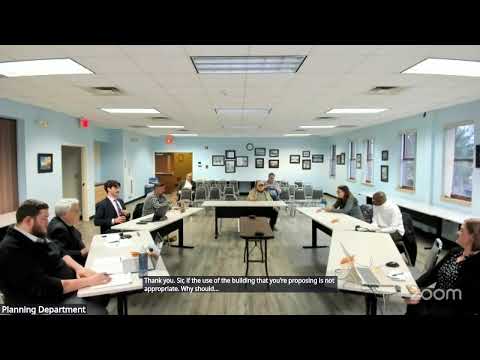
Members of the public raised questions about whether the new units or spaces would operate as a shelter and about shared access through a gate and fence between neighboring properties. Dr. Michael Murski, of 210 Lancaster Street, said he has lived adjacent to the site for decades and that neighbors had concerns circulating about the possibility the building would become a homeless shelter. Board members clarified on the record that the Historic Resources Board reviews architectural appropriateness in the historic district and does not review or approve building use or operations.
City staff reported that the project is a minor application circulated to city departments and does not proceed to the planning board. Commissioner Garrity had emailed staff that, given the limited amount of ground disturbance, a full archaeological survey is not required; she suggested a condition requiring notification to the city if construction reveals human remains, unusual foundations, wells or historic industrial features. The board attached that notification stipulation as a condition of approval.
A commissioner moved to approve the application with the archaeological notification stipulation as read by staff; another commissioner seconded. The motion passed by unanimous voice vote. The board instructed neighbors with questions about building use or property-access easements to contact In Our Own Voices' executive director or the nonprofit directly for clarification.