Get Full Government Meeting Transcripts, Videos, & Alerts Forever!
Get email alerts on the Library Facilities Funding topic
No spam. Unsubscribe anytime.
Rowlett library advisory board urges planning for larger facility as federal IMLS funding is uncertain
Summary
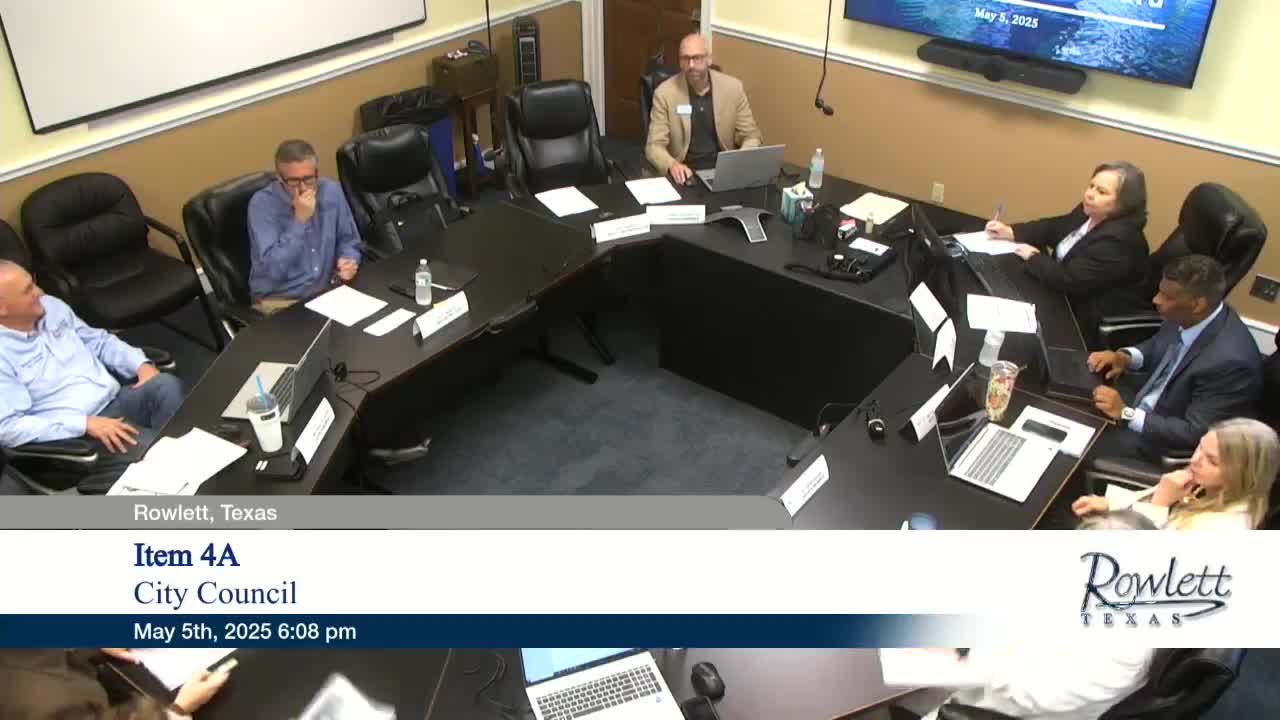
The Rowlett Library Advisory Board presented its annual report to the Rowlett City Council on May 5, reporting increasing library use and program growth and asking to be included in future facility planning as the city evaluates municipal complex options.
The Rowlett Library Advisory Board presented its annual report to the Rowlett City Council on May 5, reporting increasing library use and program growth and asking to be included in future facility planning as the city evaluates municipal complex options.
The board said physical circulation and visits rose in fiscal 2024, while digital checkouts climbed 14 percent, and requested a follow-up meeting in September to discuss library planning and branding. The library’s director also warned an executive order affecting the federal Institute of Museum and Library Services could reduce future grant and service funding for Texas libraries.
Erin Decker, chair of the Library Advisory Board, told council members the board continues outreach and benchmarking with nearby systems and wants “to be a part as we are exploring how this new library comes to be” and to meet again in September to discuss planning and design.
Laura, director of library services, said the library won the Achievement of Excellence Award from the Texas Municipal Library Directors Association for the 20th consecutive year and reported usage figures: approximately 167,000 physical checkouts and 67,000 digital checkouts in the prior year. She said the library averaged about 559 weekly summer-reading submissions and ran 79 summer programs with 4,737 attendees.
“The digital stuff, I think it is people are going away somewhat from books. We also added an additional ebook service,” Laura said, noting broader adoption of ebooks and audiobooks and one-on-one staff help for patrons using devices.
Board members and staff highlighted children’s programming as a driver of traffic, including story times, STEAM Squad and a reading-challenge program aimed at encouraging parents to read to pre-kindergarten children. Erin Decker said the board benchmarks other libraries and visited Frisco’s 158,000-square-foot facility as a reference point; by comparison, Rowlett’s facility is roughly 12,000 square feet.
On facilities, Decker reminded council of a 2020 facilities evaluation and the earlier architect recommendation for a phased approach. She said an initial concept based on full build-out exceeded council comfort, and a later, population-based proposal reduced the recommended size to about 40,000 square feet.
Council members discussed possible reuse of a city police/court building as a library site. City staff cautioned the municipal-complex planning process is still refining design documents and that a comprehensive conversation tying library space planning to the municipal-complex timeline will likely occur once design documents are brought to council in the coming months.
On federal funding, Laura described an executive order issued March 14 that named the Institute of Museum and Library Services among several federal entities targeted for elimination, which prompted IMLS staff furloughs and halted grants. She said the Texas State Library and Archives Commission (TSLAC) receives federal funding (about $11 million annually) that it passes to Texas libraries and provides services such as the interlibrary loan courier and consortium software, TechShare databases, and summer reading materials.
“We receive money from TSLAC in four different ways: through grant opportunities, through our interlibrary loan program, our TechShare databases, and summer reading program materials,” Laura said. She said Rowlett is “currently spending down two grants”: a Texas Reads grant for summer reading performers and supplies ($10,000) and a special projects grant for a Job Start program ($24,000). She also said the library had purchased about $20,000 in laptops tied to the Job Start grant and initially paused grant spending until TSLAC could confirm reimbursements.
Laura said the city received encouraging news May 2 that TSLAC would honor the two current grants, but that future funding remains uncertain while litigation proceeds. “We received word on May 2 that a narrow temporary restraining order was issued,” she said, adding that plaintiffs and defendants were ordered to file a joint status report by May 6.
Laura explained operational impacts if federal funding is reduced: the interlibrary loan courier and software and TechShare databases are subsidized through state and federal funding. She said the courier reimbursement roughly covers courier costs (city staff estimated the courier runs about $2,000 annually with a reimbursement near $1,800), and losing that support could require either local funding or a new consortium arrangement.
Council members asked about program take-up rates; Laura said the Job Start program began in January and had served “around 20 people so far” with plans to continue using the laptops for multiple programs. On timing for facility planning, staff said municipal-complex design documents are advancing and that a focused library planning conversation is likely six months to a year away once the municipal-complex process advances.
The advisory board’s presentation requested council involvement in planning and reiterated the board’s desire to remain engaged in design and policy discussions. Council members encouraged the board to remain involved and said staff should return with more detailed timelines and cost data when the municipal-complex work advances.
Ending: Council did not take any formal action at the May 5 work session; the board will remain on council’s agenda for future discussion and the library will continue to monitor legal developments affecting IMLS and TSLAC funding.