Get Full Government Meeting Transcripts, Videos, & Alerts Forever!
Get email alerts on the Cdbg Consolidated Plan topic
No spam. Unsubscribe anytime.
Rowlett staff previews CDBG five-year plan; council gives direction to proceed
Summary
City staff and consultant Joe Carroll reviewed the Community Development Block Grant (CDBG) program, eligibility rules and proposed five-year priorities. Council signaled support to move forward with developing a consolidated plan and required public hearings; staff outlined spending rules, LMI thresholds and procurement constraints.
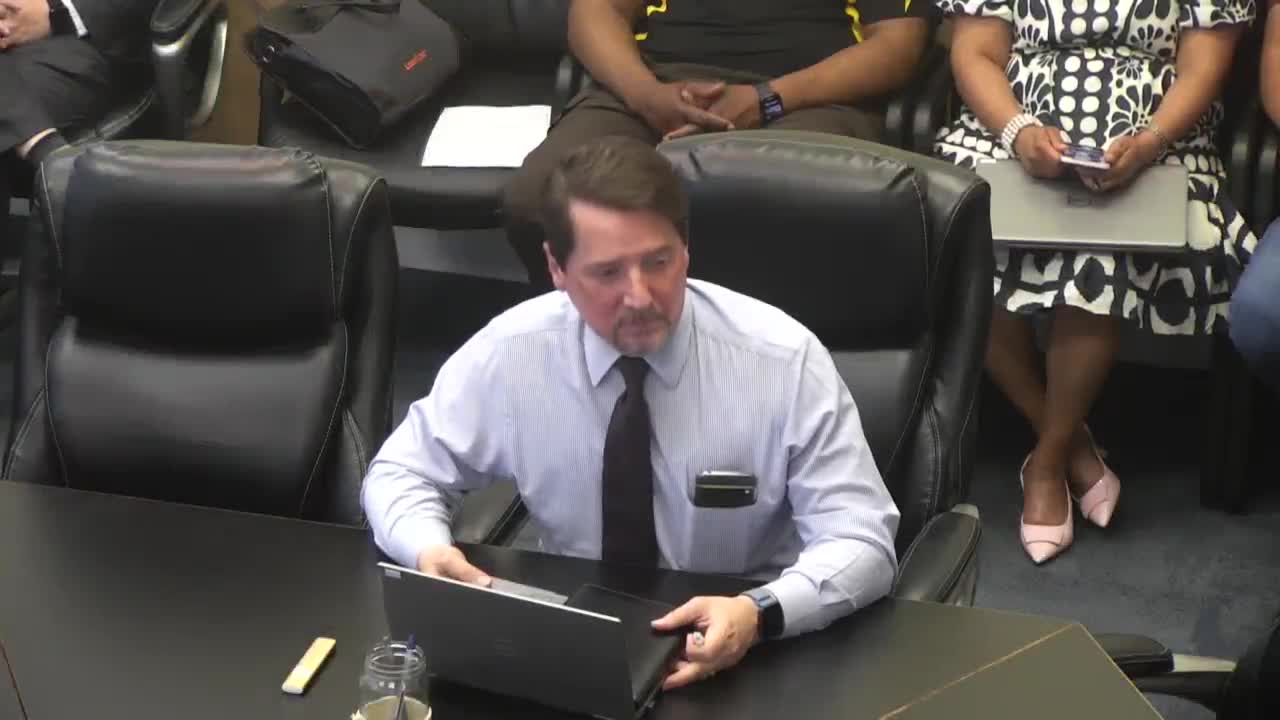
City staff and a contracted consultant briefed the Rowlett City Council on March 31 about the Community Development Block Grant (CDBG) five-year consolidated plan update required by the U.S. Department of Housing and Urban Development. Joe Carroll, the citys CDBG consultant, reviewed eligible activities, income thresholds and the process that will lead to a required plan submission in mid‑August.
Carroll summarized the program—ramework and constraints: CDBG funds must serve low‑ and moderate‑income (LMI) households or LMI areas, or meet other HUD national objectives such as slum and blight removal or urgent community development needs. For entitlement jurisdictions that lack census tracts with 51 percent LMI populations, HUD applies regional exception rules; staff said the Dallas County exception reduces the LMI area threshold for Rowlett to roughly 34 percent. Carroll listed typical program caps: administration (up to 20 percent), public services (up to 15 percent) and other eligible activities (about 65 percent).
Council and staff reviewed how Rowlett has used CDBG dollars in recent program years: food pantry support and transportation assistance, park and sidewalk improvements, police overtime downtown, Salvation Army rental assistance and alley projects. Carroll noted the city has sometimes combined multiple years of grant funding to finance larger capital projects; HUD generally requires that grant funds be spent within about five years from the date the grant is awarded.
Procurement and implementation constraints were emphasized. Carroll said CDBG spending must follow federal procurement rules, though an in-house option (force account) is available where properly documented. Staff noted the small size of the city—oxed annual grant limits the types of projects that are cost‑effective under CDBG (for example, homebuyer assistance programs may not be feasible given local house prices and income levels).
Council asked about specific candidate projects and outreach. Staff displayed an alley priority list with preliminary PCI (pavement condition index) rankings; Dana Drive was identified as an upcoming project and staff said the Dana Drive alley project package includes about $1,520,000 in additional city funds to make the work possible. Councilors suggested targeted outreach for the public hearing — for example, direct notices to households with alley frontage and outreach to Quail Middle School parents — and staff said the public hearing required by HUD can be scheduled during a council meeting or as a separate event.
Carroll and staff laid out the next steps and timeline: staff will collect data, prepare a draft consolidated plan and hold public hearings; council approval of the five‑year plan is expected in August so staff can meet an August submission deadline to HUD. In the work session, the council voiced no objections to proceeding with the proposed plan development and to scheduling the required public hearings; no formal ordinance or binding vote was taken at the meeting.
Ending: Staff will prepare the draft consolidated plan, conduct public outreach and hearings (staff recommended multiple outreach channels and targeted notices for properties directly affected), and return to council for final approval and submission to HUD, with an anticipated council approval in August and submission by the program deadline.