Get Full Government Meeting Transcripts, Videos, & Alerts Forever!
Get email alerts on the Vape Regulation topic
No spam. Unsubscribe anytime.
Commission discusses vape-shop rules; staff directed to revise draft for public hearing
Summary
Planning commissioners reviewed a proposed ordinance to regulate vape shops in the Unified Development Code, debated distance, conditional-use and sign/licensing provisions, and directed staff to produce a cleaned draft for attorney review and a future public hearing.
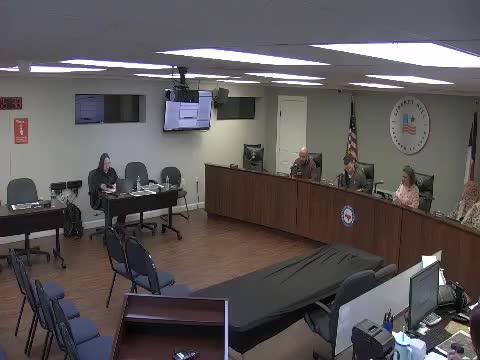
The Liberty Hill Planning and Zoning Commission discussed a proposed ordinance to regulate vape shops in the City of Liberty Hill Unified Development Code and asked staff to produce a cleaned-up draft for attorney review and public hearing.
Mackenzie, a planning staff member, reviewed the draft and said that most existing vape shops are in the C-3 zoning district, with one downtown exception. She told commissioners the draft evaluates whether distance separations or a conditional-use permit (CUP) approach would create nonconformities and that “none of them are within a thousand feet of each other at this time” based on a preliminary map.
Commissioners and staff described two recurring legal concerns from the city attorney: licensing and sign restrictions. Staff relayed that the attorney advised the commission that “licensing regulations” and some sign limitations were “sticky points” because licensing may be outside the commission’s scope and signs raise First Amendment issues. Commissioners discussed distance buffers — 1,000 feet versus 500 feet — and the risk that an overly large buffer might preclude any new businesses.
Several commissioners said they favored restrictions on advertising and sign appearances while avoiding overreach on licensing. Commissioners also discussed grandfathering existing businesses if a new ordinance imposes distance or location limits and noted state law implications; Mackenzie referenced a recent state law (referred to in the meeting as “Senate Bill 929”) that could require compensation if a use is prohibited without a compliance period.
The commission asked staff and commissioner Harlan to incorporate attorney comments into a cleaned draft, have the city attorney review the revised text, and place the ordinance on a future agenda for a public hearing after required public notices. Staff said noticing might take about a month to accommodate newspaper advertisement and business notification. No formal regulatory action was adopted at this meeting; the commission’s direction was to revise and seek legal review before scheduling a public hearing.