
Liberty Hill youth leagues capping rosters, turning players away as city lacks fields and maintenance capacity
Get AI-powered insights, summaries, and transcripts
Sign Up Free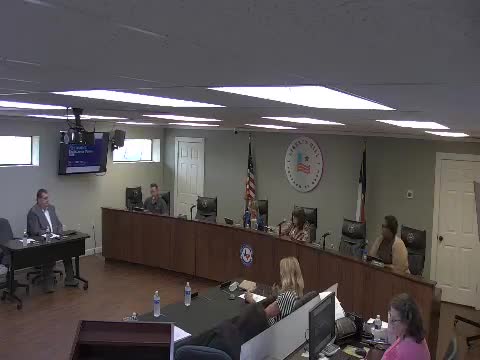
Summary
At a Liberty Hill City Council workshop meeting, Parks and Recreation staff, board members and league representatives said local youth sports programs are capping registrations and turning players away because the city lacks enough fields and the maintenance capacity to support growing demand.
At a Liberty Hill City Council workshop meeting, Parks and Recreation staff, board members and league representatives said local youth sports programs are capping registrations and turning players away because the city lacks enough fields and the maintenance capacity to support growing demand.
Parks and Recreation staff member Katie said the city heard consistent reports from five independent youth leagues that field space and upkeep are the primary constraints. "They have a lot of needs, and they're vocal about those needs. Mostly needing field space, needing help with maintenance. They're having to turn kids away because they don't have adequate facilities," Katie said.
The shortage reflects several factors: strong registration growth before 2023 in some programs, heavy reliance on Liberty Hill Independent School District (LHISD) facilities, and limited city-owned playing space. Nicole Bauer, chair of the Parks and Recreation Board, said league leaders gave a conservative estimate that Liberty Hill would need at least 12 total baseball fields and four total softball fields within five years to meet demand. "They expect that they're going to need at least 12 new 12 total baseball fields and at least 4 total softball fields to satisfy the demands of the community," Bauer said.
League structure and current use
Speakers described five primary recreation tracks: baseball/softball, basketball, football and cheer, lacrosse and youth recreational soccer. Bauer said baseball fields used to support higher registrations but lost players and volunteer coaches when teams could not get enough practice time. Softball currently uses one field at Lions Foundation Park and one at Liberty Hill Middle School; baseball teams primarily practice at fields adjacent to the elementary school under an historical arrangement. Katie noted the city currently owns only the soccer fields at City Park and has a maintenance contract with the youth soccer association for those fields. "I just wanted to make sure that y'all were aware that we don't own anything other than the soccer fields at City Park," she said.
Football and cheer programs have split into separate Liberty Hill and Legacy Ranch leagues because of increased interest; both reported wait lists for tackle teams. Bauer said Legacy Ranch had registration increases into 2025 and that one league reported 27 children on a wait list at the time of the workshop. Lacrosse, established locally in 2023 as a 501(c)(3), is growing and currently relies on open grass at Lions Foundation Park and limited spring access to school facilities. Recreational soccer uses five fields at City Park that are painted to create up to 10 playing areas; leagues report capping registrants at multiple age groups.
Field conditions and amenities
Speakers emphasized the need for lighting, more durable surfaces and parking. Several football practice fields cited by presenters lack lights; one field at Santa Rita Middle School is a grass practice field without lights, creating scheduling limitations in fall/winter. Bauer and others also identified the need for permanent field lighting at City Park so teams can practice later in the evening. The council packet referenced City Park as the largest functional park at about 23.1 acres; other parks named included Wetzel Park (0.9 acres), Veterans Memorial Park (0.2 acres) and a Mansions Parkland parcel of about 52 acres that is protected by habitat constraints and therefore not suitable for field construction.
Short-term projects and master plan
Parks staff said a City Park mini master plan with eight phases was completed last year but none of the phases are currently funded. Staff reported they are starting phase 1 (parking-lot repaving) and hope to begin design work this summer. Staff also said they plan to convert one soccer field to a full 11-by-11 field to accommodate older youth and lacrosse, and to construct a lacrosse practice wall beside the basketball court. Katie said the city will update City Park parking this summer.
Potential funding and revenue
Richard, recreation and facilities supervisor, outlined several funding avenues: developer dedication or cash-in-lieu, city budget allocations, state grant programs and the hotel occupancy tax. He said the Texas Parks and Wildlife local parks grant is being pursued and that the hotel occupancy tax (HOT) could support tourism-oriented recreation facilities. "The idea behind it though is to promote tourism," Richard said, adding that state and local collections together can create a funding stream for sports facilities and tournaments.
Volunteer coaches and potential tournament revenue were also part of the discussion. Coach Travis Tabor described how some coaches formed select teams after leaving the rec league because practice time was insufficient. He estimated revenue potential from tournaments: "A conservative estimate of revenue at one of these tournaments would be approximately $80,000 per weekend," Tabor said, referencing entrance fees and gate fees (not including concessions).
Constraints and dependencies
Speakers repeatedly noted the community's reliance on LHISD facilities and warned that school-district rental increases would further pressure leagues. Bauer and Katie said rising rental costs at LHISD could push youth organizations to raise fees for parents. Council members and board members also flagged uncertainty about funding sources: the Parks-in-Lieu fund is not full, a recent Texas Parks and Wildlife grant application just missed selection, and one council member referenced an unspecified state bill affecting parkland dedication or fees in lieu as a potential risk to future park funding.
Next steps and council context
Staff said they will continue pursuing grants, design work for phase 1 and the parking improvements, and that a resolution on the council agenda would seek to use Mansions Parkland as a grant match for this year's Texas Parks and Wildlife application. There was no formal council vote on policy changes or new bonding during the workshop; presenters asked council members to consider supporting parks in future budget and development discussions.
The presentation closed after roughly a half-hour of discussion. City staff and the Parks and Recreation Board recommended pursuing a mix of short-term improvements and longer-term planning to expand field capacity, increase maintenance support and explore revenue options such as tournament hosting and the hotel occupancy tax.