Get Full Government Meeting Transcripts, Videos, & Alerts Forever!
Get email alerts on the Historic Preservation topic
No spam. Unsubscribe anytime.
City hears options to preserve Bryson Stagecoach Stop on recently acquired Monroe Land property
Summary
Presenters told the Liberty Hill City Council workshop that the Bryson Stagecoach Stop — a 19th‑century building on land the city acquired Dec. 31 — is on a state historical marker and the National Register, needs repairs, and several preservation and ownership options are under consideration.
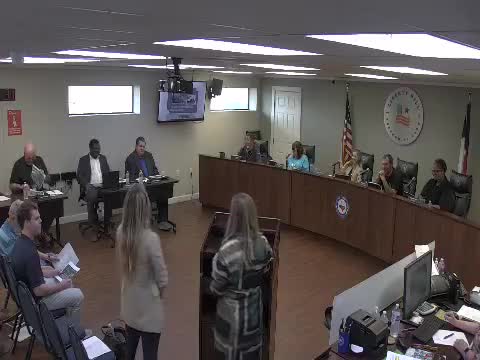
Liberty Hill City Council members heard a presentation on the Bryson Stagecoach Stop and the future of the Monroe Land property during the Oct. 12 city council workshop. Amy Reed and Paul Jensen of Pool Partners presented options for preserving the 19th‑century structure, which sits just east of Liberty Hill High School and near Glad Tidings Church, and described the building as the only property in the city with a state historical marker and listed on the National Register of Historic Places.
The presenters said the city acquired the land on Dec. 31 and that the structure is in “desperate need of repair.” Amy Reed summarized the group’s objectives: “We want to do something to preserve it,” and asked for community input on possible paths, including donating the building to the Chamber of Commerce, donating it to the city, transferring it to the Liberty Hill Development Foundation, co‑ownership arrangements, or relocating the building if required.
Representatives of the Liberty Hill Development Foundation said the foundation is willing to work with the city but does not currently have funds to pay for substantial rehabilitation. “Our foundation has no money … but we are interested in working with them and maintaining the historic significance of it,” a foundation board member said.
Local historian and community members who spoke at the workshop described the building’s origins and local significance. Presenters and commenters noted that moving or substantially altering the structure could remove it from the National Register; council discussion referenced the city’s comprehensive plan and plan‑unit‑development (PUD) language as the mechanisms through which the building’s protection could be specified in zoning approvals.
Council and attendees noted that a zoning application (a PUD or C‑3 zoning) is already with the planning department; presenters said they will proceed through planning and zoning steps and welcome the city’s input on wording to protect the Bryson Stagecoach Stop specifically. No formal council action or vote was taken at the workshop; the item remained a discussion and planning matter.
Background details offered at the workshop included that the structure was built in the early 1850s by John and Amelia Bryson in a dog‑trot style, that other nearby buildings on the former Fort Tumbleweed site were later additions and in poor condition, and that the National Register and state historical marker status are considerations in deciding whether to relocate or alter the building. Attendees encouraged preservation and pledged partnership where possible; no funding commitments were made during the meeting.