Get Full Government Meeting Transcripts, Videos, & Alerts Forever!
Get email alerts on the Land Use topic
No spam. Unsubscribe anytime.
Council approves zoning restrictions for vape shops, including 1,000‑foot buffer from sensitive sites
Summary
The council adopted zoning amendments that define vape shops, restrict them in residential and public‑institution zones, and include a 1,000‑foot separation from schools, parks and other sensitive areas; C‑1 and C‑2 locations will require conditional use permits.
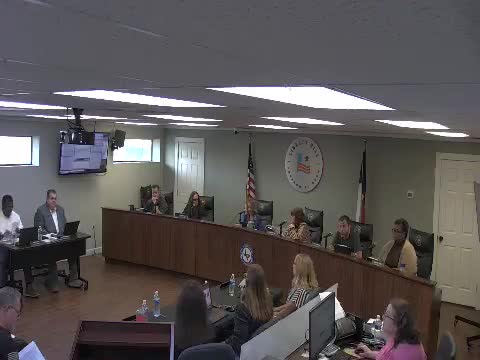
City Council on April 23 approved a zoning amendment aimed at regulating vape shops within the City of Liberty Hill.
Planner Mackenzie Hicks told the council the proposal arose from months of Planning & Zoning Commission work and public input. Hicks said the zoning ordinance adds a definition for "vape shop," limits where new vape shops may locate, and imposes a proposed 1,000‑foot distance requirement between new vape shops and "sensitive areas" such as schools, daycares, parks, libraries, places of worship and residential subdivisions.
Hicks explained how the use table would change: vape shops would be permitted by right in C‑3, I‑1 and I‑2 zones, allowed by conditional use permit (CUP) in C‑1 and C‑2, and prohibited in agricultural and residential zones. The amendment also clarifies that existing vape shops would become legal nonconforming uses and described circumstances (change of use, expansion, abandonment) under which nonconforming status could affect operations.
Carlyn Keller, acting chair of the Planning & Zoning Commission, described the multi‑month process: "Over the past several months, the commission has taken a very deliberate approach to this. We started working it in October, worked with staff, worked with legal counsel to provide feet to get feedback." Keller said the commission visited local businesses and adjusted the draft after hearing owners' concerns.
Council discussion focused on the distance requirement, downtown impacts, and parity with other regulated uses. Some council members opposed the clustering restriction (distance between vape shops), arguing it restricts property owners' commercial uses; others said the distance requirement was intended to limit proliferation and to keep vape shops away from sensitive locations downtown. Council also noted state law provisions related to age restrictions and other regulatory limits.
After debate the council voted to adopt ordinance 2025‑O‑019 amending the Unified Development Code; the final recorded vote was 4–2 in favor. The ordinance includes the 1,000‑foot proximity rule and the use‑table changes described by staff.
The council and staff said the changes do not require existing businesses to close but make future permits and expansions subject to the new rules. Planning staff will notify affected property owners and manage administration of CUPs for C‑1 and C‑2 locations.
Votes at a glance: Ordinance 2025‑O‑019 (UDC amendments regulating vape shops) — Passed, 4–2.