Get Full Government Meeting Transcripts, Videos, & Alerts Forever!
Get email alerts on the Rules Of Order topic
No spam. Unsubscribe anytime.
Highland Park council reviews changes to rules of order, debates executive-session notice, attendance, and social-media records
Summary
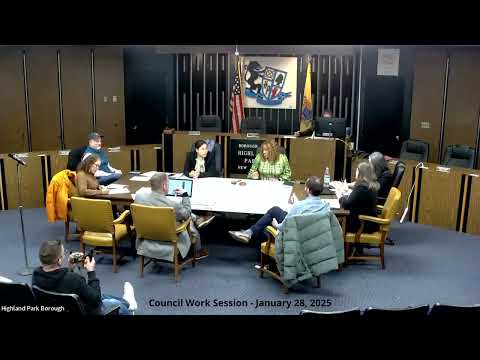
At a special meeting, the Highland Park Borough Council reviewed proposed revisions to its rules of order, focusing on executive-session notice, attendance/vacancy language, public-participation rules, and how council members’ phone and social-media use can create public-records obligations under state law.
The Highland Park Borough Council met in a special session to review proposed changes to its rules of order, discussing executive-session notice requirements, attendance and vacancy language, public-participation timing and limits, and how social-media and phone use can create Open Public Records Act (OPRA) obligations.
Council members and borough officials said the changes are intended to align meeting procedures with the Open Public Meetings Act and other state requirements and to clarify ambiguous language that could be misread by residents or result in unintended administrative consequences. Borough Attorney Terry explained the legal baseline for executive sessions, and several council members pressed for clearer wording on attendance and on what counts as a public-record when members use personal devices or social media for borough business.
Most of the discussion centered on several recurring items. On executive sessions, Terry said, "you need to have the executive session published before," noting that the council must publish notice consistent with the Open Public Meetings Act before holding the session. Council members asked whether disclosure rules that could jeopardize federal or state funding were treated the same; the attorney said the packet language reflected typical OPMA provisions but that she would confirm and return with a statutory citation.
Attendance and vacancy language drew sustained debate. The draft reads that "every member must attend every meeting and participate for the agenda to pass," language several members called misleading. Members pointed to the municipal vacancy provisions discussed later in the meeting, which tie vacancy to extended nonattendance. The attorney noted the statutory standard was typically framed as absence for eight consecutive weeks (often equated administratively to four regular meetings in some statutes) and said she would confirm whether standing-committee meetings count toward that total. Council members flagged two concerns: (1) the draft could be interpreted to require a resolution to excuse routine absences such as short vacations, and (2) bond ordinances require a two-thirds approval of members present, so quorum language must be precise.
Council members also debated public-participation rules. The revised draft lays out up to two general public-participation opportunities per meeting (one limited to agenda items and a second open session), plus any separate sessions required by statute for ordinance public hearings. The draft retains three minutes per speaker and a 21-minute aggregate cap for the public portion; some members said the 21-minute total felt arbitrary and recommended either a rounder limit or clearer language about extensions. Council member Phil asked for clearer formatting so a reader would not think there are always three distinct public sessions.
A lengthy exchange focused on phones and social media. The attorney told the council that if a member "is conducting borough business on your personal cell phone, it is subject to OPRA," and warned that borough-owned devices are borough property and subject to retention and forensic copying when a records request or legal process demands it. The clerk and other staff noted the borough has a "report a concern" portal on the website that officials monitor and encouraged residents to use it rather than tagging individual council members on private social pages. Council members discussed whether campaign or pre-existing personal social accounts remain private; the attorney said the question depends on the account’s use and on the state records-retention schedule and exceptions under OPRA, and promised to provide guidance.
Members also debated a draft provision telling the mayor not to make promises or commitments that would bind the council outside formal sessions. Some argued the line belongs in a municipal ethics code rather than rules of order; others recommended rewording to make clear that decisions must occur in open, formal votes. The council discussed changing the council-president term from one year to two years and the consequences for reorganization procedures; several members supported a two-year term to provide continuity, while others noted statutory and reorg timing issues that might require ordinance changes.
Other procedural items discussed included recordkeeping and roll-call timing, clarifying when committee items must be routed through standing committees, and whether certain committee meetings should be noticed to avoid unintended quorum consequences when the mayor attends. The attorney and clerk repeatedly recommended finalizing statutory citations before adopting substantive changes.
During the public-comment period, a commenter identifying a YouTube channel called "Jersey Watcher" alleged sexually explicit content in a young-adult book at the Highland Park Library and asked the council to take action; council and staff did not respond substantively during the meeting. An anonymous resident later spoke in support of clearer OPRA guidance for social-media records, raised concerns about access and ADA compliance at some municipal facilities, and urged more time for public speakers in some circumstances.
The council closed public participation and adjourned by motion. The meeting did not adopt the rules in final form; council members and staff agreed to revise language and return the changes at the next regular meeting so statutory checks and drafting edits can be completed.
The council directed the borough attorney and clerk to (1) confirm statutory citations on vacancy and executive-session notice language, (2) draft clarified text on attendance, agendas and public participation, (3) prepare guidance on social-media records and retention obligations under OPRA, and (4) return a redline with suggested rewording before the next general meeting.