Get Full Government Meeting Transcripts, Videos, & Alerts Forever!
Get email alerts on the Housing Affordable topic
No spam. Unsubscribe anytime.
Residents and town experts press zoning commission on safety, water and stormwater for two proposed Oronoque Lane affordable-housing projects
Summary
Public comment and town experts raised safety, water-supply and stormwater concerns at hearings on two 8-30g affordable-housing text amendments and zone-change petitions for properties at 150 and 100 Oronoque Lane; the commission kept the hearings open and left the applications on the table for further information.
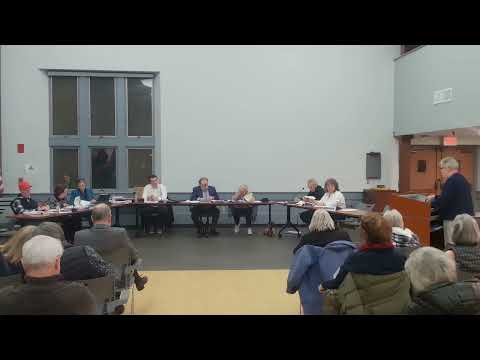
Residents, town experts and the developer’s attorney sparred for more than three hours over proposed zone changes and text amendments to permit affordable-housing developments on two small Oronoque Lane parcels, and the Stratford Zoning Commission voted to keep the public record open while the parties provide additional technical information.The items on the Feb. 26 agenda were separate applications: a text amendment and zone change for 150 Oronoque Lane (a proposed 60-unit, six-story building on about 0.85 acres) and a text amendment/zone change for 100 Oronoque Lane (a proposed 66-unit, six-story building on about 0.92 acres). Both petitions were filed under Connecticut General Statute 8-30g (statute governing affordable housing applications) and propose a set-aside model where a portion of units are deed-restricted as affordable.
Why it matters: Town experts told the commission there is “more than a mere possibility” of harm if the conceptual proposals advance without detailed engineering: they said fire apparatus cannot safely access the buildings as shown, existing municipal water and sewer infrastructure likely cannot support the added demand, and the substantial increase in impervious surface would make compliance with Connecticut’s stormwater-quality requirements infeasible on these small lots. Neighbors voiced broad opposition citing traffic safety, runoff, well contamination fears, loss of neighborhood character and property-value concerns.
Expert testimony and town position - Town experts: The town submitted verified expert reports (filed pursuant to the transcript’s cited section “22 8 dash 19” of the Connecticut General Statute) and called two technical witnesses used in both applications. Engineer René Basulto reviewed conceptual site plans and concluded the single access drive, long dead-end distances (200–300 feet), short turning radii and lack of turnaround area would prevent ladder and other large fire apparatus from safely accessing exterior walls, in violation of National Fire Protection Association (NFPA) standards adopted in Connecticut’s building and fire codes. Basulto also calculated domestic and fire-suppression water demand increases the town’s supply likely cannot meet and said septic/sewer-service limitations mean on-site sewage treatment would be necessary but is not shown on drawings.George Logan, a soils/wetlands/ecology expert, said both sites would increase impervious coverage from roughly 8% to about 80%, create runoff volumes that cannot be detained or infiltrated on such small lots under the Connecticut Stormwater Quality Manual (2023), and pose a “reasonable likelihood of unreasonable impairment” to Freeman Brook and associated wetlands. Logan said lack of soil/geotechnical data, groundwater information and stormwater design made it impossible to confirm compliance with state MS4 and stormwater-control criteria.
Applicant response and procedural points - Applicant counsel: Attorney Steven Bellas, representing the contract purchaser (Affordability LLC), said both filings are statutory 8-30g applications limited at this stage to a zone change and text amendment; he said conceptual site plans are allowed under the statute and detailed site engineering would be presented later, if the commission approves the zoning changes. Bellas argued the town’s verified pleadings should not prevent consideration of those filings and noted Stratford’s current 8-30g-recognized affordable-housing inventory (the applicant’s materials cited roughly 6.04%) does not exempt the town from new 8-30g applications. He also disputed some expert procedural objections (for example, that some witnesses are not licensed civil engineers) as premature at the zoning/text-amendment stage.Public reaction and petitions - Hundreds of neighbors attended and dozens spoke in opposition: concerns included traffic congestion on Oronoque Lane, difficult sightlines up and down the hill, on-street parking spillover, potential damage to private wells, erosion and prior costly emergency stabilization work on Freeman Brook, neighborhood character and property values. Speakers cited a petition of more than 600 names filed in opposition and pointed to an unsigned letter circulating among residents and LLCs that several speakers characterized as evidence the developer’s outreach was contentious. Some speakers said the applications felt retaliatory or political in origin; others reminded the commission of its stated zoning purposes, including orderly growth and neighborhood preservation.
Commission action and next steps - The commission voted to continue/keep the public hearing open and left the applications on the table while requesting additional technical documentation. The transcription shows a motion to continue the open application was made, seconded and approved by voice vote. Specific items the town asked to be added to the record include stormwater plans, water-supply/will-serve data, detailed fire-access layouts demonstrating compliance with NFPA and building codes, and any required septic/sewer feasibility assessments.The applicants and intervening parties were given the opportunity to file further evidence; town counsel asked that the record remain open to accept additional materials. The commission did not take final votes to approve or deny the zone changes or text amendments at the Feb. 26 hearing.
What remains unresolved: The transcript records substantial factual disagreements about stormwater capacity, water-supply capacity and fire access. Those are the precise items the commission requested be addressed before it issues any final zoning action; the hearing record will remain open so the commission can consider additional reports and revised plans.