Get Full Government Meeting Transcripts, Videos, & Alerts Forever!
Get email alerts on the Energy Infrastructure topic
No spam. Unsubscribe anytime.
Stratford commission approves special permit for 11 fuel cells at former plating site with conditions
Summary
The Stratford Zoning Commission approved a special-permit installation of 11 natural-gas fuel cells at 540 Longwood Avenue, a town-owned former contract-plating site, after hearing applicant testimony, an independent noise study, and neighbor concerns. Approval includes fence, vegetative buffer and documentation requirements.
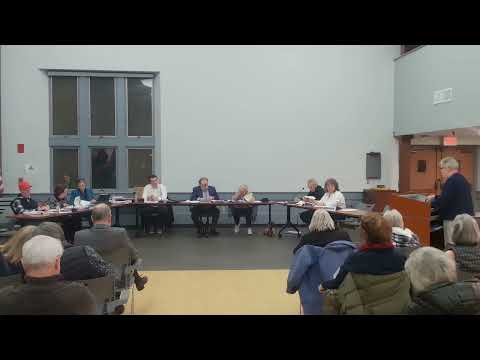
The Stratford Zoning Commission approved a special-permit application to install 11 fuel-cell units and ancillary equipment at 540 Longwood Avenue, the commission chair said at a special public hearing and subsequent administrative session on Feb. 26.The applicant, represented by attorney Barry Moss, is proposing placement of the units on a small portion of a 9.13-acre parcel the town owns; the developer will lease the parcel from the Town of Stratford.The commission’s action followed testimony from the applicant’s engineers and consultants, a letter from the Connecticut Siting Council and public comment from neighbors about noise and light impacts.
The commission’s approval was conditioned on measures the applicant agreed to: installation of a perimeter fence (6–8 feet, with the record suggesting 8-foot preference), an eight-foot vegetative buffer between the fence and the haul road with plant selection approved by the town conservation administrator, submission of an emergency-response plan to town departments, and submittal of documentation with building/mechanical permit applications showing compliance with the conditions.The commission closed the public hearing and later recorded that the applicant agreed to the conditions of approval.
Why it matters: The proposal turns a portion of a long-contaminated, town-owned industrial parcel into an energy facility that will feed electricity to the grid. Neighbors said the site’s proximity to Cottage Place and the existing noise walls raise concerns about continuous mechanical noise, light pollution and long-term site management; the commission required buffers and documentation in part to address those concerns.
Details of testimony and evidence - Applicant presentation: Barry Moss, attorney for Hayek, Inc., provided photographs, site plans and an aerial exhibit showing the proposed fuel-cell location just inside the main gate on the haul road. He said the installation would occupy a small portion of the 9.13-acre former contract-plating site currently undergoing remediation.Megan Castle, a mechanical engineer for the applicant, described the fuel-cell process: natural gas is reformed to hydrogen, which feeds the fuel cells to produce electricity and water; the plant uses cooling modules and captures and reuses cooling water. She said the power plant is self-contained, includes automatic internal shutoffs, and has multiple leak detectors and manual external shutoffs; service technicians visit sites and 24-hour surveillance is provided.Carl Casio (transcribed as “Casio/Cascio”), the project’s noise consultant, summarized a noise-compliance study using a speaker test and transfer-function modelling from existing, measured fuel-cell units; his report found predicted noise levels at nearby residences and businesses would comply with state and local noise limits and estimated the units would require roughly an 8 dB reduction for residences and 4 dB for businesses compared with measured sources. The applicant also submitted a September 26, 2024 Connecticut Siting Council letter stating the proposal met air and water quality standards and would not result in substantial adverse environmental impacts.Public comment and concerns: Neighbors raised concerns about continuous 24/7 mechanical noise (cooling fans), the potential for reflected noise from existing tall sound walls, and light pollution; one neighbor argued plantings would be insufficient and suggested a reflecting wall paid in part by rent concessions. The applicant agreed to provide a vegetative buffer, work with the conservation administrator on plant selection, and confirmed the equipment would be removed at the end of the lease if the facility was decommissioned.Safety and operations: The applicant provided a product safety statement and a certificate of compliance for the proposed PureCell Model 400 units, and said an emergency-response plan will be shared with the fire and health departments. Castle and counsel described automatic internal gas shutoffs, multiple detectors, manual site shutoffs with locks/barcodes and 24-hour monitoring. The applicant committed in the record to remove the fuel cells at the end of the lease.
Commission action and next steps - Motion to close the public hearing for 540 Longwood Avenue: passed, voice vote recorded “Aye, 5–0.”- Administrative approval conditions read into the record by the zoning administrator and accepted by the applicant; the record lists the perimeter fence height, vegetative buffer height and maintenance, emergency-response-plan submission and requirement to provide a compliance packet with mechanical permit applications. The transcript indicates the applicant agreed to the conditions and the commission took the item off the table; no roll-call vote on final permit adoption is recorded in the transcript but the administrative record states the applicant’s agreement and the conditions of approval were entered for enforcement and permit review.
What remains unresolved: The transcript shows the commission required the applicant to submit an emergency-response plan and documentation during permit review; the conservation administrator must approve specific plantings; the record also notes ongoing remediation on the site by EPA contractors that will alter final grading and elevation work before installation.