Get Full Government Meeting Transcripts, Videos, & Alerts Forever!
Get email alerts on the School Budget topic
No spam. Unsubscribe anytime.
Stratford schools request $132.95 million budget, seek 2.66% town increase
Summary
The Board of Education presented a $132,950,000 budget for 2025–26 at a Town of Stratford ordinance committee budget workshop, describing a 2.66% increase driven by wages, benefits and special education and warning that state and federal grant timing creates fiscal uncertainty.
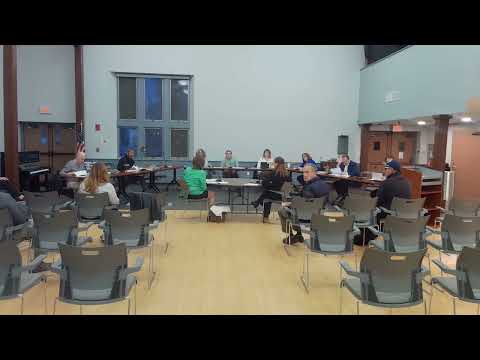
The Board of Education presented its proposed 2025–26 operating budget to the Town of Stratford ordinance committee, asking the town to fund a $132,950,000 plan that represents a 2.66% increase over the current year.
Interim Superintendent Heather Borges told committee members the budget “prioritizes stability, sustainability, and strategic investment in our schools without reducing any positions.” Borges said the board unanimously approved the request and forwarded it to the mayor.
The proposal lists wages, benefits and special education as the primary cost drivers. Borges said wages are budgeted with a 0.2% increase, benefits 1.5%, and an added $1.2 million for special education to “ensure continued support for our students with special education needs.” Chief Financial Officer Pam Mangini provided the committee with supplemental materials that list grant-funded positions, general operating positions and the board’s most recent grant report.
Why it matters
School officials said the budget is meant to maintain staffing and to stabilize district operations while the town continues to absorb most variable special-education costs. Board leaders warned, however, that federal and state grant timing and year-to-year funding levels — including Title I and the grant identified in the transcript as “IDA” — make final revenues uncertain and can affect the town’s out-year exposure.
Budget details and clarifications
- Total requested operating budget: $132,950,000 (2.66% increase). Borges described the request as a “foundational” budget that preserves full-time equivalent positions.
- Special education: The presentation emphasized that the district budgeted “net, not gross” for special education. Borges said that approach allows the district to rely first on unfilled-position savings and other internal adjustments before asking the town for additional funds. The proposed town contribution includes a $2,000,000 line identified in the materials as available for special-education costs; how the town will categorize or allocate that money is the town’s decision, officials said.
- Benefits and health insurance: Mangini told the committee the district’s health-insurance renewal with Anthem is about 10% this cycle and that last year a $2,000,000 private gift covered roughly $1,000,000 of health-insurance costs outside the general fund; the district had to bring that amount back into the operating budget for 2025–26.
- Staffing and contracts: Borges said the budget does not eliminate any FTEs. The district shifted some previously contracted positions (notably athletic trainers at the high-school level) into salaried positions because contractors reported difficulty filling roles. The district also now contracts substitute coverage through Kelly Services; Borges said that produced higher substitute pay and improved fill rates.
- One-time and legacy costs: The budget includes a line for contractual payouts such as unused sick leave; Mangini said the district estimates those payouts based on historical data but that the exact annual total is unknown until retirements are finalized (the district uses an April 1 deadline for teachers to notify retirement decisions).
Funding uncertainty and risk
Officials repeatedly flagged the timing and variability of federal and state grants as a principal risk. Mangini and Borges said Title I and the grant identified as “IDA” have historically fluctuated and that state and federal award amounts are often not finalized until months after the school year begins. Mangini described the federal grant cycle as opening in September, with award amounts commonly unknown until late fall or early winter, which complicates cash-flow and planning.
Mangini and Borges told the committee the district currently estimates a potential special-education deficit in the neighborhood of $1.2 million to $1.4 million for the year, but cautioned that the figure will change with ongoing individualized education program (IEP) decisions and student movements through spring PPTs and placements.
Questions from council members and follow-up
Council members asked about year-over-year increases in certified-staff costs, the effect of new teacher contracts and the district’s approach to prior program cuts. Borges and Mangini said the budget accounts for step increases and negotiated contracts and that students affected by last year’s program changes (for example, the “Alpha” program referenced in the discussion) continue to receive services in other placements or through in-district programs. Mangini said the district continues to track those students monthly and cited the recently awarded LEAP grant as supporting outreach to chronically absent students.
Several council members sought clarification about where a town-held special-education reserve or education reserve fund would reside and whether the $2,000,000 identified for special education would be placed into an existing education reserve fund. Borges and Mangini said the town determines fund placement; Mangini noted she had helped craft town language on a nonlapsing education reserve fund when she arrived in Stratford and that the town’s statute and budget practice now govern how any reserve would be held and released.
Next steps
Committee members thanked the board staff for supplemental documents and said the workshop would continue as part of the town’s March budget workshop schedule. Borges and Mangini offered to meet with council members, visit schools, and provide further documentation as the council reviews the town portion of the budget.
Ending
Neither the ordinance committee nor the council took formal votes on the board’s request during the session. Council members and board staff agreed to continue workshops and follow-up meetings in March to reconcile special-education exposure, health-insurance renewal impacts and the allocation of any town-held reserve funds.