Get Full Government Meeting Transcripts, Videos, & Alerts Forever!
Get email alerts on the Affordable Housing topic
No spam. Unsubscribe anytime.
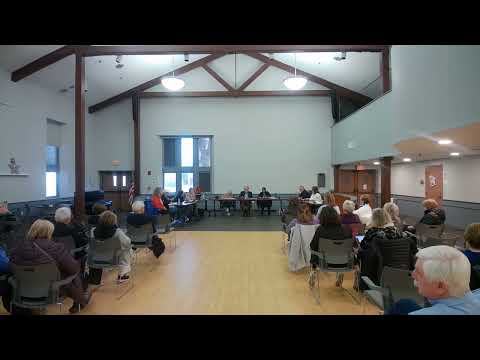
Stratford zoning commission rejects proposed Oronoke affordable housing district, 5-0
Summary
The Stratford Zoning Commission voted 5-0 to deny a text amendment and accompanying zone change that would have created an Oronoke Affordable Housing District for 150 Oronoke Lane, citing unresolved health, safety and environmental concerns and an absence of detailed site plans.
The Stratford Zoning Commission voted unanimously to deny a proposed text amendment and accompanying zone change for 150 Oronoke Lane that would have created a new Oronoke Affordable Housing District under Connecticut General Statutes 8-30g.
Chairman Harold Watson said the commission must decide on the basis of evidence in the record, not personal preference, and announced his vote against the proposal. “We must vote based on the testimony presented to us and not on our personal feelings,” Watson said before the roll call.
The commission’s denial followed a staff presentation and expert testimony, read into the record by Planning and Zoning Administrator Smitha Atada, that flagged multiple unresolved public-health, safety and environmental issues. Town attorney Kristin Maneno’s written comments, included in the staff report, said the proposal “would have a significant adverse impacts on public health, safety, and environment.” Mechanical engineer Renee Basulto told the commission—via the staff summary—that the site plan lacks adequate fire access routes for emergency apparatus and that the single entrance shown would not provide a sufficient turning radius for fire vehicles.
The applicant, Petition of Affordability LLC, proposed building 60 residential units on a roughly 37,500-square-foot parcel at 150 Oronoke Lane—about 69.6 units per acre—on land currently zoned RS-1, which the staff report said allows roughly one unit per acre. The proposed zone would have allowed a maximum building height of 70 feet (about six stories).
Staff and expert comments in the record also noted that the lot currently relies on private septic systems and drinking wells; Stratford Water Pollution Control Authority had approved a sewer extension only sufficient for a single-family home and had not approved multiple connections. The staff report quantified the proposal’s projected demands as about 101 gallons per minute of water demand and roughly 7,300 gallons per day of sewage flow, figures the report said would exceed the town’s existing infrastructure capacity. George Logan, an environmental soil scientist whose remarks were summarized in the staff report, warned that increasing impervious surface on the site from about 8% to an estimated 80% could generate additional pollutants, increase erosion, and degrade nearby receiving water courses; the parcel lies within the Freeman Brook watershed and falls within 300 feet of Roosevelt Forest and the Redland soils area.
The record also notes that part of the parcel is inside or adjacent to a special flood hazard area (Flood Zone A) and that the site appears in Connecticut’s Natural Diversity Database; the staff report said an eastern box turtle, a Connecticut-listed species of special concern, is likely present and that consultation with the Connecticut Department of Energy and Environmental Protection would be required.
Planning staff told the commission that the applicant provided only a conceptual site plan and did not meet the town’s site-plan requirements under section 7.3.3 of the zoning regulations. The Stratford Planning Commission issued an unfavorable recommendation on the proposal; under the town’s procedures the zoning commission requires a supermajority of four votes to approve a proposal that lacks the planning commission’s endorsement. The zoning commission’s roll-call vote was No from Watson, No from Linda Manos, No from Ewald Joseph, No from Deborah Lamberti and No from Linda Cholera, producing a 5-0 denial.
Commissioners and staff repeatedly noted that without detailed engineering and site plans—showing access for emergency vehicles, stormwater management, landscape and native-plant restoration, and a final determination from the inland wetlands agency—there was insufficient evidence in the record to find the proposed text amendment and zone change met the town’s legal standards.
The commission also addressed corrections to the meeting minutes and then approved those minutes before adjourning. The next regular meeting is scheduled for April 30 at Town Hall, according to the chair.