Get Full Government Meeting Transcripts, Videos, & Alerts Forever!
Get email alerts on the Environment Indian River Lagoon topic
No spam. Unsubscribe anytime.
Marine Resources Council urges low-impact practices to protect Indian River Lagoon
Summary
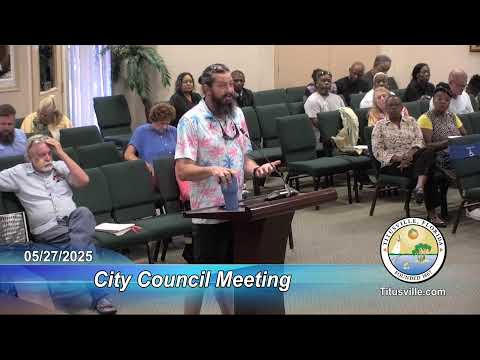
The Marine Resources Council presented a Low Impact Living program to the Titusville City Council on May 27, outlining landscaping and green stormwater infrastructure to reduce nutrient runoff into the Indian River Lagoon and offering municipal and homeowner resources and a regional conference in October.
The Titusville City Council on May 27 received a presentation from the Marine Resources Council (MRC) on a “Low Impact Living” initiative intended to reduce nitrogen and phosphorus runoff into the Indian River Lagoon.
The presentation, given by Laura Wilson, executive director of the Marine Resources Council, outlined how runoff and freshwater inflows harm seagrass, oysters and other lagoon resources and described four program pillars—educate, empower, advocate and demonstrate—aimed at homeowners, HOAs, municipalities and developers.
MRC emphasized the land-based origins of the lagoon’s largest pollutant loads and urged local adoption of green stormwater infrastructure to “capture water where it lands” and keep nutrient-rich runoff out of pipes that discharge to the lagoon. Wilson said the council’s materials and public dashboards track indicators including wastewater spills, seagrass coverage and water quality.
City council members asked about funding and project scale. Wilson identified the Florida Department of Environmental Protection and a program she cited as “SORL” as sources municipalities commonly pursue, and said final legislative budgets could range “anywhere from 0 to a hundred million” for Indian River Lagoon work and that municipalities typically apply for those grants. She also said MRC can provide staff and municipal support on grant timing and technical design.
Presentation materials shown at the meeting cited a downtown Cocoa Beach corridor retrofit as an example of green infrastructure. Those materials listed the project cost at approximately $5.2 million and referenced Department of Environmental Protection documentation that the project reduced flow to the lagoon by roughly 97 percent, according to the presenters.
Wilson described MRC demonstration projects—shoreline restoration, mangrove nursery production, floating wetlands and rain gardens—at the group’s Lagoon House site in Palm Bay and said the group will host a low-impact development conference in Rockledge Oct. 29–30 with a half-day field trip planned Oct. 28. She invited council members and staff to contact MRC for technical assistance and to review model checklists for households, businesses and HOAs.
Council members pressed for project specifics: Member Nelson asked the project cost and tank storage size for the Cocoa Beach example; presenters said the Department of Environmental Protection has documentation on the project’s performance and that they would provide detailed cost and storage figures after the meeting. Member Stochel asked whether different corridors require different strategies; presenters said they maintain a “menu” of practices scaled to site conditions and noted tree canopy preservation and engineered nature-based practices both play roles.
No formal action or vote was taken by the council during the presentation. The discussion concluded with presenters offering follow-up materials and contact information for city staff who want design templates, grant guidance or case studies.
For more information, the presentation listed the Marine Resources Council and contact points for Laura Wilson and staff colleagues for follow-up on grant opportunities, design guidance and the October conference.