Get Full Government Meeting Transcripts, Videos, & Alerts Forever!
Get email alerts on the Emergency Caches And Supplies topic
No spam. Unsubscribe anytime.
Depoe Bay committee recommends $150,000 for Stonebridge emergency cache site, approves wetland study and supply purchases
Summary
The Depoe Bay Emergency Preparedness Committee on April 14 recommended funding for a Stonebridge emergency cache, approved a wetland delineation study and moved to pursue supply purchases and storage funding.
The Depoe Bay Emergency Preparedness Committee on April 14 recommended that the City Council include funding to establish an emergency supply cache at the Stonebridge site and approved preliminary steps including a wetland delineation and inventory purchases.
The committee heard staff and members describe possible cache sites and constraints. City staff reported that a wetland (riparian) delineation is required for the Stonebridge property because no prior study exists; the engineer estimated the delineation at about $2,000. Committee members then discussed broader site costs: earlier estimates for a completed Stonebridge cache project were cited in the transcript at roughly $110,000–$150,000 once fencing, site preparation and other work were included.
After discussion, a committee motion (and second) recommended that the City budget committee be asked to fund a Stonebridge cache project at about $150,000, to allocate $50,000 to ongoing emergency‑preparedness activities (supplies, programming and staging), and to reserve $2,200 for short‑term storage. Committee members held a voice vote and the motion carried; the transcript records that members were asked to say “I” for the record in the roll call.
Why it matters: committee members said Stonebridge is on an evacuation route and would serve regional needs during an extended outage; members also emphasized that site remediation and permitting (including wetland work) must precede construction and will affect schedule and budget.
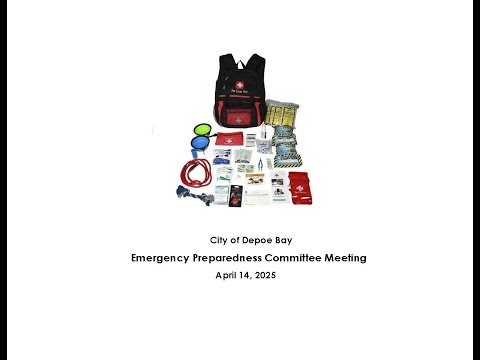
Supplies and caches: committee volunteers presented a line‑item inventory for a single cache and for central storage. The committee discussed immediate purchasing from existing city funds (roughly $37,000 remaining in this year’s emergency preparedness budget). Items discussed and approximate quantities or cost guidance from the meeting included:
- Tarps and shelter supplies (example: 60 tarps at roughly $2.99 each mentioned in the inventory). - Medical/trauma kits and trauma unit packages (packages discussed for 200–500 persons; a 500‑person trauma medical unit price of about $3,599 was cited in discussion as an example). - Body‑handling supplies: participants used a model fatality estimate of about 80 (county estimate referenced) and discussed buying roughly 40 conventional body bags plus several mesh bags for floaters; committee members also proposed placing stretchers in caches (two stretchers per cache suggested). - Containerized storage/Connex units for caches and a dedicated storage unit for supplies (committee discussed at least one storage option and the $2,200 storage line item).
Committee members debated what budget request size would be politically supportable. Staff urged the group to produce an itemized budget; members agreed to present a package to the budget committee with the suggested figures. The chair and staff noted that even if the budget committee changes appropriations in future years, moving the design and wetland work forward this year improves the project’s eligibility and timing.
Public comments and logistics: a public attendee, Ken Bauer, offered to connect the committee with contacts who have access to large tents and triage equipment; another commenter offered to check supplier channels used by neighboring Lincoln County responders.
Ending: Committee members agreed to finalize an itemized budget worksheet and to present the Stonebridge proposal, the wetland delineation ask, the storage need and a prioritized supplies list to the budget committee for the next fiscal cycle.