Get Full Government Meeting Transcripts, Videos, & Alerts Forever!
Get email alerts on the Legislative Update topic
No spam. Unsubscribe anytime.
City lobbyist outlines Salem activity: transportation package, Willamette Falls locks funding and housing implementation
Summary
West Linn’s lobbyist reviewed mid‑session activity in Salem, including a proposed transportation funding package that blends gas‑tax changes, vehicle fees and new road‑user charges; funding requests for Willamette Falls locks; and housing‑related bills and implementation matters.
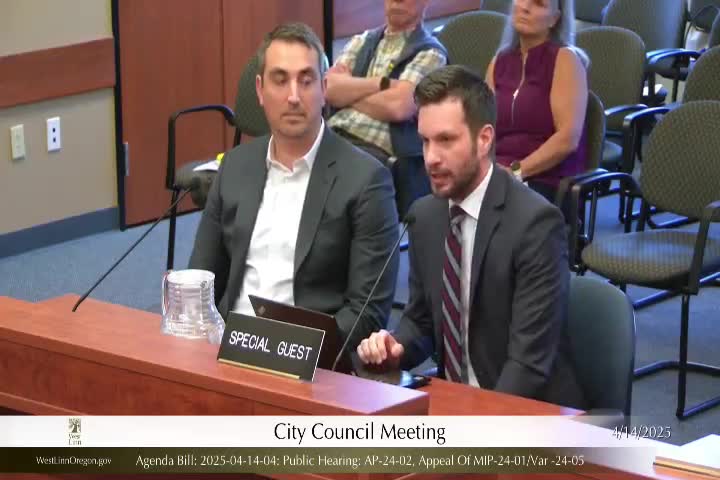
Doug Riggs, the city’s lobbyist, briefed the council on the Oregon legislative session during the April 14 meeting, summarizing several bills and trends midway through the long session.
Riggs said the first chamber deadline had just passed and roughly half of introduced bills had been cut; committees and the Ways and Means process will shepherd remaining measures. He described a transportation funding framework being discussed that would diversify revenue sources beyond the gas tax — proposals referenced include staged gas‑tax increases, changes to vehicle titling/registration fees, an increase in the sales‑tax‑based new vehicle fee and a road‑user fee initially aimed at electric vehicles and heavier delivery trucks to offset declining fuel‑tax receipts.
Other items noted: a controversial bill enabling certain public‑employee strike provisions (SB 916) was moving through the Legislature; the Willamette Falls locks and associated funding requests (including HB 2574) remain under consideration and were identified as a priority; and the Ways and Means committee was conducting road‑show hearings across the state. Riggs also flagged ongoing implementation of House Bill 2001 (middle housing / housing production rules) and an amendment track on HB 2138 to give local governments some breathing room on implementation. A bill to expand allowable uses for transient lodging tax revenues did not progress past the committee deadline.
Council members thanked the lobbyist and offered to participate in Salem advocacy if needed; mayor and staff reiterated interest in monitoring jurisdictional transfer language tied to Highway 43 and potential state funding for highway upgrades prior to any transfer of ownership.
Ending: Riggs said he would continue to track bills important to the city and coordinate with staff and council on opportunities to advocate or provide testimony.