Get Full Government Meeting Transcripts, Videos, & Alerts Forever!
Get email alerts on the Data Centers topic
No spam. Unsubscribe anytime.
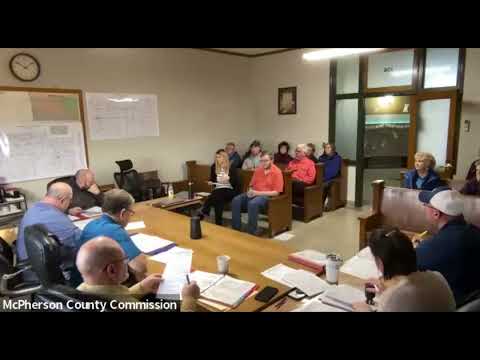
Commissioners send proposed data-center ordinance back to zoning board after public questions
Summary
After a lengthy public-comment period and technical questions about power, noise and review authority, McPherson County commissioners voted to return the proposed data-center ordinance to the zoning board for further revision and public outreach.
McPherson County commissioners voted to return the proposed data-center ordinance to the county zoning board for more review and public input following an extended public-comment session and technical questions about electrical service, environmental studies and community impacts.
The measure matters because the ordinance would set local rules for siting large server farms; commissioners and members of the public raised questions about what studies should be required, how the Public Utilities Commission (PUC) review interacts with local zoning and whether additional technical work — including independent engineering input — is needed before local land-use rules are finalized.
At the start of public comment, attorney Bill Macamp, who said he represents the data-center project, told the commission the company is willing to work within county setbacks and to participate in public information sessions. “While it was not their first choice, the project would attempt to move forward with a one-mile setback that meets with the county’s other setbacks,” Macamp said. He also advised the public to consult the PUC dockets for technical filings; the application in the record was identified as EL24027.
Multiple residents and a number of commissioners discussed technical items that they said would benefit from outside review — for example, low-frequency noise measurements and detailed electrical-load studies. One resident suggested asking South Dakota State University or a third-party engineering firm to help evaluate technical studies and to translate specialized results for local decision-makers.
Commission discussion focused on what should be written directly into the zoning ordinance versus what can reasonably be requested and presented at public informational meetings. County staff and commissioners cautioned that putting extensive, nonbinary study requirements into the ordinance could create legal obligations the county would then have to “take into account” when making permit decisions; instead, several commissioners supported using the ordinance to require an informational public meeting and to set a clear process for conditional-use review while asking applicants to provide technical studies at those hearings.
After discussion, a motion “to put it back to the zoning board” was made and seconded; the board voted in favor. The motion’s mover was not specified on the record; the motion was seconded by Mike (last name not specified) and the motion carried by voice vote.
The zoning process described during the meeting: zoning board review and public hearing(s) at the zoning level, publication and then first and second readings by the county commission. Commissioners and staff also discussed updating the county’s comprehensive plan and administrative manual in parallel with any ordinance changes so the documents align.
Ending: Commissioners asked zoning staff to schedule revisions and public outreach with the zoning board so the ordinance can be refined before further readings by the commission. The county’s PUC docket reference for the electrical application was cited during public comment as EL24027; commissioners and members of the public said they expect additional technical information to be presented at future hearings.