Get Full Government Meeting Transcripts, Videos, & Alerts Forever!
Get email alerts on the Active Transportation topic
No spam. Unsubscribe anytime.
Addison Circle business owners and residents oppose proposed Quorum bike lane and warn of parking, delivery and safety impacts
Summary
Dozens of Addison Circle residents and business owners told the council that a proposed Quorum Drive bike-lane plan would remove vital parking, hamper deliveries and create safety issues, and urged the town to pursue lower-impact alternatives and more outreach.
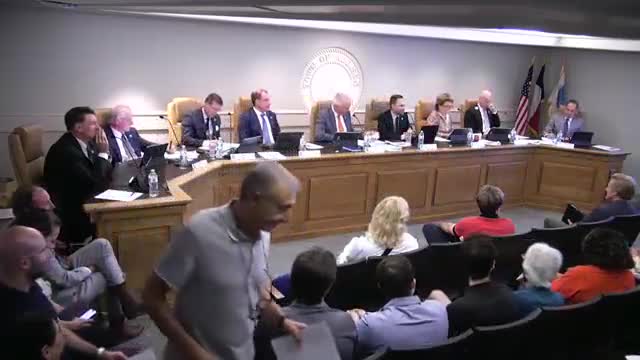
Business owners and residents in Addison Circle urged the City Council on April 22 to pause or redesign a proposed Quorum Drive bike-lane project, saying the current plan — which would replace one travel lane in sections and place parked cars between moving traffic and a buffered bike lane — would remove critical parking, impede delivery trucks and create safety hazards for pedestrians and cyclists.
Why it matters: Addison Circle business owners said abundant curbside parking and visible signage are essential to their customers and to keep small retailers viable. Multiple speakers said they see few cyclists using Quorum now and argued the project would shrink traffic capacity and complicate weekend moves and deliveries.
What residents and business owners told council: Several speakers who said they run salons, cafés and bars on Quorum and Morris Drive described long-term business presence and localized safety concerns. Sherry McCune, owner of Swank Salon at 15635 Quorum Drive, said the bike-lane plan would remove visible parking signs, worsen delivery conflicts and “create a traffic nightmare.” Claudia Rotariu, who owns Glow Salon, said the proposed design looked complicated compared with a simple painted-bike lane and said businesses rely on street parking to survive. Elena Arsova and Teddy Arsova, owners of Astoria Café and Wine Bar, and other Circle residents asked for a flashing red stop sign and a marked crosswalk at Coram and Morris to address frequent toddler and pedestrian crossings.
A number of speakers urged smaller, less-intrusive steps: paint-only bicycle markings, reduced speeds (20–25 mph suggested), shared-lane treatments, improved signage and targeted pocket bike facilities elsewhere rather than removing a travel lane through the Circle. Some bicycling advocates in the audience supported safer facilities but questioned the current cross-section, which places parked vehicles between the bike lane and moving traffic — a configuration that raises risk of dooring injuries to cyclists.
Staff context and council reaction: Councilmembers acknowledged the competing goals of walkability, parking and traffic flow. Several council members suggested more neighborhood outreach and detailed traffic modeling before moving forward. Staff did not present a formal agenda item or vote on the bike-lane plan at this meeting; speakers were participating during the public-comment period.
Ending: Speakers asked the council to walk the Circle with residents and business owners and to consider lower-impact, low-cost alternatives (painted lanes, signage, crosswalk improvements and speed reductions) before adopting a plan that would convert existing two-lane sections to one travel lane with a buffered bike facility.