Get Full Government Meeting Transcripts, Videos, & Alerts Forever!
Get email alerts on the Housing Accessibility topic
No spam. Unsubscribe anytime.
Council hears staff research on universal design standards; debate centers on incentives versus mandates
Summary
Planning staff reported limited developer survey response but recommended outreach and incentives rather than an outright requirement. Council members discussed possible options including incentives tied to tax credits or planned developments, noting the rising senior population and the tradeoffs between regulation and construction costs.
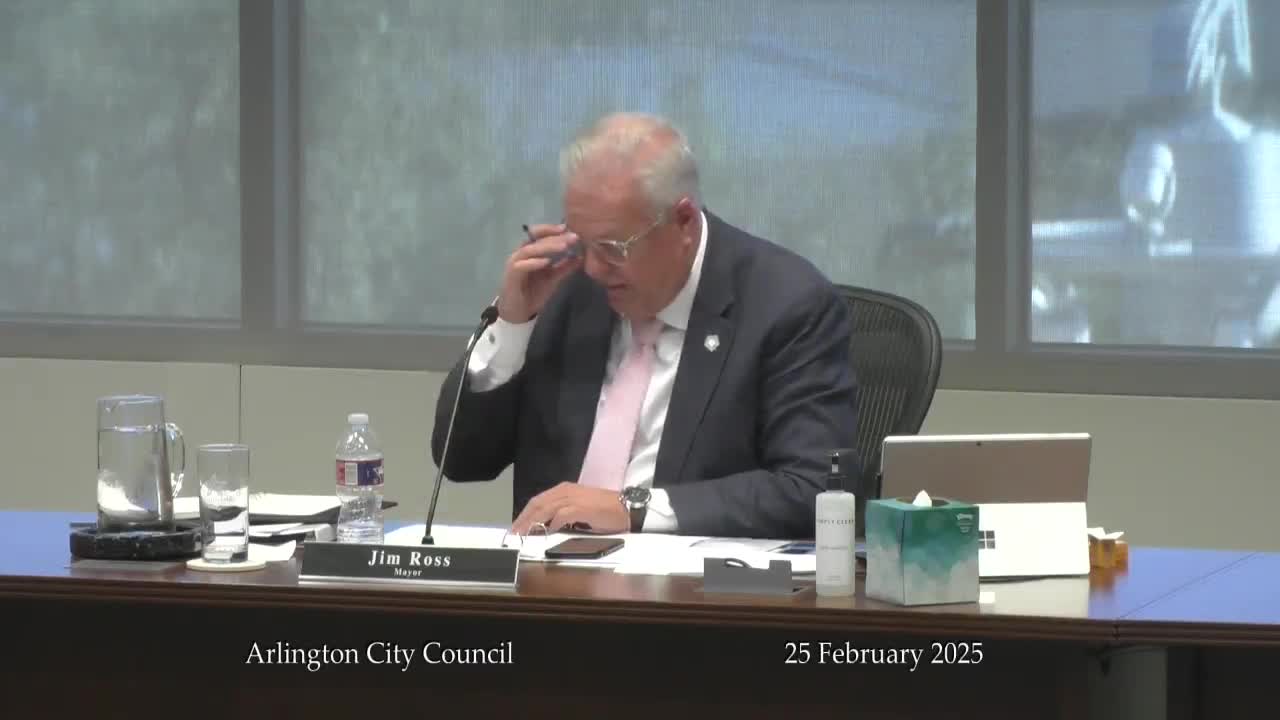
Planning staff briefed the City Council on Feb. 25 about research into Universal Design Standards (UDS) and age‑friendly housing options and solicited council direction on next steps.
Jinsey Dopel, Director of Planning and Development Services, said city staff surveyed local builders and developers but received only a small number of responses. The respondents indicated some awareness of UDS and that it can be cheaper to include accessibility measures in new construction than to retrofit later. Based on the limited response, staff said adding a citywide regulatory requirement was not recommended at this time; staff instead proposed outreach, educational materials and incentives.
Why it matters: council members said Arlington's population is aging and that more housing stock built for aging‑in‑place could reduce future retrofit needs and improve quality of life for seniors. Council members debated whether to require a percentage of units with UDS when the city provides incentives such as tax credits or other support, or to rely primarily on voluntary market uptake and targeted incentives.
Discussion highlights
- Survey results and staff recommendation: Dopel said survey respondents generally could offer floor plans that conform to UDS and that new construction usually costs less than retrofits. "Based upon the response, adding as a requirement was not something that we found from the response rate," Dopel said. Staff suggested producing educational materials (similar to Plano's approach) and considering UDS as a factor in incentive programs.
- Council concerns: Several council members supported incentives rather than a broad mandate. Councilmember Bridal and others noted UDS can be implemented in ways that do not require visible fixtures such as grab bars; Bridal said UDS is primarily about "ADA ready" clearances (wider doorways, wider hallways) rather than exterior handrails. Councilmember Trogg urged caution about adding regulatory requirements that raise construction costs and could reduce other developer amenities.
- Targeted approaches: Staff suggested the city could require UDS for projects receiving specific public support (tax credits, planned‑development concessions) or include incentives like additional lot coverage or other development flexibilities to encourage adoption.
Next steps: staff will prepare outreach materials for developers and consider how incentives could be structured; council asked staff to explore whether housing programs the city supports (including tax credit projects) could include UDS expectations.
Ending: Council members asked staff to return with options that balance incentives and cost impacts and to provide more detailed proposals for how UDS might be tied to city incentives or applied in targeted circumstances.