Get Full Government Meeting Transcripts, Videos, & Alerts Forever!
College Station council hears decade-long Midtown history as residents push for rec center, developer pitches tourism complex
Summary
City staff presented a 14-year history of Midtown development and its financing; Midtown residents pressed the council about rising Municipal Management District (MMD) taxes and unbuilt amenities; the Midtown developer proposed a large public–private tourism and recreation project and asked the city to vet it through economic development.
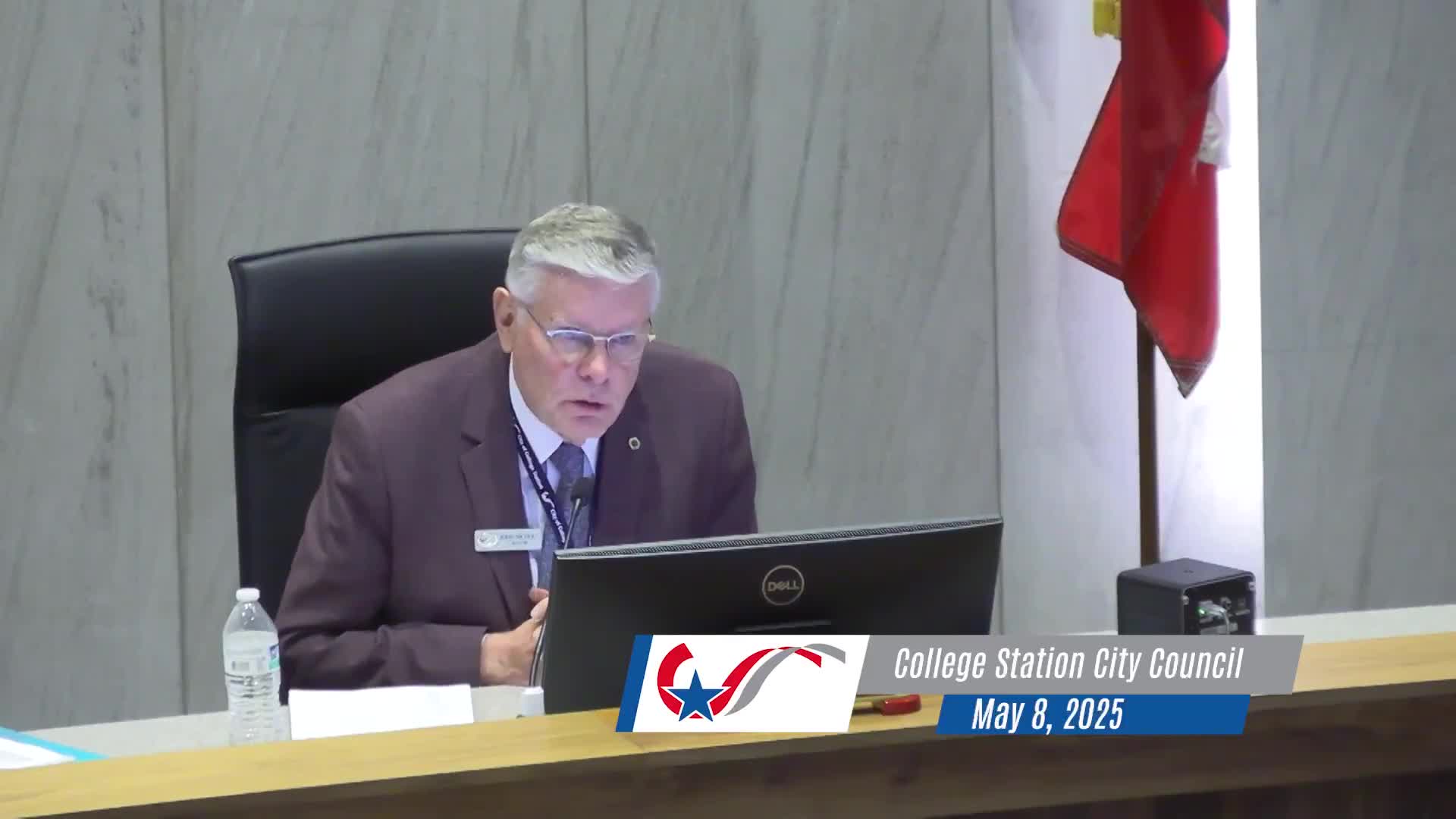
College Station City Council members and Midtown residents heard a detailed history of the Midtown development and its financing on May 8, 2025, then spent more than two hours debating rising Municipal Management District taxes, unmet neighborhood amenities and a new public–private proposal from the Midtown developer.
Assistant City Manager Jennifer Prochaska told the council the presentation had been requested so members who were not on earlier councils could understand the sequence of planning, incentives and infrastructure investments. “When the developer builds his required infrastructure … and realizes at least $50,000,000 of value in that area and builds 150,000 square feet of non-residential use, the city will give all of the city property tax money it has collected on the increased value since 2016 to the developer and will make an annual payment to him until 2036,” Prochaska said in summarizing the economic development agreement (EDA) between the city and the developer.
Why it matters: Midtown residents pay an extra property tax to Rock Prairie Municipal Management District No. 2 (MMD), and some told the council that local services and promised commercial amenities have not appeared while their bills rose. The council asked staff to vet a newly presented public–private partnership concept and requested additional financial information so members can weigh next steps.
Most of the council meeting’s Midtown discussion reviewed past actions and agreements. Prochaska said the city and the developer worked together during the medical‑district master‑planning process; the city consented in 2013 to creation of two MMDs and established tax increment reinvestment zones (TIRZs) for…
Already have an account? Log in
Subscribe to keep reading
Unlock the rest of this article — and every article on Citizen Portal.
- Unlimited articles
- AI-powered breakdowns of topics, speakers, decisions, and budgets
- Instant alerts when your location has a new meeting
- Follow topics and more locations
- 1,000 AI Insights / month, plus AI Chat