Get Full Government Meeting Transcripts, Videos, & Alerts Forever!
Get email alerts on the Public Health Infectious Disease topic
No spam. Unsubscribe anytime.
Tarrant County health officials warn of H5N1 spread in animals, urge vigilance after West Texas measles outbreak
Summary
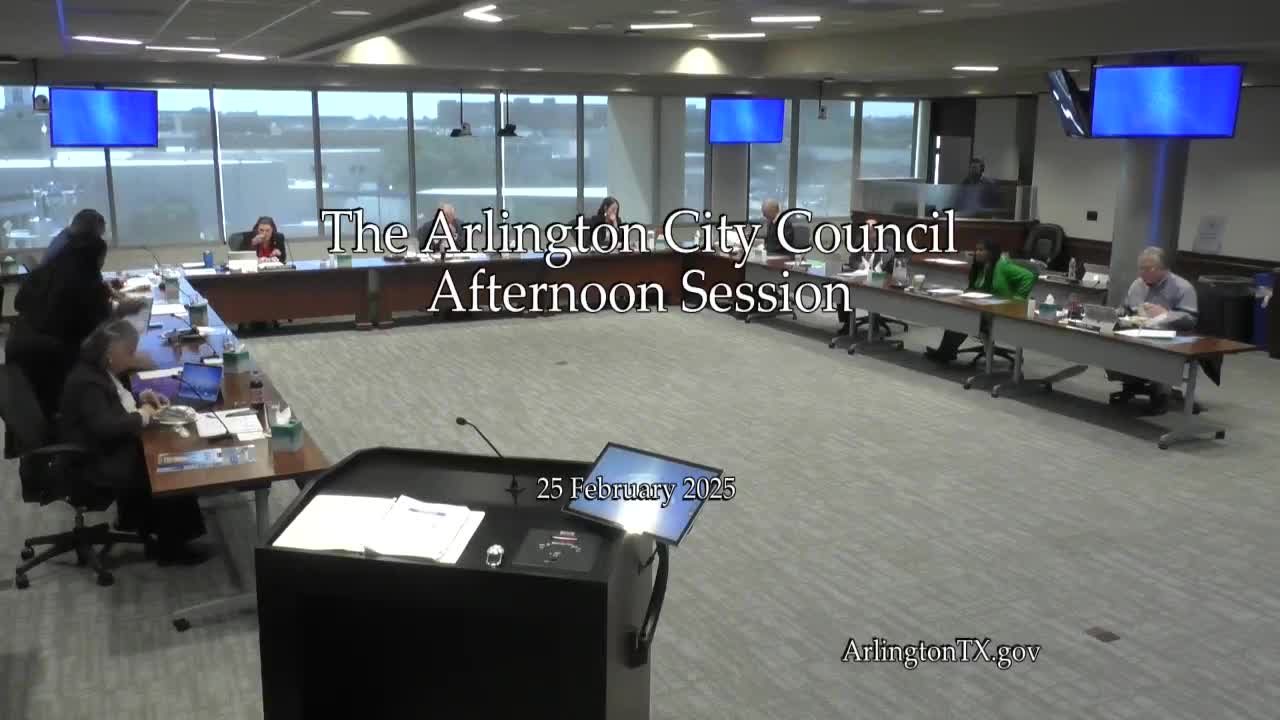
Tarrant County Public Health Director Brian Byrd and Chief Epidemiologist Russ Jones briefed the Arlington City Council on Feb. 25 on a high seasonal influenza year, the international spread of H5N1 avian influenza into poultry and dairy herds, and a measles outbreak in West Texas, calling the H5N1 pandemic risk "moderate" and urging faster influenza subtyping and vaccination.
Tarrant County Public Health Director Brian Byrd and Chief Epidemiologist Russ Jones told the Arlington City Council on Feb. 25 that seasonal influenza has been unusually high this winter and that a separate threat from H5N1 avian influenza requires continued monitoring.
Byrd and Jones said H5N1 remains concentrated in birds and livestock but has infected people occasionally since last year. "So far, bird flu has stayed mostly in cows and birds. It hasn't yet attained the ability to jump human to human," Byrd said. Federal agencies have characterized the virus's pandemic potential as moderate, and the CDC issued a health alert urging hospitals to speed subtyping of influenza specimens to detect novel strains quickly.
Why it matters: county officials said the virus's recent spread into dairy herds and other mammals increases opportunities for genetic change that could make human-to-human transmission possible. Separately, a measles outbreak in the South Plains and West Texas has produced more than 100 confirmed cases, mainly in children, and dozens of hospitalizations.
Key points from the briefing
- Scope of H5N1 cases: Byrd said public-health surveillance has recorded roughly 70 human H5N1 cases worldwide since early reports; officials reiterated that most human cases have been associated with direct animal exposure, including poultry and, more recently, dairy cows. "There's been some testing of milk coming off the shelf that's pasteurized...the difference is it's pasteurized and not viable," Byrd said, describing detection of viral material that does not grow in culture.
- Animal and agricultural impacts: Jones described large poultry culls in major egg-producing states that have driven up egg prices. He also said multiple dairies have reported infection, with temporary quarantines and production impacts.
- Clinical picture: Officials said recent human infections have ranged from conjunctivitis (pink eye) to respiratory illness; one death linked to an H5N1 infection was reported in Louisiana in December. "The feeling is the pandemic potential is moderate," Byrd said, citing interagency risk assessments.
- Testing and surveillance: County labs are prepared to subtype influenza and send suspicious samples to state or CDC labs. Byrd said the CDC wants subtyping ordered within 24 hours for hospitalized patients with influenza to speed detection of unusual strains.
- Measles outbreak: Jones and Byrd reported an outbreak concentrated in the South Plains (Gaines County and neighboring counties) with more than 100 cases, the majority age 17 and younger, and at least 18 hospitalizations reported in the cluster. They reiterated that two doses of measles vaccine provide substantially better protection than a single dose and recommended that adults who received only one childhood dose consider a second dose if they will travel or are in an outbreak area.
- Local vaccination push: Tarrant County Public Health said it plans a larger immunization effort this year, expanding a late‑summer "shot rush" program to reach more children; the county set a goal to vaccinate 10,000 children in the upcoming campaign and said it is partnering with Cook Children's Hospital to expand reach.
What officials recommended
- Clinicians and hospitals should follow the CDC health advisory and prioritize rapid subtyping for suspicious influenza cases. - People with direct contact with poultry or lactating cattle should use personal protective equipment and report illness promptly; meat and properly pasteurized milk are not considered viable transmission routes based on current evidence. - Individuals not fully vaccinated against measles (two doses) who live in or travel to outbreak areas should get vaccinated; county officials emphasized vaccination is the most effective prevention.
Questions from councilors focused on adult boosters and how to reach unvaccinated pockets. Byrd said persons born before 1957 are generally assumed immune, but immunocompromised older adults require special consideration. He said the county is watching the West Texas measles cluster closely and has notified area healthcare providers and schools.
Ending: County officials closed the briefing by urging vigilance, timely testing and vaccinations while noting that, at present, human-to-human spread of H5N1 has not been demonstrated in sustained chains of transmission.