Get Full Government Meeting Transcripts, Videos, & Alerts Forever!
Get email alerts on the Local Governance topic
No spam. Unsubscribe anytime.
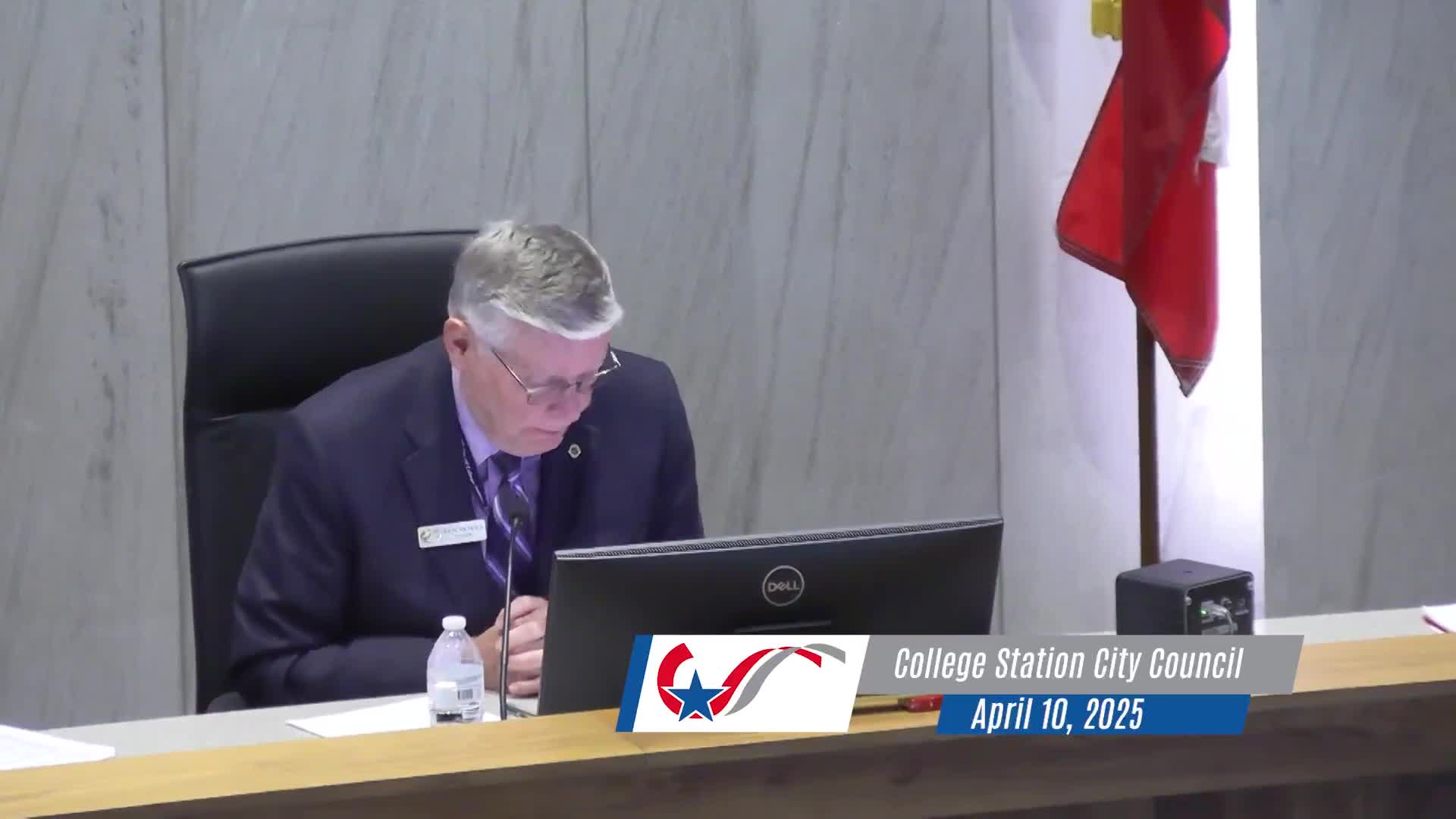
College Station council adopts 2025 strategic plan updates; authorizes mayor to send letters urging preservation of home-rule impact-fee authority
Summary
The College Station City Council on April 10 approved updates to its 2025 strategic plan and directed staff to pursue a legislative engagement approach aimed at protecting local home-rule authority, including the city's ability to impose or waive development impact fees.
The College Station City Council on April 10 approved updates to its 2025 strategic plan and directed staff to pursue a legislative engagement approach aimed at protecting local home-rule authority, including the city's ability to impose or waive development impact fees.
The council unanimously adopted a revised strategic-plan draft staff circulated after a February planning session. Chief of Staff Ross Brady told council that the packet included a redline version of the draft and that the edits reflected council'members' priorities. Council agreed to replace one line that read "pursue strategies to maintain housing affordability" with stronger language to "pursue strategies to achieve housing affordability." Councilmembers also discussed retaining a line calling for an "expanded and diversified consumer-oriented economy" after several members said the phrase reflected residents' repeated requests for more retail and experiential amenities.
Members added an action under good governance directing staff to develop a legislative platform and to "actively engage" with state legislators on matters that could affect local control. "The city will support home rule authority and oppose infringements upon home rule authority," one suggested sentence read during the debate.
The council then debated three draft letters prepared by the council's newly formed Legislative Engagement Committee that corrected testimony or urged state lawmakers to respect local authority on impact fees. Committee members Melissa McElhinney, Bob White and Jennifer Wright had circulated a version of the letters to Senators and a state representative. The packet included a letter to Senator Bettencourt and two letters related to Senate and House members discussing impact-fee legislation during a Senate Local Government Committee hearing.
Council amended the language in the letters to soften or clarify a paragraph that had divided members, then voted on whether to authorize the mayor to sign and transmit the revised letters on behalf of the city. The motion to send the letters with the mayor's signature passed by a 5-1 vote.
Mayor John P. Nichols said he would work with staff to finalize the language and add his signature. "I will work with Mr. Brady to finalize that language and add my signature, and we'll get it off tomorrow," Nichols said.
Why it matters: The changes formalize council's near-term priorities for economic development, housing affordability and state engagement. The explicit addition of a legislative action and the decision to transmit letters to state lawmakers underscore growing concern among council members about state-level bills that could restrict local authority to set impact fees and other local regulations.
What the letters say (summary): Committee drafts stated that while the bills under discussion did not, in current form, prohibit cities from imposing impact fees, College Station strongly opposed any state action that would abolish the city's authority to impose or collect impact fees. The letters argued that imposition and elimination of impact fees are matters best decided locally by elected councils after public debate.
Next steps: Staff will finalize the letters with the mayor's edits and transmit them to the named legislators. City staff will also draft a legislative platform and propose an action item laying out how the city will pursue legislative priorities during the current session.