Get Full Government Meeting Transcripts, Videos, & Alerts Forever!
Get email alerts on the Parking topic
No spam. Unsubscribe anytime.
College Station council asks staff to study overnight parking limits in areas near Texas A&M
Summary
After a lengthy workshop, the City Council directed staff to develop and return with proposals to limit overnight on‑street parking in high‑density neighborhoods near the university as a tool to address safety and overcrowding tied to unrelated-occupant housing.
College Station City Council members gave staff direction to study restrictions on overnight on‑street parking in high‑density neighborhoods near Texas A&M University and return with public‑engagement plans, possible boundaries and enforcement options.
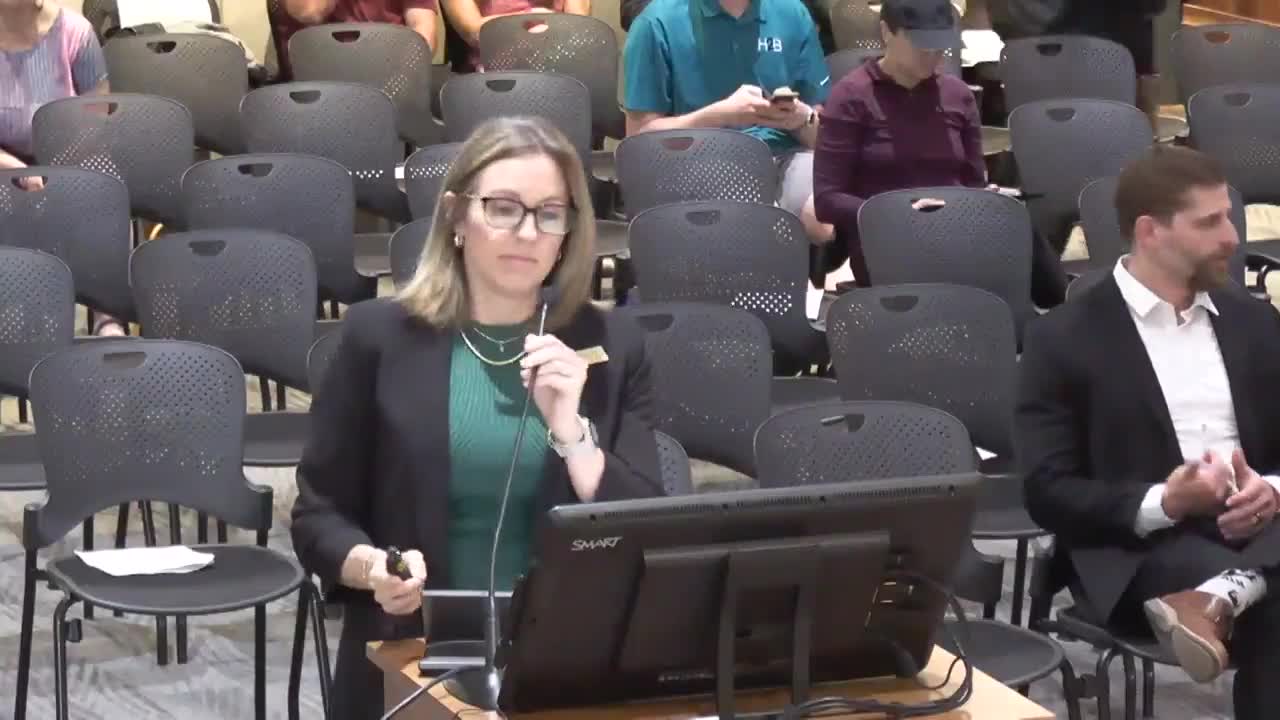
Council members said the measure is intended as one tool among several to reduce neighborhood overcrowding, improve emergency access and discourage long‑term street parking associated with unrelated‑occupant rentals. Assistant City Manager Jennifer Prochaska, who presented parking options, told the council that “there is no action item for tonight. This is just an opportunity for the council to be able to look at these options, ask questions about them, discuss amongst yourselves.”
The council discussed several specific approaches: a narrow overnight ban (for example, 1–5 a.m. or 2–5 a.m.), one‑side daytime parking in certain blocks, and more administratively complex options such as registered residential permits or license‑plate based programs. Prochaska cautioned that permit programs are administratively heavy to run and enforce. Council members repeatedly returned to an initial pilot approach — restricting overnight street parking in targeted zones for a trial period and evaluating results.
Supporters, including Councilmen Scott Schaeffer and William Wright, said a limited overnight ban would be relatively straightforward to enforce and could be a measurable first step. Councilman Scott Smith said he was “leaning toward the nighttime … 2 to 5AM parking prohibition,” citing ease of enforcement as a practical advantage. Councilwoman Melissa McElhinney and others urged outreach to affected residents and neighborhood groups before adoption.
Opposition and caution came from Councilman Robert Yancey, who flagged prior experiments that produced unintended consequences and urged a more holistic approach, including housing and transportation strategies. Yancey and others recommended extensive public engagement and recommended using the city’s survey and neighborhood meetings to test support.
Staff described enforcement options ranging from traditional parking citations and towing to technology such as license‑plate readers if council chose a permit model. Prochaska noted prior pilots with paid parking for special events had reduced parked vehicles but were controversial.
The council did not adopt an ordinance. Instead, members reached a consensus to ask staff to return with a detailed proposal: recommended geographic boundaries (beginning with Southside and adjacent conservation neighborhoods), proposed overnight hours, an enforcement plan, and a public‑engagement schedule. Staff was instructed to bring a workshop report and suggested ordinance language back to council for additional direction before any street‑by‑street changes.
If the council later moves forward with a prohibition in a zone, staff said the change would be implemented by ordinance and by signage on affected streets. Council members emphasized that exemptions, special events and safety needs (for example, fire‑engine access) must be considered in any plan.
Next steps: staff will prepare outreach materials and draft options for a future workshop; the council asked that proposed boundaries and an outreach plan be included when staff returns.
Ending — implementation and oversight: Council members said they favored starting with a limited test rather than a citywide program. Several members said adjustments after a pilot year would be expected. The council also asked staff to report back on expected enforcement costs, potential staffing needs and lessons from similar college towns.