Get Full Government Meeting Transcripts, Videos, & Alerts Forever!
Get email alerts on the Neighborhoods Taxes Occupancy topic
No spam. Unsubscribe anytime.
Midtown homeowners tell College Station council rising MMD levy and weak occupancy enforcement are eroding neighborhood promises
Summary
Several Midtown residents urged the College Station City Council on Jan. 23 to act after they said municipal management district (MMD) taxes rose sharply while promised commercial amenities did not materialize.
Several Midtown residents urged the College Station City Council on Jan. 23 to act after they said municipal management district (MMD) taxes rose sharply while promised commercial amenities did not materialize.
The heart of the complaint came from Shelby Behm, who said she lives in Midtown and that her 2024 property-tax bill showed a roughly $500 increase even though her property value had fallen and state tax relief had been enacted. "I discovered the reason for this is due to the municipal management district my property is zoned to had increased their tax rate 30% year to year," Behm said, adding that homeowners were sold a vision that included shops, restaurants and a recreation center that never arrived.
Why it matters: Behm and other speakers said the higher MMD levy and the lack of commercial development are shifting costs onto homeowners and undercutting the neighborhood plan promoted when properties were sold.
Other speakers connected that concern to long-running disputes over occupancy enforcement. Shirley DuPriest read from a city article and highlighted the city's zoning limit that allows no more than four unrelated occupants in suburban residential areas, saying enforcement tools and code clarity are needed. "Zoning and its enforcement are the key elements in assuring that the city is delivering on its charter mandate and vision," DuPriest said.
Fred DuPriest, who represents neighborhood advocates, said residents have repeatedly provided data and recommendations but see little result from enforcement efforts. "We've made those recommendations. We have been ineffective. We have failed," he said, adding the relationship between volunteer enforcement groups and the city had become a "black box."
Other residents echoed concerns that enforcement had not kept pace with changes in neighborhood occupancy. Richard Woodward said despite new ordinances and a moratorium, the neighborhood continues to see over-occupancy. "You all want the law to be enforced," Woodward said. "Proof's in the pudding."
Jacob McFarland, speaking for Delaney subdivision residents, said the community has worked with the city for five years and provided data and legal changes without seeing desired results. "What more can we do for you? It seems there's nothing left that we, the citizens, can do," McFarland said.
A final public commenter, dialing in online, raised a separate legal complaint about the city's handling of petitions under state law. Scott Lovett asked the council to "cease your violation" of Senate Bill 2038 and criticized the city's legal position on denying petitions under the statute.
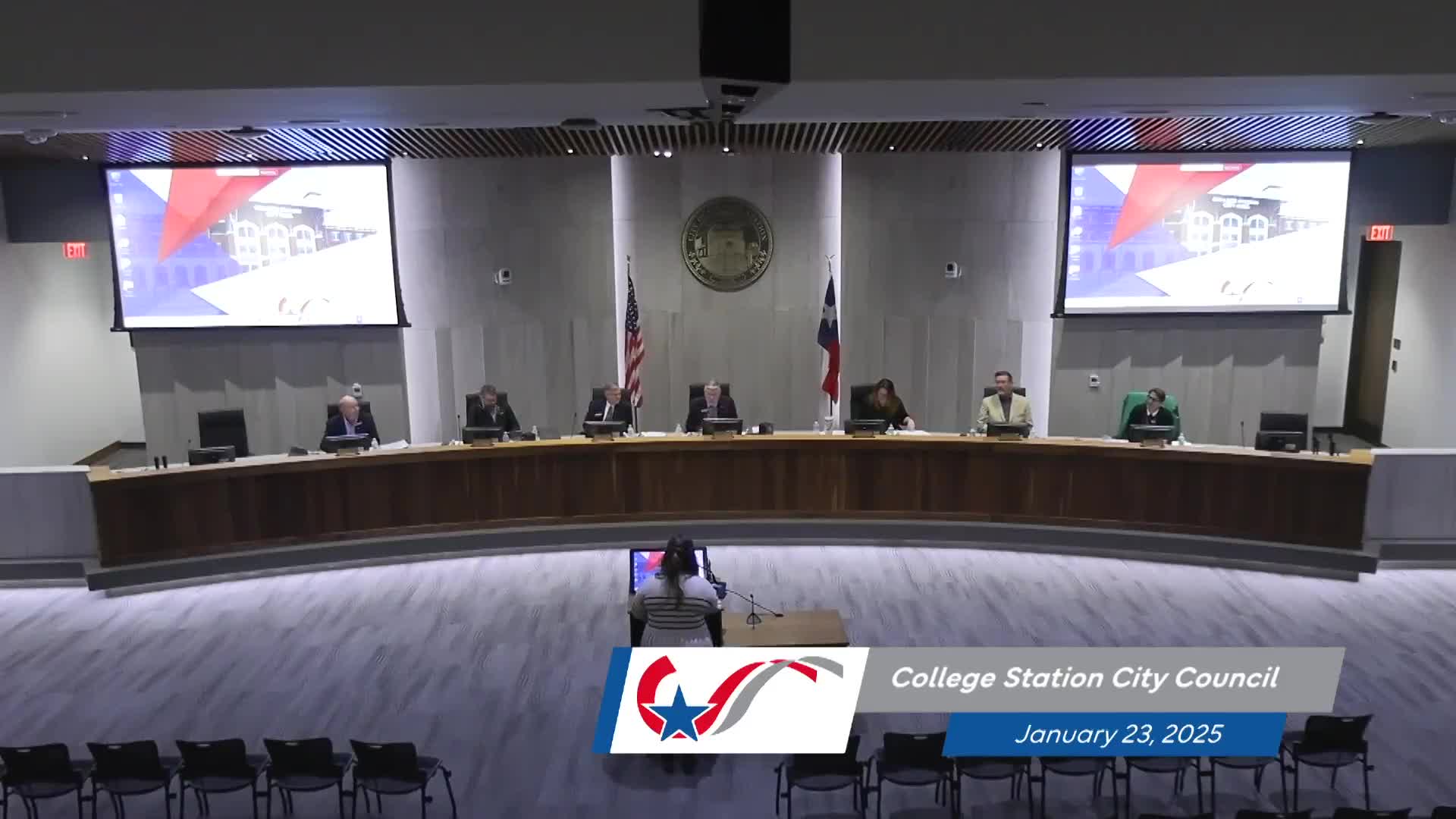
Council response and next steps: The remarks were delivered during the meeting's "hear visitors" public-comment period. Council members did not take a formal vote on the issues during the meeting; the period is intended for the council to receive information and, when appropriate, ask staff to investigate or place items on a future agenda. No formal direction or ordinance change was adopted on Jan. 23.
Community context and clarifying details: Behm asserted her parcel's MMD tax rate was raised about 30% year to year and said promised commercial amenities — including a recreation center and pool — have not been built. Residents reported producing evidence for enforcement teams, including thousands of photographs, and described several years of recommended changes that they say were not fully implemented.
Where this could go next: Speakers asked council to prioritize commercial development in Midtown and to publicly clarify occupancy enforcement steps, evidence standards, and enforcement outcomes. Councilmembers signaled they had heard the concerns and may place those topics—enforcement status and Midtown development promises—on future workshops or agenda items for staff follow-up.
Ending: The council did not take formal action during the public comment period; any follow-up would require staff research or a future agenda item and formal council vote.