Get Full Government Meeting Transcripts, Videos, & Alerts Forever!
Get email alerts on the Legislation Ab371 topic
No spam. Unsubscribe anytime.
Nevada cosmetology board votes to oppose multistate cosmetology licensure compact after lengthy briefing and public comment
Summary
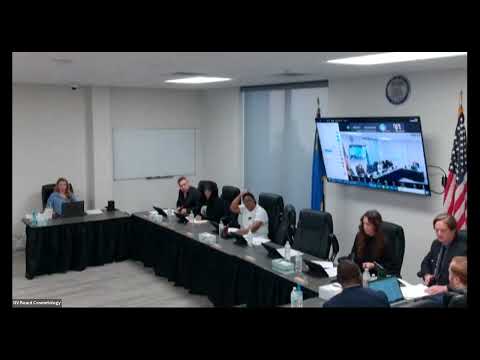
After a two-hour presentation and extended public and member discussion about a proposed multistate cosmetology licensure compact (AB371), the Nevada State Board of Cosmetology voted to oppose the bill on March 24, citing concerns about fraud, enforcement, and state-specific training standards.
The Nevada State Board of Cosmetology voted March 24 to oppose Assembly Bill 371, a proposal to adopt a multistate cosmetology licensure compact, after a presentation by the Future of the Beauty Industry Coalition and extensive public comment and board discussion.
What the compact would do: Presenters said the compact would allow a cosmetology license issued in a member state to grant the holder a privilege to practice in other member states without reapplication — similar in concept to the interstate driver’s-license model. Supporters, speaking for employers with multistate staffing needs, said the compact would improve licensee mobility, support military spouses and disaster-displaced workers, and provide a multistate database for adverse-action reporting.
Arguments and concerns: Board members, staff and public commenters raised concerns about differences in training hours between states, diploma- and license-fraud, human trafficking and enforcement gaps, fiscal and IT integration costs, and whether the commission could effectively exclude problem member states. Speakers from cosmetology schools and instructors argued that Nevada’s current 1,600-hour program protects public health and that reducing hours or enabling easier movement of underskilled practitioners could harm consumers. Board staff noted potential fiscal impacts for initial implementation and the need to add staff to handle new processes.
Presenters’ responses: Leslie Roste (Future of the Beauty Industry Coalition) said the compact preserves each state’s authority over hours, testing, fees and scope and that multistate licenses would be issued by home states; the proposed commission would create common database and bylaw rules. She said the commission’s rules would be written at an initial meeting planned for July and that the first multistate licenses were projected to be issued in early 2026, subject to commission rules and state implementation.
Board action: Following public comment and extended Q&A, a board member moved to oppose AB371; the motion passed on a voice vote. The transcript shows the board discussed fiscal considerations (staffing and software integration), public-safety and fraud concerns, and the limits of state enforcement over licensees issued by other states. The board’s formal opposition will be reflected in the administrative record; staff indicated they will implement any statute adopted by the legislature but will raise the board’s concerns in testimony and comment.