Get Full Government Meeting Transcripts, Videos, & Alerts Forever!
Get email alerts on the Public Safety Labor topic
No spam. Unsubscribe anytime.
Mesquite police association urges council to reconsider pay parity policy, warns of recruitment shortfalls
Summary
Members of the Mesquite Police Association and law enforcement advocates told the council public comment that a city pay‑parity policy dating to 1992 has left patrol officers paid last among seven comparable cities and urged a public debate to resolve recruitment and retention problems.
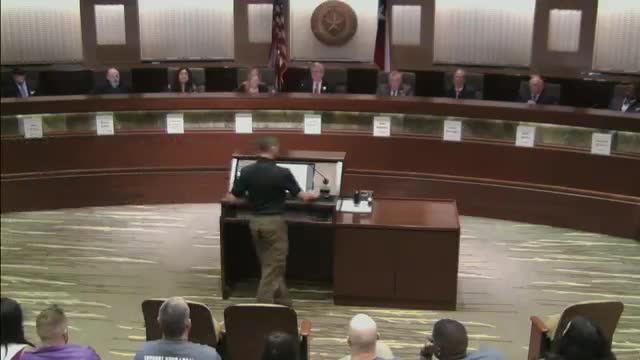
Representatives of the Mesquite Police Association called on the council Wednesday to publicly debate and change a long‑standing pay parity policy that ties police and firefighter pay, saying the rule has left officers behind market rates and harmed recruitment and morale.
Bruce Zells, president of the Mesquite Police Association, told the council the department is last among seven comparable cities in the city's market-based pay analysis while firefighters rank third. "Pay parity ... requires that employees at the rank of police officer and firefighter be paid the same salary even if the market indicates that police officers and firefighters' salaries should be different," Zells said, and he urged the council to identify its position on the policy.
Clint McNear, representing regional law enforcement groups, said the policy is "antiquated" and noted that the council's own budget workshops have documented the pay gap. McNear said the situation affects recruitment and retention and warned that a recent homicide just before the meeting had drawn officers to an active scene, underscoring the stakes for staffing.
Zells said the association provided updated 2025 salary studies and three pay proposals to the city and asked for a transparent, public debate. He said pay parity was established in 1992 and that changing it is a matter for council action.
What was not requested or decided: these remarks were public comments; the council did not take immediate action on pay parity during the meeting. Several council members and the mayor acknowledged the comments and indicated willingness to continue discussions outside the public comment period.
Why it matters: Council control of local pay policy affects the city's ability to recruit and retain sworn officers. Association leaders warned low pay could harm public safety by reducing staffing and increasing turnover.