Get Full Government Meeting Transcripts, Videos, & Alerts Forever!
Get email alerts on the County Budget Process topic
No spam. Unsubscribe anytime.
Supervisors weigh flat tax recommendation, budget tradeoffs and timeline for follow‑up study sessions
Summary
Budget staff presented follow‑up numbers on positions, parcel counts and the difference between a flat tax and a T&T (truth‑in‑taxation) approach. Supervisors debated leaving the property tax rate flat in the recommended budget versus lowering it, and asked staff for a concise summary and a follow‑up study session.
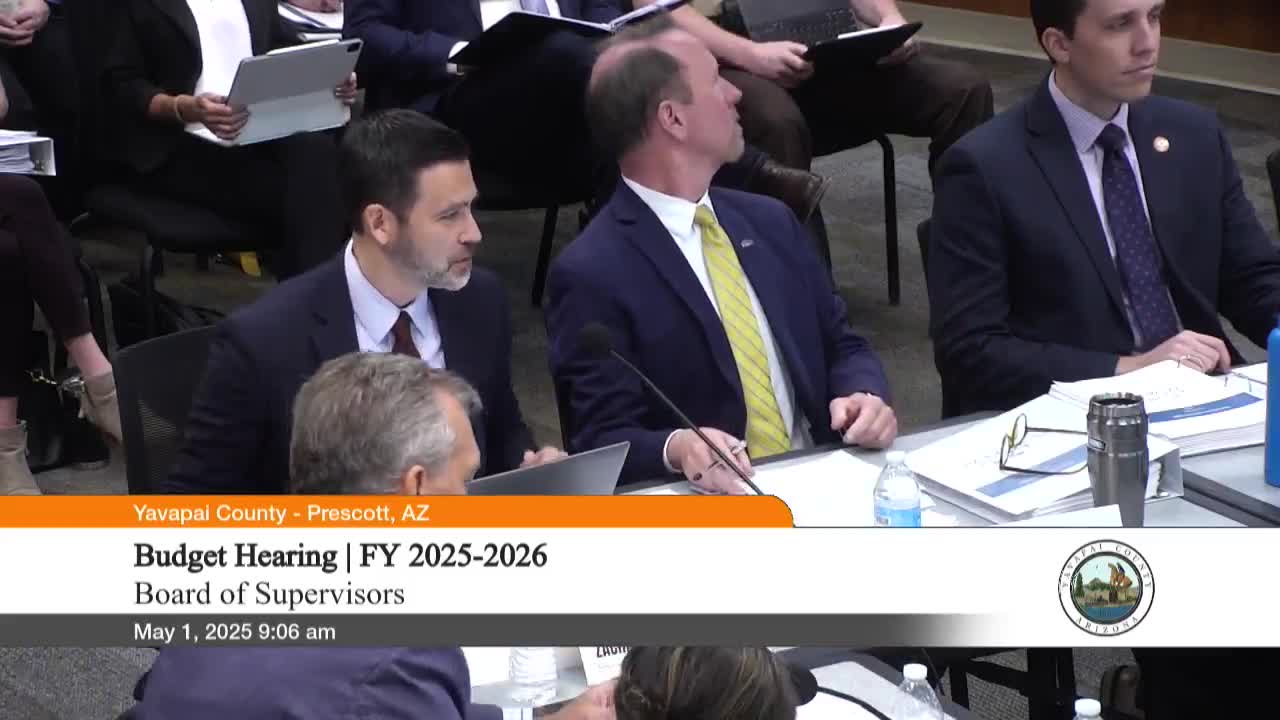
Budget manager Zack Wolf and County Manager Maury Thompson walked the Board of Supervisors through follow‑ups from prior study sessions on May 1, clarifying personnel and levy details and the fiscal effect of alternative tax approaches.
Wolf told the board the recommended budget proposes a flat property tax rate equal to a 1.6443 rate producing a $66,000,000 levy under current assumptions; a truth‑in‑taxation (T&T) option would reduce the levy by roughly $2,182,000. He also reconciled an earlier personnel discrepancy in the treasurer—s office, noting a recurring $63,032 savings after correcting a mid‑year position change.
Supervisors debated the recommended flat rate. Some members said the county—s 2024 Proposition 4‑79 (expenditure limitation change) was intended primarily to enable capital projects, and voiced reluctance to raise recurring operational commitments or appear to increase taxes after that vote. Others argued that keeping the rate flat avoids cutting services and preserves staff pay and public‑safety investments that supervisors had prioritized.
Thompson and budget staff said a concise high‑level summary of recommended changes and the general‑fund impacts would be prepared for the next budget session and that staff would provide more detailed schedules for Tuesday—s reconvened study meeting. Supervisors asked staff to prepare options showing where reductions could be made if the board wanted to lower the rate and to identify one‑time versus ongoing tradeoffs.