Get Full Government Meeting Transcripts, Videos, & Alerts Forever!
Get email alerts on the Staffing And Compensation topic
No spam. Unsubscribe anytime.
Supervisors weigh staffing additions, vacancy savings and continued compensation increases in FY‑26 draft
Summary
Board members debated a package of proposed new positions, a vacancy‑savings factor, and pay assumptions during the May 6 study session; staff proposed removing an assistant to the county manager position, keeping a budget analyst, and applying roughly $1.8 million in vacancy savings to generate recurring capacity.
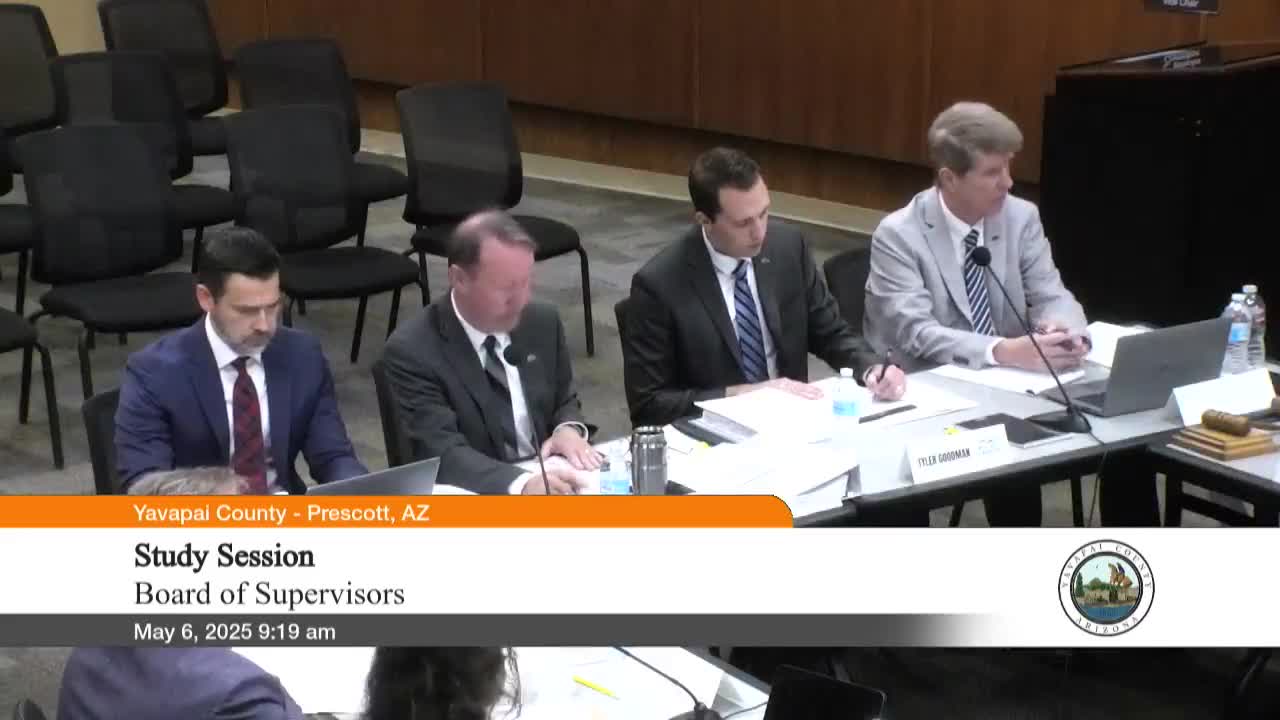
YAVAPAI COUNTY, Ariz. — Supervisors spent substantive time on May 6 reviewing proposed FY‑26 staffing changes, vacancy practices, and compensation assumptions that will shape recurring costs.
Key staffing decisions discussed: Staff reported $205,176 in recurring savings from removing the assistant to the county manager position and a closed administrative assistant position in the treasurer’s office. The recommended staffing list included roughly 25–26 net new positions across departments in the initial packet, though staff said some numbers were still being reconciled. Department requests discussed included attorneys for the county attorney’s office, additional court security and justice‑court positions, juvenile probation detention slots, sheriff’s deputies and communications operators, a facilities capital projects manager and coordinator, and a library network administrator. The board signaled support for removing the assistant to the county manager while retaining a budget analyst position.
Vacancy savings factor and rationale: For FY‑26 staff proposed applying a vacancy‑savings factor to capture historical turnover and free recurring capacity; the budget office estimated roughly $1.8 million in recurring vacancy savings to be applied organization‑wide rather than showing the entire amount as one‑time bottom‑line fund balance. Budget staff explained the factor was developed from historical vacancy patterns in large departments and capped at a conservative fraction of prior years’ vacancy savings to avoid over‑reliance on unfilled positions.
Compensation and benefits: Human resources director Wendy Ross described benefit cost drivers and how positions were budgeted at midpoint salary plus benefit loading. Ross said the county’s health insurance rates rose for FY‑26 and told the board, “We did a 7% increase on the health insurance,” clarifying the county pays full single coverage and subsidizes family coverage. Staff also noted the draft included a combined merit and COLA assumption in the 5–6% range tied to market conditions and HR policy.
Process concerns and follow up: Several supervisors asked for clearer, earlier information next year. Supervisor Chek criticized aspects of the process and urged more lead time and alternative budget scenarios; other supervisors and staff agreed to schedule additional study sessions and to refine the FTE reconciliation for the tentative budget. Staff also said some departmental changes (for example, the assessor’s proposed reallocation) were still being finalized and would be reconciled before the tentative budget.
Ending note: Staff will reconcile the new position count, confirm the vacancy‑savings application, and return a tentative budget that reflects the board’s direction on which positions to remove or retain. Final hiring and ongoing funding decisions will depend on the board’s adopted budget and subsequent staffing authorizations.