Get Full Government Meeting Transcripts, Videos, & Alerts Forever!
Get email alerts on the Frisco Center For The Arts topic
No spam. Unsubscribe anytime.
Frisco council sets May 3 vote on $300–$340 million Frisco Center for the Arts; council approves ballot language
Summary
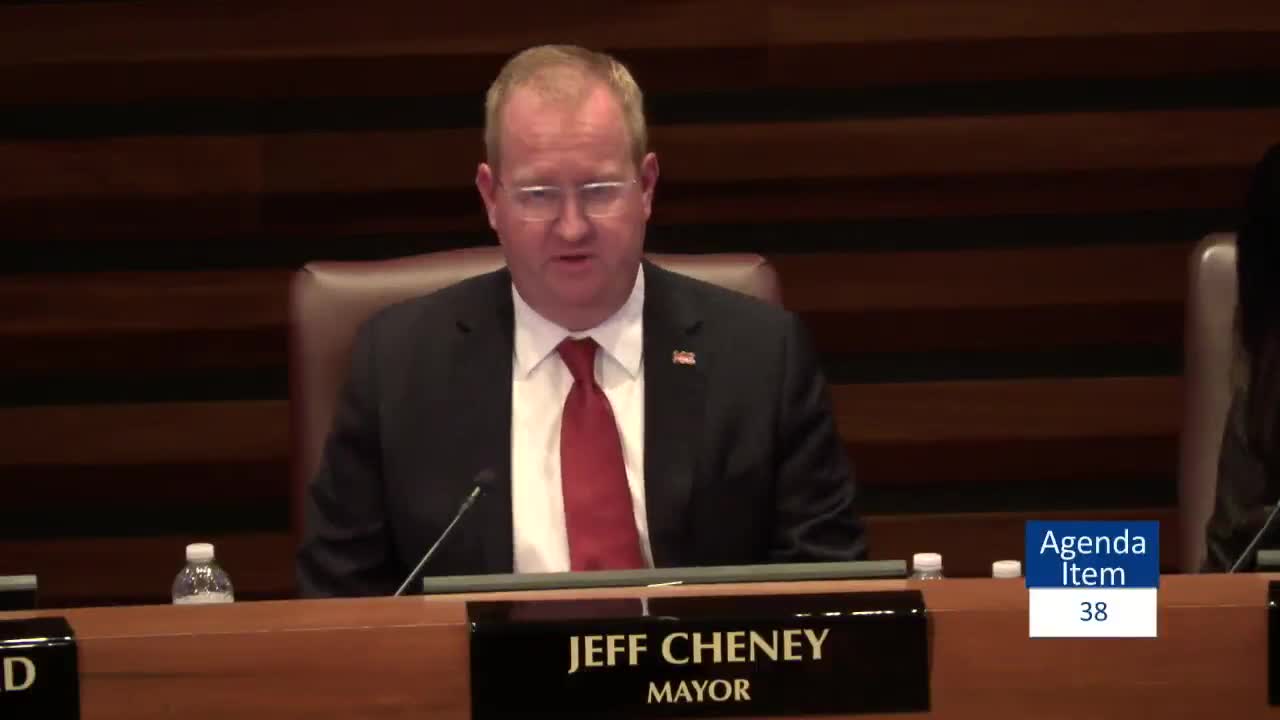
Frisco City Council voted 5–1 on Tuesday to place two ballot measures on the May 3 special election that would authorize use of economic-development sales-tax proceeds and allow the city to issue up to $160 million in bonds to help fund the proposed Frisco Center for the Arts, a two-venue performing-arts facility estimated to cost $300 million–$340 million.
Frisco City Council voted 5–1 on Tuesday to put two ballot measures before voters on May 3 that would authorize financing steps for the proposed Frisco Center for the Arts, a multi-venue performing arts facility the city and its partners have studied for several years.
The measures would (1) allow the Frisco Economic Development Corporation to use proceeds of its sales-and-use tax for the proposed Center for the Arts and (2) authorize the city to issue bonds in an amount not to exceed $160 million for a city-owned performing-arts facility. Council action on the ordinances calls a special election for May 3 to let qualified city voters decide whether to approve both items.
The vote follows a multihour presentation and discussion during which city consultants and project partners outlined the proposal: a Broadway-capable large hall of roughly 2,800 seats and a community hall of about 300–400 seats, a partnership agreement in development with Prosper Independent School District, and a capital plan that combines private philanthropy, school-district support and public economic-development financing. City materials estimate total project cost in the range of $300 million to $340 million, with a roughly $100 million private capital campaign target and a $100 million contribution indicated by Prosper ISD in current planning documents.
City staff and consultants described a funding “puzzle” that would mix private gifts, a USD 100 million Prosper ISD commitment, and public economic-development tools. The draft funding framework discussed at the session allocates roughly $45 million from the city’s Community Development Corporation (CDC) sales-tax proceeds, $75 million from the Economic Development Corporation (EDC) proceeds and $40 million of TIRZ-1 (tax increment) support, subject to voter authorization and later council decisions on issuance. Consultants emphasized that pledges typically convert to cash over multiple years and that fundraising timing is a principal risk for keeping the schedule and budget on track.
Councilmembers repeatedly stressed that the May ballot questions would only authorize future actions — not immediately spend cash or change the tax rate. If voters approve the bond authorization, council and staff would still decide whether and when to issue bonds, set issuance terms and approve construction contracts. Staff also said an operator selection process and a fundraising plan are underway and would return to council for further approvals.
Public comment at the meeting was extensive and split. Supporters said the facility would be an economic-development catalyst, draw regional visitors, and provide education and workforce opportunities for students. Opponents warned the project is expensive, pointed to financial problems at other performing-arts centers, and argued the city should prioritize immediate needs such as staffing for public safety or an animal shelter. City leaders and consultants said those arguments are part of the public debate the May election is intended to resolve.
Next steps laid out by city staff include continued concept design, a capital-campaign plan and a public information program ahead of the May ballot. If voters approve authorizations in May, staff said the city would retain multiple decision points before committing to construction, including schematic design sign-off, fundraising milestones, and bond issuance approvals.
What the council decided: the motion to call the special election and place the two ballot questions passed 5–1. One council member voted no; the council did not record individual roll-call votes in the meeting transcript.
Details and context: city consultants said a qualified capital-campaign effort could net roughly $100 million toward the project, with an estimated split of 50–60% coming from individual gifts and 40–50% from corporate giving. Consultants also estimated the project could produce large construction and annual economic impacts for Collin and Denton counties, and they stressed the importance of converting pledges to cash in order to keep construction on schedule and avoid pauses that increase cost.
The city’s presentation, supporting reports and a schedule for additional public meetings are posted on the project web page; staff also scheduled a virtual Q&A for community members in the coming week.