Get Full Government Meeting Transcripts, Videos, & Alerts Forever!
Get email alerts on the Special Education Audit topic
No spam. Unsubscribe anytime.
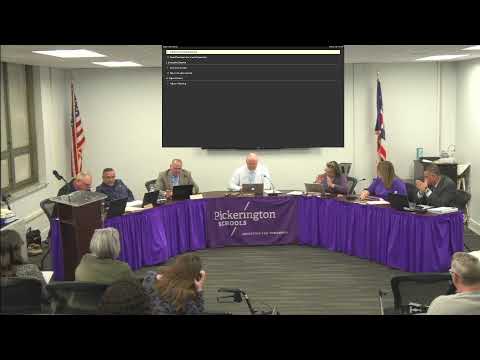
Pickerington Local reviews special-education audit; board hears staffing and parent concerns
Summary
Pickerington Local School District trustees received a special-education audit presentation from New Solutions K12 on March 10, 2025, outlining six opportunities to reorganize instruction, interventions and staffing to better serve students with disabilities.
Pickerington Local School District trustees received a report Monday evening from New Solutions K12 that recommends structural changes to the district’s special-education program and a multi-year implementation plan to reduce staff workload and improve outcomes for students with disabilities.
The consultant, Nate Levinson, summarized a six-point set of opportunities after a month-long review of practices, interviews and data. The recommendations include empowering general-education teachers to assume larger instructional roles for students with mild-to-moderate disabilities, expanding access to evidence-based intervention time, reorganizing specialized “unit” classrooms by student need and teacher strengths, designing a workload-based staffing model for special educators, allowing staff to specialize, and improving two-way communication with families and staff.
The report matters because district leaders and parents told the board the special-education caseloads and severity of needs have increased, and staff turnover among paraprofessionals is high. Trustees and administrators said they want changes that can be sustained without necessarily increasing total spending, but they acknowledged some reallocation of positions and more specialized hires will likely be required.
Levinson told the board that great core instruction in general education is the primary lever for improving outcomes: “Great teaching is great teaching,” he said, arguing that many students with mild-to-moderate disabilities would benefit when general-education teachers take ownership of core instruction and when supplemental, content-strong interventions are available.
The consultant said many of the district’s best-practice interventions already exist but are unevenly distributed across schools and not always available to students on Individualized Education Programs (IEPs). He described a workload approach that counts hours and average group size rather than a simple caseload number, and urged the district to let staff specialize (for example, behavior specialists) so teachers can “play to their strengths.”
District staff said they accept the report’s findings and have begun internal work. Christina (last name not specified) and Malika briefed the board that the district’s guiding coalition has begun unpacking items and that an initial implementation plan is expected by the end of the summer, with a larger 3–5 year rollout anticipated. The district said planning will separate work by grade band because elementary, middle and high school models differ.
Board members expressed concern about rising severity of student needs, incidents of staff being physically harmed in classrooms, and paraprofessional turnover. A board member reported 26 paraprofessional resignations in special education since the start of the school year. Trustees repeatedly asked for clarity about how any reallocation would affect day-to-day services and whether the district could create specialized roles without increasing overall cost.
Several parents and community members addressed the board during public participation. Rebecca Gilmore, a Sycamore Creek Elementary parent, said she has advocated at IEP meetings for her son, who has quadriplegic cerebral palsy, to be placed in general education with a one-to-one paraprofessional and described long waits for needed supports. She and other commenters urged better training, planning time, pay and retention for paraprofessionals and clearer district communication about available resources.
Multiple parents urged the district to consider reorganizing specialized units by support level (mild, moderate, full support) rather than by grade, a change some trustees and the consultant said could increase teacher satisfaction and improve student matches to provider expertise.
District leaders noted the report recommends prioritization and multi-year focus: staff should first build common language and understanding, then create detailed implementation plans with stakeholder buy-in. Administration said this will require focused communication and ongoing monitoring rather than one-time fixes.
Votes at a glance
- Approval of meeting agenda — motion and second; roll-call unanimous (Postage, Henson, Niekamp, Lopez, Olszewski): approved. - Minutes of Feb. 24, 2025 regular meeting — motion and second; roll-call unanimous: approved. - Rates-and-amounts resolution (county tax rates/amounts) — motion and second; roll-call unanimous: approved. - Consent agenda (personnel actions, stipends, volunteer approvals, early graduations, camps) — motion and second; roll-call unanimous: approved. - 2025–26 elementary school handbook (second reading) — motion and second; roll-call unanimous: approved with clerical update to superintendent name. - Job description: Coordinator of Engagement and Student Success — motion and second; roll-call unanimous: approved. - Motion to recess into executive session under Ohio Rev. Code §121.22(G)(1) (preparing for negotiations and employment matters) — motion and second; roll-call unanimous: approved.
What’s next
District staff said they plan to notify families who may be affected by other agenda items (attendance-area amendments) and to circulate an initial implementation plan for the special-education recommendations by the end of the summer. Administrators emphasized the work is expected to take several years and will require prioritization, targeted communication and continued board oversight.
The presentation and many comments emphasized that the changes will be difficult but feasible if the district prioritizes supports, clarifies roles and increases transparency around workload and staffing decisions.