Get Full Government Meeting Transcripts, Videos, & Alerts Forever!
Get email alerts on the Budget Oversight topic
No spam. Unsubscribe anytime.
Pickerington board pulls service-fund and bill-payment authority from consent agenda, tasks finance committee to review
Summary
Trustees removed the 2025 service fund item and a routine authorization allowing the treasurer to pay bills from the consent agenda, directing a newly formed finance committee to recommend a process for encumbrances and then-and-now purchases.
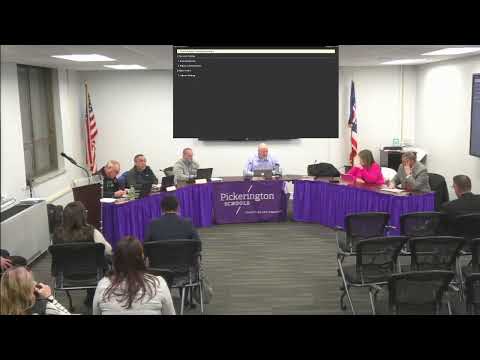
At its Jan. 13 regular meeting the Pickerington Local School District board voted to remove two items from the consent agenda — the 2025 service fund authorization and the routine resolution that authorizes the treasurer to pay bills — and asked a finance committee to review related purchasing and encumbrance procedures.
Board members debated the authority granted in the consent agenda that allows the treasurer to pay bills once invoices and receipts are in order. One trustee proposed removing the authorization while the district is running a deficit, arguing the board should review encumbrances and purchase orders before the treasurer issues payments. That motion passed by roll call.
Treasurer John Walsh explained the district’s purchasing process and the “then-and-now” certification used when purchases occur without a prior purchase order. Walsh said then-and-now certification applies when someone procures goods or services without a purchase order; the treasurer’s statutory authority to pay such invoices is limited to $3,000, and amounts above that must be presented to the board for approval.
The board directed that the question return to the finance committee for recommendations on a process that would reduce the frequency of then-and-now certifications and improve policy compliance. Trustees appointed a finance committee liaison at the meeting and asked the committee to report back with options.
Separately, the board tabled the consent-item authorizing the 2025 service fund — a fund funded at $2 per student or a stated $20,000 maximum in the draft — to allow staff to provide detail on past spending and whether the full amount is necessary while the district is deficit spending.
Board members noted that approving a budget does not by itself authorize specific encumbrances; encumbrances (purchase orders) establish authority to spend against budgeted funds. Several trustees pressed for clearer policy and administrative practice so the board and public have transparency about commitments of funds.
The board later approved most of the remaining consent agenda items after removing the two contested entries. Members agreed to create or reconstitute a finance committee to examine the purchasing and encumbrance process and to bring recommendations to the full board.