Get Full Government Meeting Transcripts, Videos, & Alerts Forever!
Get email alerts on the Social Services topic
No spam. Unsubscribe anytime.
Valley Veterans Service Center budget gaps prompt request for county support and state advocacy
Summary
Valley Vets director told commissioners that claim workload and staffing have grown sharply and that the voter‑approved levy will not fully cover rising personnel and rent costs. She and commissioners discussed using grant carryforward and seeking legislative relief; county leaders asked for follow‑up on sustainable funding options.
The Board of County Commissioners on May 7 heard a preliminary budget and staffing update from the Valley Veterans Service Center (Valley Vets) and discussed revenue shortfalls that will require county choices or legislative fixes.
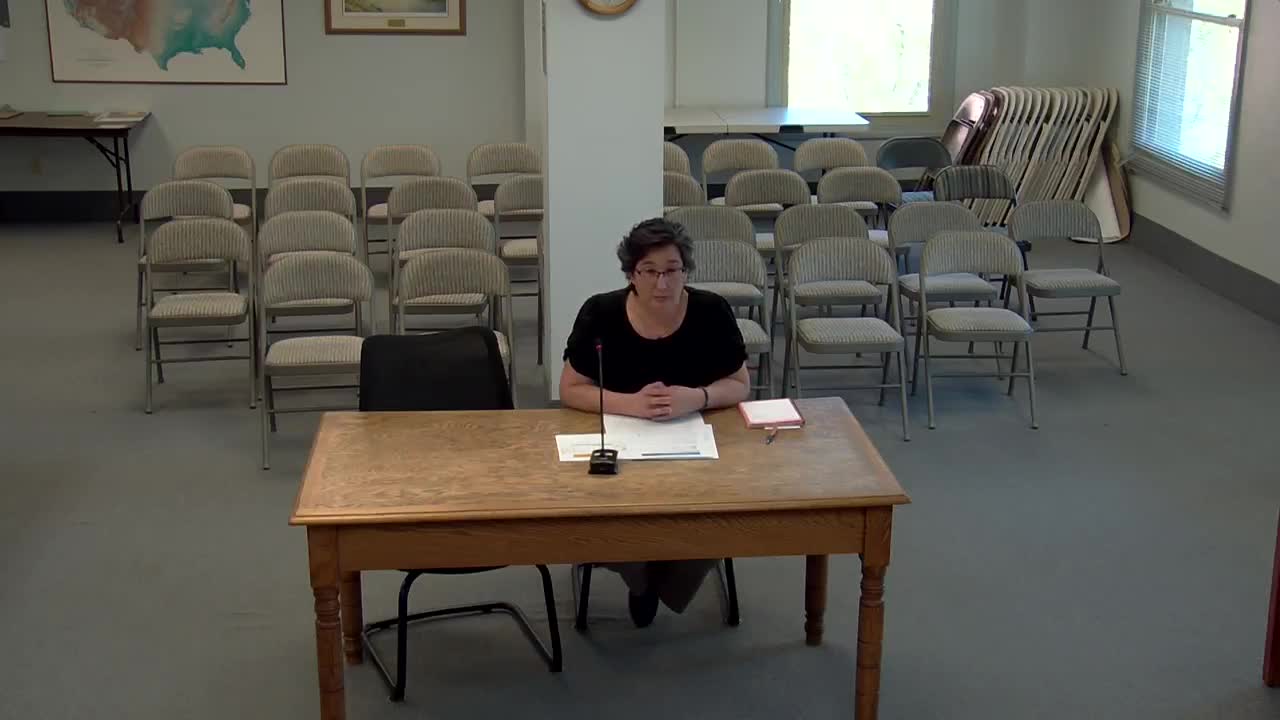
Jamie, the center’s representative, told the board the office is processing a steep increase in casework and that claims handled by Valley Vets have risen from 274 in fiscal 2022 to 419 so far in the current fiscal year. “Our workload has nearly doubled in the last few years,” Jamie said, noting the burden on capacity and continuity when trained staff leave for higher wages elsewhere.
Why it matters: Valley Vets provides claims assistance and outreach to veterans in Ravalli County. Commissioners and staff agreed that more stable operational funding is needed if the center is to continue current services without drawing on general county funds.
Key points
- Workload and staffing: Jamie described rising claims and turnover. The office has expanded staff over recent years; several VSOs hired by the center later took positions with the VA. Commissioners and staff said retention pressures are real and asked whether the levy revenue would sustain the current staffing levels.
- Budget and levy: Valley Vets’ levy and permissive medical revenues do not fully cover the projected expenditures. Staff noted the center has some cash carryforward and a state grant balance intended for infrastructure and start‑up costs, but those funds are not typically allowed to pay ongoing salaries.
- Rent and operations: The center faces a rent increase later in the fiscal year. Staff said finding county office space could reduce rent costs but the county currently has limited spare office capacity.
- Potential funding routes: Commissioners asked staff to pursue legislative advocacy for increased state support, examine certification models that could unlock funding, and consider using allowable grant reserves for rent or capital needs where statute permits.
Discussion vs. decision
- Discussion: Commissioners and Jamie discussed program growth, staff turnover, rent pressures, and federally funded benefits that the center helps veterans access. Commissioners asked for options to sustain operations and for more detail on restricted‑use grant balances.
- Direction/assignment: Staff were asked to follow up on whether state grant carryforward can legally be applied to rent or certain infrastructure costs, and to continue legislative outreach to increase state support for VSOs.
- Formal action: No binding funding action was taken by the Board at the meeting. Commissioners expressed support for pursuit of state and federal funding avenues and for bringing back additional options.
Clarifying details
- Claims: The Valley Vets claimant count was reported at 419 for the current fiscal year versus 274 for fiscal 2022.
- Revenue: The levy generates roughly in the mid‑hundreds of thousands (figures discussed in meeting materials show revenues in the $300k–$390k range depending on assessment and permissive medical contributions); staff noted last year’s carryforward and grant balances that could be applied to capital or start‑up needs but not necessarily to salaries.
- Possible costs: Jamie said one Spanish‑language two‑day trial could cost roughly $6,000 if interpreters are required.
Quotes (from meeting speakers)
- “Our workload has nearly doubled in the last few years,” Jamie said.
- On federal/state roles: a commissioner noted, “The federal government should be contributing to our operational budget because we are doing the federal government’s job,” reflecting discussion about whether federal/state funding should cover more operational costs.
What’s next
Staff will investigate allowable uses of state grant carryforward and other restricted funds, explore office space alternatives to reduce rent, and continue to press for legislative remedies that would provide recurring support for veteran service offices. The board asked Valley Vets to return with more detail on sustainable revenue options.
Ending
Commissioners recognized the public service provided by the Valley Veterans Service Center and directed staff to seek options for bridging near‑term gaps while pursuing longer‑term revenue fixes.