Get Full Government Meeting Transcripts, Videos, & Alerts Forever!
Get email alerts on the Facilities Buildingplan topic
No spam. Unsubscribe anytime.
Spartanburg District 1 board approves phase 1 and 2 of long-range building plan; referendum still required to build
Summary
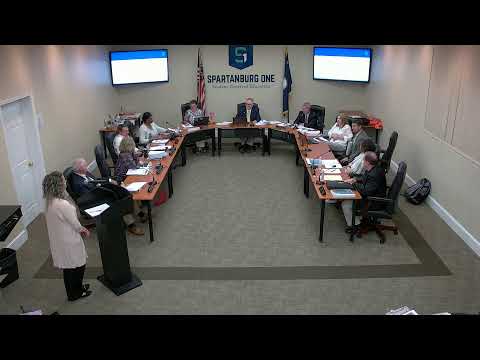
The Spartanburg School District 1 board on Tuesday unanimously approved administration’s recommendation to proceed with phase 1 and phase 2 of the district’s One Vision, One Future building plan, a planning step that would lead to design work and, if the board chooses later, a referendum to fund construction.
The Spartanburg School District 1 board on Tuesday unanimously approved administration’s recommendation to proceed with phase 1 and phase 2 of the district’s One Vision, One Future building plan, a planning step that would lead to design work and, if the board chooses later, a referendum to fund construction.
The vote came after an operations presentation by Jason McCraw, who described the plan as the product of a multi‑year facility and demographic study. “We are asking for the opportunity to to continue down this road for the district to be prepared if you guys feel so moved,” McCraw said, asking the board to approve phase 1 and phase 2 only.
The nut graph: The plan calls for new and rebuilt school facilities and site improvements intended to address the district’s aging buildings (the presentation noted an average building age of about 58 years) and to rebalance grade bands across the district. Board members stressed that the board’s approval on Tuesday authorized planning and design work for phases 1 and 2, not construction; any bond or tax referendum would require a separate board resolution and voter approval.
Most important facts: Phase 2 priorities named by administration include a new Mabry Middle School (grades 6–8) and a new O.P. Earl Elementary School; the package also includes a cafeteria and classroom additions at New Prospect Elementary and car‑line and parking changes at Holly Springs/Motlow Elementary. Phase 3 concepts discussed include a potential new Emman (K–5) at the old Mabry site and additional classrooms across the district, but the board did not approve phase 3. McCraw said New Prospect’s cafeteria will need redesign and that car‑line reconfiguration is required to meet code once major construction occurs.
Legal and procedural points: Chairman Rollins and other trustees asked for clarity on process; Trustee Banford emphasized that Tuesday’s action does not authorize construction. “This is not approving that we’re going to build the school or any of that. This is just a move forward because there at some point would be a referendum. That’s correct?” Banford asked. Dr. Mark Smith, superintendent, and McCraw confirmed: a separate board resolution to call a referendum would be required and the administration expects to return with a referendum resolution if the board directs it (the superintendent said he hoped to bring a resolution in August for a possible November referendum).
Capital funding and permitting: McCraw reviewed capital funds carried over (roughly $6.5 million in the capital fund, he said) and anticipated additional capital allocations in the fall. He cautioned that some projects require Office of School Facilities (OSF) reviews and state procurement and approvals before construction contracts can be issued. Several trustees raised questions about site readiness and costs for specific locations including the former Mabry site; McCraw said those details would be studied during design.
Other capital items tied to the plan: The operations presentation also listed campus‑level capital priorities that administration expects to advance alongside the building plan, including painting, additional indoor/outdoor cameras, two‑way radios for staff safety, permanent or high‑quality portable restroom units for athletic sites, athletic bullpen renovations, and practice turf fields at the two high schools. McCraw described the turf option as a practice field (not a game field) intended to serve multiple sports and as a “better bang for our buck” than smaller agility surfaces.
What’s next: The board’s approval authorizes staff to continue planning, engage architects and designers, and prepare materials needed should the board later vote to place a referendum before voters. McCraw and Dr. Smith said the administration will return with more detailed cost estimates, OSF requirements, and a recommended timeline; the board did not set a construction schedule on Tuesday.