
Board approves first reading of $160.3 million FY26 budget; one member votes no
Get AI-powered insights, summaries, and transcripts
Subscribe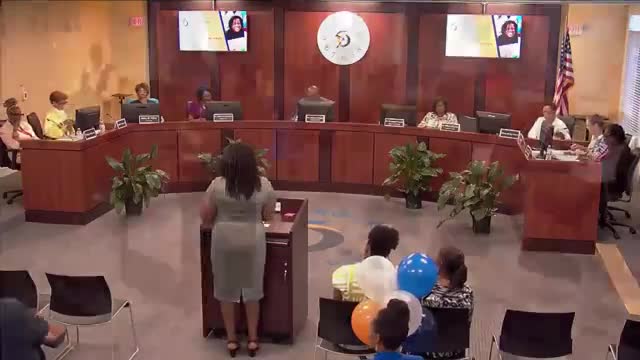
Summary
The Orangeburg County School District board voted May 13 to approve the first reading of a $160.3 million fiscal year 2026 budget that includes mandated pay increases and a one-time retention bonus; the motion passed with one dissent.
ORANGEBURG, S.C. — The Orangeburg County School District Board of Trustees on May 13 approved the first reading of a proposed fiscal year 2026 budget that would total $160,315,918.82 if the board adopts the version that includes one-time retention bonuses.
The budget approved for first reading by the board would fund a $1,500 required pay increase for employees on the professional salary schedule, a one-time $1,000 retention bonus, a 2% increase for bus drivers, step increases where eligible, and a 4.6% increase in employer health-insurance contributions. The administration said the proposal would require using fund balance to close the gap between revenue and planned spending.
The vote came after a presentation of two proposals: proposal 1 (with the $1,000 retention bonus) and proposal 2 (without the bonus). The administration presented revenue and expenditure estimates, saying total projected revenue would be $153,018,051.58 and that proposal 1 would use an additional $7,297,867.24 of fund balance to reach $160,315,918.82; proposal 2 would rely on a smaller fund-balance draw. “Just 1 time,” the administration said when describing the $1,000 retention bonus. The board moved and seconded the first-reading motion; one member voiced opposition before the motion passed.
Gail Sanders, a finance staff member, walked the board through the April financial update and the FY26 revenue assumptions. Sanders said the district’s April revenues were about $10.7 million and expenditures about $11.3 million, leaving expenditures exceeding revenues by about $609,000 for the month. Sanders also reviewed the district’s calculation of the millage and explained the optional state CPI/95% adjustment the district could adopt. “We are not asking for a millage increase. I’m just providing this information,” Sanders said when describing how the district could increase millage to capture inflation indexing under state guidance.
The administration highlighted how mandated state changes drive most of the budget increase: the $1,500 pay scale change, the employer health-insurance premium increase, and the 2% bus-driver adjustment. The presentation also included examples of taxpayer impact at different property values and a sample property tax notice showing where school operation and school debt items appear on vehicle and owner-occupied-home bills.
Board members discussed funding sources and shortfalls during the meeting. The administration told the board the district expected roughly $1.9 million to cover the required $1,500 increase to the salary schedule but that net new state funding would leave the district about $900,000 short of the full mandated increase; the administration said it still could fund the proposals in the scenario presented.
When the motion to approve proposal 1 for first reading was called, Dr. O’Quinn said, “I’m opposed.” The chair then announced the motion carried.
What’s next: the administration will publish the required newspaper notice on May 22, hold a public budget meeting on June 10 at 6:00 p.m., and hold the final budget reading June 10 at 6:30 p.m. The administration noted the presented numbers are projections and could change if final state allocations differ.